
S&P 500 Faces "Ghost Market" Liquidity Trap as Options Volume Dips Below Critical Floor

The current market setup is best described as a "ghost market." This isn't a market that's dead, but one that's critically ill. It's characterized by high valuations paired with low, fragile trading volume. The statistical floor concept is key here: sustained drops below a certain volume threshold signal a complete withdrawal of interest, increasing the risk of a liquidity-driven sell-off.
The evidence for this fragile state is clear in the options market. On March 20, 2026, the volume for S&P 500 index options settled at 6.093 million. While this figure is up from a year ago, it represents a sharp decline from the recent peak. Just a week earlier, on March 9, volume had hit 6.230 million. The trend since then has been one of erosion, with volume dipping below 5 million on several days in late February and early March. This isn't just a minor dip; it's a retreat from the levels that typically accompany sustained market momentum.
This specific volume level acts as a statistical floor. When options volume holds above it, it suggests a baseline of market participation and hedging activity. But when it consistently falls below, it indicates a deeper withdrawal of interest. In a ghost market, the few participants left are not actively managing risk through options-they are either sitting on the sidelines or, more dangerously, waiting for a catalyst to exit. This creates a dangerous asymmetry. The market's high valuations are supported by a thin layer of interest, making it exceptionally vulnerable to a sudden shift in sentiment. A small negative news event could trigger a cascade of forced selling, as the lack of liquidity means there are few buyers to absorb the sell orders, leading to a sharp, disorderly price move. The floor isn't just a number; it's a warning sign of underlying fragility.
The Behavioral Engine: How Biases Drive the Disconnect
The market's high valuations and low volume create a clear warning signal. Yet, the disconnect between this fragility and investor behavior is driven by powerful cognitive biases. These mental shortcuts cause participants to ignore the statistical floor, holding onto winners and chasing narratives even as the ground shifts beneath them.
Loss aversion is a primary driver. Investors are reluctant to sell winning positions, especially after three straight years of double-digit gains. The market's current forward P/E of about 22 represents a premium not seen since the dot-com peak. This high valuation is a clear overvaluation signal, but the fear of realizing a loss on a profitable holding often outweighs the rational assessment of risk. The result is a herd of investors holding onto stocks, propping up prices even as the underlying statistical support weakens.
This herd behavior is amplified by confirmation bias and the viral nature of modern information. A fictional AI dystopia scenario, released as a weekend blog post, triggered a sharp market decline. The report, which painted a picture of mass layoffs and a 38% stock-market correction, went viral on social media. This narrative provided a ready-made explanation for fear, confirming existing anxieties about technology's disruptive power. The market's reaction-a 1.51% drop on March 20-demonstrates how a powerful story can override fundamental economic data, driving a disproportionate sell-off based on recency bias and overreaction.
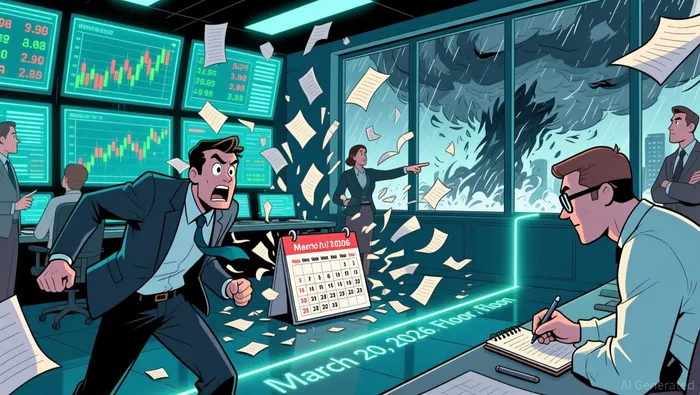
The market's move on March 20 also highlights a key vulnerability: the tendency to overreact to recent negative news. The drop was significant, but the underlying economic data did not justify such a sharp move. This is classic fear-driven selling, where the psychological impact of a negative headline outweighs a balanced view of long-term prospects. The market is reacting to the narrative, not the numbers.
Finally, cognitive dissonance may explain why investors ignore the volume warnings. Acknowledging that the market is both overvalued and lacks trading interest creates a painful contradiction. It's psychologically easier to dismiss the volume signal as noise, focusing instead on the recent gains and bullish analyst forecasts. This dissonance allows the ghost market to persist, as the discomfort of facing the full picture is avoided in favor of maintaining a sense of control and optimism.
The bottom line is that the market's current state is a product of human psychology, not pure math. Loss aversion keeps money in overvalued stocks, herd behavior spreads fear narratives, and recency bias fuels overreactions. Until these biases are confronted, the statistical floor will remain a warning that few are willing to truly hear.
Evidence of the Trap: Price Action and Sentiment
The market's recent price action provides a stark, real-time demonstration of the ghost market's vulnerability. On March 20, the S&P 500 closed down -1.51%, a sharp move that took the index to a 6.25-month low. This drop was triggered by geopolitical news about potential U.S. escalation in Iran, a classic example of a minor catalyst causing a disproportionate reaction. The key detail is the context: this significant sell-off occurred on a day of already low options volume. It confirms the behavioral model-the market's high valuations and thin trading layer mean sentiment can shift violently on minimal volume, creating a dangerous asymmetry where a few sellers can easily overwhelm a passive market.


This price move is mirrored in a growing undercurrent of fear. A recent survey from the American Association of Individual Investors shows that more than 46% of investors are worried that stock prices will be lower six months from now. That's a notable jump from just a week prior. This creates a classic fear-optimism trap. On one side, the herd is still holding onto recent gains, driven by loss aversion and recency bias. On the other, a growing segment is succumbing to fear, creating a nervous tension beneath the surface. This split sentiment makes the market exceptionally fragile. It lacks the unified momentum to push higher, yet it also lacks the collective resolve to sell decisively, leaving it poised for a sudden, disorderly move in either direction.
Perhaps the most statistically significant warning sign, however, is the market's broken seasonal rhythm. The failure of the year-end "Santa Claus Rally" for the third consecutive year is a historic red flag. As detailed in the evidence, the final trading sessions of 2025 saw a synchronized decline that neutralized the rally. This marks the first time in market history that this seasonal indicator has failed for three years in a row. Traditionally, a strong rally into year-end signals optimism and momentum. Its repeated failure suggests the underlying momentum is truly broken. Investors are not buying the narrative of a new year's promise; they are choosing to lock in gains or simply sit out. This erosion of traditional seasonal strength is a powerful signal that the market's psychology has shifted, making it more susceptible to the behavioral biases that drive the ghost market's volatility.
Catalysts and Risks: What Could Break the Illusion
The ghost market's illusion of stability rests on a thin thread. The behavioral biases that have sustained it-loss aversion, herd following, recency bias-can only be maintained until a specific event forces a reckoning. The primary catalyst for a broad-based correction would be a narrative shift from AI optimism to AI anxiety. The market's recent reaction to a fictional blog post detailing a 38% stock-market correction scenario demonstrates how vulnerable it is to such a story. If this narrative gains traction as a feared reality, it could trigger a flight from high-valuation growth stocks, the very assets propped up by the current herd mentality. This would be a classic case of cognitive dissonance breaking down; investors would have to confront the painful truth that their bullish bets are now the most exposed.
A more immediate and structural trigger would be a sustained drop in trading volume below the statistical floor. The evidence shows volume has already been eroding, dipping below 5 million on several days in early March. If this trend continues and volume remains permanently depressed, it would confirm a complete withdrawal of interest. In a market with low liquidity, as detailed in the risks of low-volume stocks, the ability to buy or sell without moving the price is severely compromised. This creates a dangerous setup for a sharp, liquidity-driven sell-off. As one risk guide notes, low liquidity can also cause problems for smaller investors because it leads to a high bid-ask spread. In a ghost market, this spreads the cost of exit for everyone, making it harder to sell and easier for prices to collapse when selling pressure builds.
The greatest danger, however, is the feedback loop that fear-driven selling would create. A negative catalyst-be it a viral narrative or a macroeconomic shock-could spark initial selling. In a low-volume market, that selling would depress prices quickly and sharply. This price drop would then trigger more fear, leading to even more selling as investors try to exit before further losses. This cycle would depress volume further, as fewer participants remain willing to trade, amplifying any negative catalyst. It's a self-reinforcing spiral where each wave of selling makes the next wave more severe. The market's current fragility, with its high valuations and thin layer of interest, is the perfect tinder for such a feedback loop. The statistical floor isn't just a warning; it's the threshold where this dangerous dynamic becomes likely.
Disclaimer: The content of this article solely reflects the author's opinion and does not represent the platform in any capacity. This article is not intended to serve as a reference for making investment decisions.
You may also like
Synlait Reports $80.6 Million Loss, Highlighting Worsening Debt Issues and Longer Path to Recovery
Spain Leads European Pushback on Hormuz Energy Threat

Talisman Gold’s Gravity Plant Trial May Confirm Imminent Production and Reveal Hidden Cash Flow Potential

Fonterra's Mainland Dividend Windfall Ignites Search Surge Amid Dairy Price Downgrade Tension

Trending news
MoreCrypto prices
More





