
March PMI to Gauge the War's Impact on the Economy—Be Alert for Rapid Changes in Currency and Bond Movements

March PMI: The First Real Test of the Middle East Conflict’s Economic Impact
The world is about to get its first concrete look at how the ongoing Middle East conflict is affecting the global economy. The March Purchasing Managers’ Index (PMI), expected around March 16th, will deliver the first official data showing how businesses are responding to the turmoil—moving the conversation from speculation to measurable reality.
Two opposing dynamics set the stage. On one hand, recent data has shown unexpected strength. The February ISM Manufacturing PMI reached 52.4, surpassing forecasts and marking the second month of growth, suggesting manufacturing was holding up despite cost pressures. On the other hand, the war has introduced significant uncertainty. The Bank of Canada has warned that the conflict has increased risks for the global economy, a sentiment echoed by the UN’s Asia-Pacific division, which highlights immediate spikes in shipping, energy, and fertilizer costs.
This raises a crucial question for the March PMI: will it reflect the immediate economic shock of the conflict? The data will reveal whether rising shipping costs, energy price swings, and supply chain disruptions are already slowing business activity, reducing new orders, or adding to inflation. While February’s numbers serve as a pre-war baseline, the March release will be the first to capture a full month of conflict-driven volatility. For investors, this data could quickly shift the narrative from resilience to mounting challenges.
How the Shock Spreads: From Shipping Routes to Production Lines
The economic fallout from the war isn’t just a headline—it’s a direct hit to global manufacturing, and the PMI is designed to track these effects in real time. The Strait of Hormuz is a critical chokepoint, handling a quarter of the world’s seaborne oil. Any disruption there immediately rattles energy markets, as seen in the recent surge of Brent Crude prices above $100 per barrel.

This spike is just the beginning. The resulting cost pressures are exactly what the PMI is built to capture. First, shipping expenses are soaring as major carriers suspend routes and the UN reports sharp increases in freight costs. This is reflected in the PMI’s supplier deliveries sub-index, which tracks how long it takes for goods to arrive. Delays, already evident in February, are likely to worsen as routes are disrupted. Second, higher energy and fertilizer prices feed directly into the “prices paid” sub-index. In February, this measure hit its highest level since June 2022, driven by rising costs for steel, aluminum, and tariffs. Since late February, gas and fertilizer prices have jumped 55% and 35% respectively, adding further pressure.
The impact extends far beyond oil. The conflict is causing supply chain disruptions across Asia and the Pacific, creating an immediate crisis for industries dependent on Gulf resources. Shortages of specialized gases threaten semiconductor and electronics manufacturing, while disruptions in petrochemical supplies could ripple through major Asian economies. These effects will be visible not only in US manufacturing data but also in global PMI surveys. February’s ISM data already showed slowing new orders and longer supplier delivery times. March’s report will reveal whether these trends have intensified, turning early warning signs into a measurable drag on global production.
Market Implications: What the March PMI Could Reveal
The March PMI is a pivotal event for markets. Its results will likely have an immediate impact, potentially shifting sentiment from optimism to concern and influencing currency and commodity markets. The key will be how the data compares to expectations. A reading well below the 51.8 forecast would confirm the disruptive impact of the war, likely boosting safe-haven currencies like the yen and weakening those sensitive to risk. Conversely, a stronger-than-expected result could reinforce confidence, supporting the dollar and commodities such as oil, which have recently rallied.
Recent foreign exchange trends reflect a risk-on environment, with the USD/JPY dropping 0.85% last week and both the EUR/USD and GBP/USD rising over 1.3%. If the PMI data signals economic strain, this could quickly reverse, validating warnings from the Bank of Canada and sparking a flight to safety that might see the yen strengthen and the dollar index fall below key levels.
The most important detail to watch is inflation. February’s PMI showed the highest price pressures since June 2022, driven by energy and raw materials. If March’s data shows another surge, it would reinforce inflation fears and challenge the Federal Reserve’s recent dovish signals, possibly delaying any interest rate cuts and supporting bond yields and the dollar—even if overall activity slows.
Ultimately, this is a classic risk-reward setup. Markets are currently positioned for a gentle economic landing, with the dollar weakening and growth-sensitive currencies rallying. The PMI is the first real test of that outlook. A disappointing result would force a rapid reassessment of geopolitical risks, while a positive surprise could extend the current rally. The outcome has the power to quickly shift market sentiment from optimism to caution.
Looking Ahead: Key Events and Risks This Week
The release of the March PMI is imminent, providing the first hard evidence of the war’s economic impact. However, the coming week is filled with other important events that could influence or even overshadow the PMI’s significance. One major risk is that the data may lag behind real-time developments. The conflict has escalated quickly, with shipping through the Strait of Hormuz nearly halted and Brent Crude prices soaring. By the time the PMI is published, markets may have already priced in more severe disruptions than the data can reflect, creating a risk of mispricing based on outdated information.
Other key data releases will also shape market sentiment. The US Core PCE price index, due later in the week, is the Federal Reserve’s preferred inflation measure and will be closely watched for signs that war-driven price pressures are spreading to consumers. A higher-than-expected reading could shift attention away from manufacturing and reignite expectations for tighter monetary policy, supporting the dollar and bond yields. With markets already betting on a soft landing, any data that challenges this view could quickly overshadow the PMI’s results.
The main risk and reward hinge on the PMI’s price pressures sub-index. February’s reading was the highest since June 2022, driven by energy and raw materials. If March’s data shows another unexpected jump, it would reinforce inflation concerns and challenge the Fed’s dovish stance, potentially triggering a move into safe-haven assets like bonds and the yen—even if overall activity is weak. On the other hand, a softer price index could support risk assets and the dollar by reinforcing expectations for central bank easing. The true significance of the PMI lies in its ability to rapidly shift the market narrative from resilience to growing economic headwinds. The coming week will reveal whether the current risk-on mood can withstand the first solid evidence of the war’s economic toll.
Disclaimer: The content of this article solely reflects the author's opinion and does not represent the platform in any capacity. This article is not intended to serve as a reference for making investment decisions.
You may also like
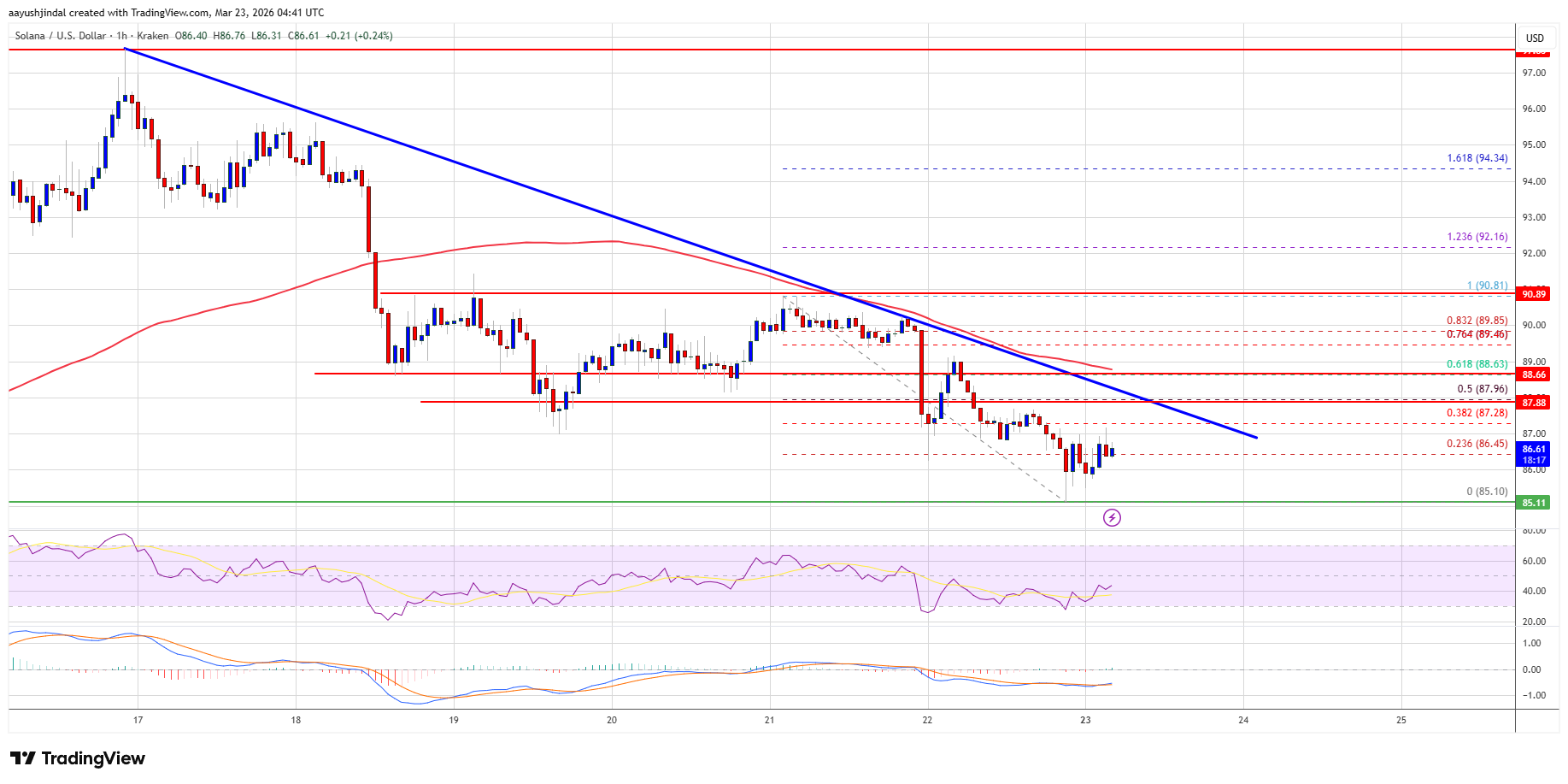
Solana (SOL) Drifts Lower, Is a Drop Below $85 Now Imminent?
XRP Price Extends Dip, Are Deeper Losses Now on the Table?

Bitcoin holds $68,300 as gold crashes for a ninth day and Asian stocks drop

MLKN’s Q3 Outlook Clouded by Oil Prices and Geopolitical Storm

Trending news
MoreCrypto prices
More





