
Wetherspoon’s Share Repurchase Shows Optimism—Yet Profit Alerts Reflect Expectations of a Softer Underlying Business

Wetherspoon's Share Buyback: A Confidence Move Amid Financial Strain
Wetherspoon's recent decision to repurchase and cancel 65,000 ordinary shares at 755p each appears to signal strong management confidence. Traditionally, such actions are intended to boost shareholder value by reducing the number of outstanding shares. However, this gesture stands in sharp contrast to the company's current financial challenges. Following a second profit warning this year, the stock has tumbled, reaching one-year lows near 550p and dropping as much as 11% in a single trading day.
This disconnect highlights a central dilemma for investors. The buyback was executed at a price well above the current share value, suggesting management sees greater intrinsic worth than the market does. Analysts remain cautious, maintaining a Hold rating and expecting full-year profits to fall slightly short of the £79 million consensus. While the buyback may be intended as a show of confidence, the sharp decline in share price indicates skepticism. The underlying numbers tell a story of mounting financial pressure: first-half pretax profit dropped by 32%, and management now anticipates full-year results will miss even the reduced expectations. As a result, the buyback seems less like a strategic move and more like a diversion from deeper operational issues.
Examining the Business Fundamentals: Bridging the Expectation Gap
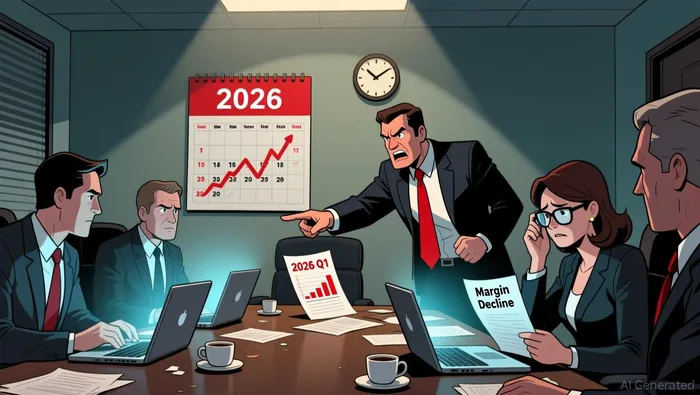
There is a clear mismatch between the buyback's intended message and the company's financial reality. While management is using cash to support the share price, the core business faces significant challenges. For the first half of the year, Wetherspoon reported like-for-like sales growth of 4.8%, continuing its trend of outperforming competitors. However, this revenue growth has not translated into increased profits. Pretax profit fell 32% to £22.4 million, and the operating margin shrank from 6.3% to 4.86%. This means the company is earning less profit for every pound of sales, a crucial factor when considering the effectiveness of a buyback.
The main cause of this decline is a surge in predictable costs. Management has flagged an additional £60 million in annual expenses for wages and National Insurance, along with £7 million more in energy costs and a £2.4 million packaging levy. Energy expenses alone are now 80% higher than in 2019. These are ongoing, structural challenges that will continue to squeeze margins. The skepticism from investors is warranted, as the buyback is taking place while costs are rising.
There is some complexity in the financials. An unexpected £11 million repair and maintenance bill was responsible for most of the operating profit decline. Excluding this, underlying pub profitability actually increased by £3 million. This suggests the core pub business is performing better than headline figures indicate, but this is a temporary accounting effect. The persistent cost increases remain the real threat to profitability.
Ultimately, the share buyback does not match the weakening business fundamentals. Management's willingness to buy back shares at a premium contrasts with financials that show a company struggling to maintain profits amid rising costs. The market expects these pressures to persist, making the buyback a risky allocation of capital when the company is facing significant challenges.
Valuation and the Buyback's Risk/Reward Profile
The risk and reward of the buyback are heavily influenced by the company's current valuation and the modest size of the capital spent. Shares are trading at a forward price-to-earnings ratio of 12.9 times, well below the 10-year average of 19-20x. This discount reflects concerns about declining profits, with analysts expecting full-year results to fall short of even lowered forecasts. In this context, the buyback appears more symbolic than impactful. The company repurchased just 65,000 shares at 755p, a minor reduction in share count given a market capitalization of around £790 million.
The main risk is that this small capital move distracts from a larger, ongoing issue: persistent margin compression. Wetherspoon's business model, which relies on high volume and low margins with a significant food component, makes it more vulnerable to inflation than many competitors. The company is already carrying substantial debt, now at £773 million, and faces escalating costs for wages, energy, and taxes. Although the buyback was executed at a premium, suggesting confidence in the balance sheet, the market remains wary that these cost pressures will continue to undermine earnings.
From another perspective, the buyback assumes that management's assessment of intrinsic value is accurate and that recent profit warnings are temporary setbacks. However, the evidence points to narrowing margins and increasing leverage. The current valuation discount provides some cushion, but it also highlights the market's doubts about the company's ability to sustain earnings. If profits stabilize, the buyback could benefit shareholders, but it does little to address the underlying weaknesses that have driven the stock to its lowest point in a year.
Key Catalysts and What Investors Should Monitor
Investors are now looking for clear evidence to resolve the tension between management's confidence and the company's declining profit outlook. The most important catalyst will be the full-year results, expected in July. This report will reveal whether Wetherspoon's warning that profits may fall slightly below market expectations is accurate. The consensus for adjusted pretax profit is £81.1 million, already a significant reduction from the previous year. The crucial question is whether the actual figure will be even lower, confirming the market's concerns.
In the short term, investors should track like-for-like sales growth. Although Wetherspoon continues to outperform the broader hospitality sector, growth has slowed. Sales increased by just 2.6% in the seven weeks leading up to March 15, compared to 4.8% for the half-year. This slowdown, combined with management's warning about pressure on consumer spending, is an early indicator of whether revenue growth can offset rising costs.
The most significant risk is the possibility of further cost increases. The company has already identified annual cost hikes of £60 million for wages and National Insurance, £7 million for energy, and £2.4 million for packaging. Additionally, energy prices could spike due to instability in the Middle East. These are not minor fluctuations but ongoing challenges that could further erode already slim margins. Any escalation would directly threaten the profitability that the buyback is meant to support.
In summary, the coming months will be crucial for Wetherspoon's investment case. The buyback is a bet on future value, but July's results and the trends in sales and costs will determine whether that bet pays off or if profit warnings become the norm. For now, the market is factoring in the risk of continued financial strain, making these upcoming metrics essential for any reassessment.
Disclaimer: The content of this article solely reflects the author's opinion and does not represent the platform in any capacity. This article is not intended to serve as a reference for making investment decisions.
You may also like
OLMA Surges 12% in Pre-Market — But No Catalyst in Sight
Antithesis' $105M Funding: A Flow Signal for Crypto & Trading Infrastructure
Trump’s Conflict “Thoroughly Executed” — Oil’s $120 Limit Remains a Threat as Temporary Price Recovery Weakens

Trending news
MoreCrypto prices
More





