
OP’s Process: Liquidity, Tiers, and the Buyback Trigger

OP Market Overview: Consolidation and Technical Headwinds
OP is currently experiencing a period of sideways trading, facing notable technical resistance. The token is priced at $0.11614, reflecting a 0.54% decline over the last day. Trading activity remains robust, with $42.56 million in volume, yet the market lacks clear direction. Technical analysis signals a bearish outlook, as the daily buy/sell indicator—driven by moving averages—suggests a Strong Sell. The 14-day RSI stands at 55.2, indicating a neutral stance and not yet pointing to oversold conditions that might prompt a rebound.
Price movement is restricted within a defined channel, fluctuating between $0.11 and $0.12. The $0.11 mark serves as a pivotal support level; a drop below this threshold could break the current range and lead to further declines. On the other hand, a convincing rally above $0.12—backed by strong trading volume—would be necessary to confirm a bullish reversal and demonstrate genuine buyer interest.
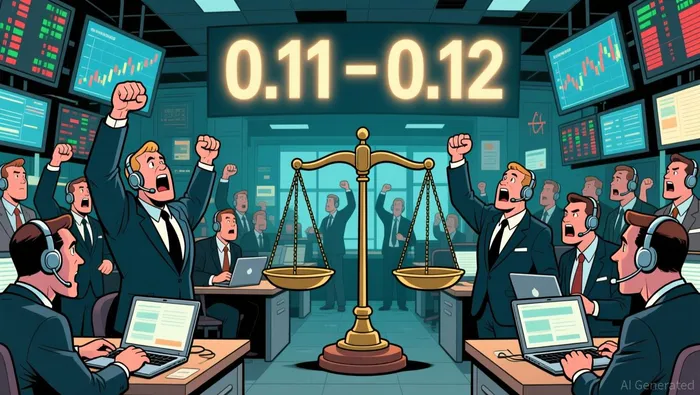
This scenario sets up a classic period of indecision. Despite high trading volumes, OP remains confined within a narrow band as the market absorbs recent developments. Technical signals remain negative, but the price has yet to breach its key support. Until a decisive move—either a volume-driven breakout above $0.12 or a breakdown below $0.11—emerges, range-bound trading is likely to persist.
Superchain Buyback Program: A New Demand Driver
The latest fundamental catalyst for OP is the introduction of a 12-month buyback initiative, commencing in February 2026. Under this plan, half of the net revenue from Superchain sequencers will be used each month to purchase OP tokens, with transactions conducted over-the-counter to minimize market disruption. This marks a significant structural change, establishing ongoing, on-chain demand that is directly linked to the ecosystem’s expansion.
Given historical revenues of around 5,868 ETH, this program could channel approximately $8 million per year into OP token acquisitions. These tokens will be transferred to the Collective treasury, where their future—potentially including burning or distribution as staking rewards—will be determined by governance decisions. This mechanism effectively introduces a price floor for OP, tying its value to the overall health and growth of the Superchain network.
The program’s effectiveness will depend on whether other OP Stack chains can compensate for the revenue lost from Base’s exit. Its success is closely tied to the adoption rate and revenue growth of the Superchain, especially amid fierce competition among Layer 2 solutions.
RSI Oversold Long-Only Strategy: Backtest Summary
- Strategy Rules: Enter when RSI(14) falls below 30; exit when RSI(14) exceeds 70, after 20 trading days, upon achieving an 8% profit, or hitting a 4% stop-loss. Backtest period: March 23, 2024 – March 22, 2026.
- Key Results:
- Total Return: -35.75%
- Annualized Return: -7.57%
- Maximum Drawdown: 55.94%
- Profit-Loss Ratio: 1.33
- Total Trades: 45
- Winning Trades: 17
- Losing Trades: 28
- Win Rate: 37.78%
- Average Holding Period: 3.09 days
- Longest Losing Streak: 12 trades
- Average Gain: 10.92%
- Average Loss: 7.49%
- Largest Single Gain: 19.21%
- Largest Single Loss: 16.93%
Key Catalysts and Risks to Monitor
The immediate bullish case for OP hinges on a breakout above $0.12 that is confirmed by strong trading volume. Such a move would indicate a shift in market dynamics and break the current consolidation. Without this confirmation, OP is likely to remain range-bound and directionless.
For the buyback program to succeed, two metrics are crucial: the growth of Superchain revenue and the transparency of buyback disclosures. The program’s annual demand is ultimately limited by actual revenue, which has recently been impacted by Base’s departure. The adoption of new chains and increased revenue will be vital to realizing the projected $8 million in annual buybacks.
The main risk lies in the prevailing bearish technical trend. OP is currently trading 67% below its 200-day simple moving average, and momentum indicators remain negative. Should the buyback demand fall short or fail to counteract selling pressure, a drop below the $0.11 support could open the door to further declines, potentially testing the $0.10 level.
Disclaimer: The content of this article solely reflects the author's opinion and does not represent the platform in any capacity. This article is not intended to serve as a reference for making investment decisions.
You may also like
Goodwin stock sinks 46% after contract losses, Iran war delays Middle East orders
UAI (UnifAINetwork) 24-hour amplitude 49.3%: Futures short pressure leads correction
Lamborghini Faces Margin Pressure: Strategic Shift Delays 2030 EV Ambitions Due to Pricing Challenges

GameStop's Earnings Flow vs. Oil's Liquidity Shock

Trending news
MoreCrypto prices
More





