
Vertiv's AI Cooling Boom: Index Adjustment Triggers Fundamental Investment in Physical AI Infrastructure

Market Mechanics: S&P 500 Rebalance and Passive Inflows
The immediate driver behind recent market activity is mechanical in nature. As trillions of dollars are invested in funds tracking the S&P 500, the quarterly index rebalance—effective before markets open on March 23—forces passive funds to buy shares of the newly included companies. This creates a straightforward liquidity boost, as index funds and ETFs must adjust their portfolios to mirror the updated benchmark.
The impact is significant. Four new companies—Vertiv Holdings, Lumentum Holdings, Coherent Corp., and EchoStar Corporation—are replacing firms such as Match Group and Paycom Software. This change is intentional, reflecting a strategic shift toward AI infrastructure. The rebalance ensures that every S&P 500-tracking fund will acquire shares in these four businesses, guaranteeing a short-term surge in demand.
Markets have already responded to this development. Following the announcement, the share prices of all four companies climbed by an average of 8%. The most pronounced move came from Vertiv, which saw its stock jump nearly 6% in after-hours trading on the rebalance day—a clear sign of passive capital entering the market. For institutional investors, the key question is whether this is a fleeting liquidity event or a reason to increase exposure to the sector.
Ultimately, the sustainability of these gains depends on whether the robust demand for AI infrastructure—evidenced by Vertiv’s 252% year-over-year order growth—can support prices beyond the initial index-driven buying.
Structural Drivers: Enduring Demand for Physical AI Infrastructure
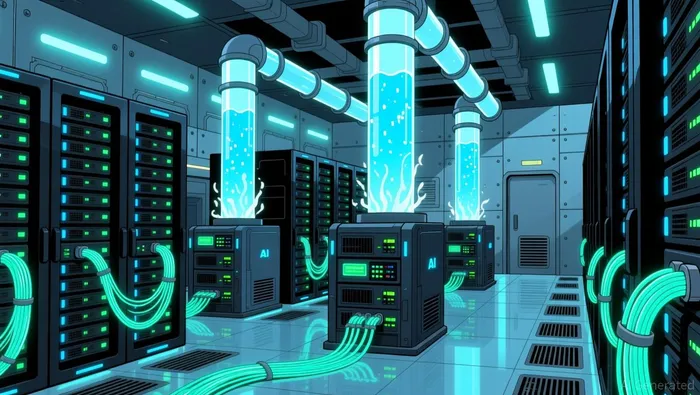
While the index rebalance is a catalyst, the real investment thesis centers on a long-term, powerful demand cycle for physical AI infrastructure. This is not a passing trend, but a fundamental reallocation of capital, supported by ambitious market forecasts and strategic industry partnerships.
The scale of this opportunity is highlighted by projections for the global data center networking market, which is expected to more than double from $39.5 billion in 2025 to over $93 billion by 2032. This expansion is fueled by the energy and connectivity requirements of AI. As organizations deploy increasingly complex models, the need for advanced processors and high-speed networking hardware grows, creating a persistent tailwind for the entire supply chain—from semiconductor manufacturers to the companies providing power and cooling solutions.
The newly added S&P 500 companies play essential roles in this ecosystem. Vertiv delivers critical power and cooling systems that manage the intense heat generated by AI chips. As data centers become more densely packed, Vertiv’s thermal management technology is vital for preventing outages and maintaining performance. The company’s projected 2026 revenue of $13.25–$13.75 billion underscores its strong growth trajectory.
On the connectivity side, Lumentum and Coherent are leaders in optical components, enabling the rapid data transfer required for AI workloads. Their strategic importance was highlighted when Nvidia invested $2 billion in each company in March, aiming to advance AI-focused optical technologies. These partnerships not only validate their technology but also secure future demand for their specialized solutions.
Together, these additions represent a strategic bet on the resilience and importance of physical infrastructure. Rather than being passive participants in the AI boom, these companies supply the indispensable systems that make AI possible. For institutional investors, this structural thesis—supported by market size, strategic partnerships, and clear revenue visibility—transforms the index rebalance from a short-term event into a long-term investment opportunity in AI infrastructure.
Portfolio Strategy: Implications and Risk Considerations

The inclusion of these physical infrastructure providers signals a broader market acknowledgment that monetizing AI requires significant investment in foundational systems. This is not a temporary theme, but a structural transformation reminiscent of past infrastructure booms. According to Fidelity, the surge in AI investment is now a key driver of U.S. economic growth, impacting nearly every industry. For portfolio construction, these companies offer exposure to AI with tangible assets and established cash flows, providing diversification from the high-valuation, software-centric names that have dominated headlines.
From a risk-adjusted return perspective, the setup is attractive. Data center operators like Digital Realty and Equinix—though not S&P 500 constituents—are considered undervalued compared to prominent AI stocks. This suggests a potential shift toward the “backbone” of the AI ecosystem. The newly added firms—Vertiv, Lumentum, and Coherent—play similar foundational roles, offering more stable, capital-light exposure to the AI cycle. Their predictable revenue streams, as seen in Vertiv’s guidance, help buffer against the volatility and valuation swings common in pure software plays.
However, there are risks. The main challenge is executing on the massive capital expenditures required for this buildout. The sector is in the midst of a multi-year expansion, with technology giants expected to spend over $300 billion in 2025 alone. This creates a capital-intensive environment where operational efficiency and cost management are critical. Additionally, data center spending is subject to broader IT budgets and economic cycles, introducing potential volatility absent in software demand.
There is also a narrative risk. While the “physical AI” theme is gaining traction, the journey from prototype to profitable deployment is complex. The focus is shifting from hype to practical application, requiring reliability and trust. For investors, the challenge is to distinguish between sustainable infrastructure demand and speculative excitement. While the index rebalance brings institutional attention, long-term returns will depend on these companies’ ability to consistently generate cash flows as the buildout continues.
Key Catalysts: Monitoring the Structural Thesis
For institutional investors, the index rebalance is just the beginning. The strength of the structural thesis will be tested by upcoming events and metrics that reveal the durability of the infrastructure buildout. Tracking these catalysts is essential for making informed portfolio decisions beyond the initial wave of passive inflows.
- Quarterly Earnings: Watch for evidence of sustained capital spending and pricing power. For Vertiv, meeting or exceeding its 2026 revenue guidance and delivering on EPS targets will signal organic growth. For Lumentum and Coherent, the focus is on converting Nvidia’s investments into recurring revenue and maintaining margins.
- Acceleration of AI Infrastructure Buildout: Look for announcements from major cloud providers like Amazon, Microsoft, and Google regarding new data center investments. Continued backing from chipmakers such as Nvidia, and strong results from companies like Broadcom—which recently reported a 106% year-over-year increase in AI revenue—will set the standard for execution.
- Institutional Flows: Monitor whether the initial passive inflows lead to sustained, conviction-driven investment. Track changes in institutional ownership and ETF allocations. A lasting increase in holdings by long-term investors would indicate growing acceptance of the thesis, while a reversal could suggest the move was driven primarily by index mechanics.
In summary, institutional investors must take a long-term view. The structural case for physical AI infrastructure is compelling, but its rewards will unfold over several quarters. By focusing on earnings delivery, buildout momentum, and the nature of capital flows, investors can distinguish lasting infrastructure demand from short-term market noise and position themselves for the multi-year cycle ahead.
Disclaimer: The content of this article solely reflects the author's opinion and does not represent the platform in any capacity. This article is not intended to serve as a reference for making investment decisions.
You may also like
FUEL (FuelNetwork) fluctuated 40.9% in 24 hours: Low liquidity and amplified trading effects are the main drivers
ELIZAOS fluctuates 55.2% in 24 hours: CoinDCX listing and rebranding drive price rebound
ARIA (Aria.AI) sees 67.3% volatility in 24 hours: Surge in trading volume triggers sharp price fluctuations
Trending news
MoreCrypto prices
More





