
Carnival (CCL) Set for Outperformance and Upward Revisions as Conservative Guidance Offers Easy Targets

Market Braces for Earnings: Volatility and Expectations
This week’s earnings season kicks off with investors already anticipating considerable uncertainty. Implied volatility—a measure of the market’s forecast for price fluctuations—tends to surge ahead of major earnings reports. This uptick is fueled by both speculators and hedgers purchasing options, which drives up option premiums and signals a wide range of possible price moves. Traders are closely watching to see if actual earnings results will prompt stock moves that surpass or fall short of these expectations. If the post-earnings move is smaller than predicted, implied volatility and option prices can drop sharply, a phenomenon known as a “volatility crush.”
Key Earnings to Watch: March 23, 2026
This week, the spotlight is on several high-profile companies, including Chewy (CHWY), Carnival (CCL), and Beyond Meat (BYND). Options markets are signaling that these stocks have the widest gaps between expected and potential actual moves. Analysts estimate that major reporting companies could see price swings ranging from 3.86% up to 29.67%. For example, Target is expected to move 9.6%, while Marvell Technology’s implied move is 11.1%. Although not all of these names are headline-grabbers, they highlight the heightened volatility environment. Carnival stands out with its unusually narrow Q1 2026 earnings guidance of $0.170 per share, which could limit volatility if results align precisely with management’s forecast.
Earnings Surprises: Market Sentiment vs. Reality
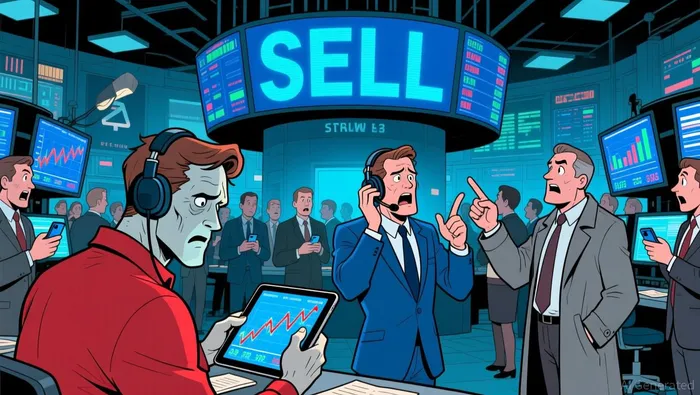
This week’s earnings season is a case study in how markets arbitrage expectations. Carnival’s situation is particularly illustrative: last quarter, the company delivered $0.34 EPS, far exceeding the $0.25 consensus. Despite this strong result, the stock dropped as investors had already priced in a positive surprise, leading to a classic “sell the news” reaction.
For the upcoming quarter, Carnival’s management has set a conservative target of $0.170 EPS, slightly below the analyst consensus of $0.18. This strategy, often called “sandbagging,” sets a low bar that’s easier to beat. As a result, the market’s expectations are now aligned with management’s guidance, making it likely that even a modest beat could be seen as a win. More importantly, Carnival’s full-year guidance of $2.48 EPS marks a notable increase from previous forecasts. If the company delivers on this and raises its outlook after the quarter, it could spark renewed optimism and drive the stock higher. Any deviation from this anticipated sequence could introduce fresh volatility.
Catalysts and Risks: Navigating the Volatility Crush

With implied volatility running high, the stage is set for a classic volatility crush scenario. The market has already factored in a range of potential moves, from a relatively small 3.8% for Costco to a substantial 11.1% for Marvell Technology. The pivotal moment will be whether actual earnings results significantly diverge from these expectations. If the move is less dramatic than anticipated, option premiums could quickly deflate as traders exit their positions.
The main risk is that a company’s results are even worse than the already pessimistic outlook implied by high volatility. For example, if a stock expected to move 9% instead drops 12% on disappointing earnings, the resulting volatility crush could be more severe than anticipated, potentially leading to larger losses for traders who bet on a contained move.
Updates to company guidance are often the most powerful drivers of market sentiment. Carnival’s narrow Q1 2026 target of $0.170 EPS, below the consensus of $0.18, sets up a likely beat. However, the real catalyst will be any changes to the full-year outlook. Management’s guidance of $2.48 EPS for fiscal 2026 is a significant increase, and if they raise this target after the quarter, it could signal stronger business momentum and prompt a sharp market reaction.
For other companies, attention will center on whether results exceed the so-called “whisper number.” A result that merely meets expectations may disappoint, while a clear beat—especially if paired with an improved outlook—could trigger a move that surpasses the implied volatility, intensifying the volatility crush as the market adjusts. Ultimately, the week’s trading will be shaped by the gap between what’s already priced in and the actual outcomes reported.
Disclaimer: The content of this article solely reflects the author's opinion and does not represent the platform in any capacity. This article is not intended to serve as a reference for making investment decisions.
You may also like
FUEL (FuelNetwork) fluctuated 40.9% in 24 hours: Low liquidity and amplified trading effects are the main drivers
ELIZAOS fluctuates 55.2% in 24 hours: CoinDCX listing and rebranding drive price rebound
ARIA (Aria.AI) sees 67.3% volatility in 24 hours: Surge in trading volume triggers sharp price fluctuations
Trending news
MoreCrypto prices
More





