
Vistry's Executives Are Offloading Shares Instead of Acquiring—Does Limited Personal Investment Signal a Red Flag?

Routine Insider Share Sales at Vistry: What’s Really Happening?
Recent insider share disposals at Vistry appear to be standard practice rather than a reaction to market weakness. Executives are not offloading shares due to negative sentiment; instead, these transactions are primarily to settle tax obligations on vested stock awards. This is a common occurrence and not a sign of concern. For comparison, earlier this month, Victory Capital Holdings saw both its President and CFO have shares withheld for tax purposes as their restricted stock vested, with the company managing the process. These were not discretionary sales, but automatic actions to meet tax requirements. The same explanation likely applies to Vistry’s recent insider activity.
In contrast, the only notable insider purchase was made by independent director Paul Whetsell, who acquired 6,000 shares at GBX 474 on March 4. While this demonstrates personal confidence, it stands alone and does not represent a broader trend. Importantly, there is no indication that Vistry insiders have been net buyers over the past three months; overall, more shares have been sold than purchased.
Although these sales are likely just for tax purposes, the absence of significant insider buying suggests that those closest to the company are not increasing their exposure at current prices. The only recent purchase—a modest one by a director at a low point—highlights that most insiders are not eager to invest further. The process may be routine, but the lack of insider accumulation sends a clear message.
The Lone Insider Buyer: A Signal or an Outlier?
Paul Whetsell’s acquisition of 6,000 shares for £28,440 is a positive gesture, but its impact is limited. This purchase was made when the stock was already under pressure, just before a dramatic 43% monthly decline triggered by a margin warning. In this context, Whetsell’s move could be seen as a show of faith ahead of turbulent times.
However, this individual action pales in comparison to the company’s own capital return efforts. In 2025, Vistry executed £71 million in share buybacks, a substantial commitment to returning value to shareholders. This board-approved initiative is a much stronger endorsement than any single insider’s purchase. The contrast is clear: while the company is actively buying back its own shares, most insiders are not increasing their stakes.
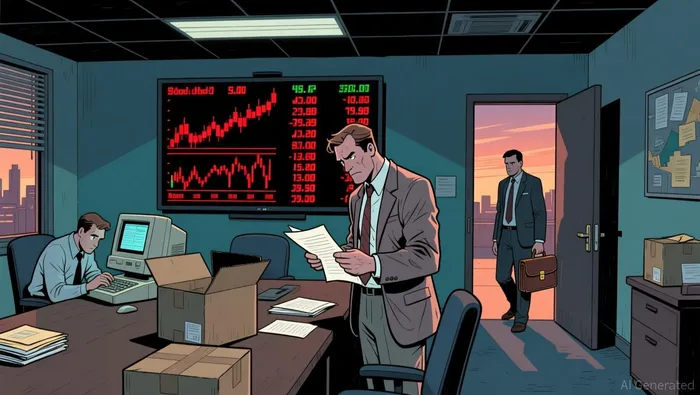
Ultimately, Whetsell’s purchase is more symbolic than indicative of widespread insider confidence. It stands alone against a backdrop of routine sales and a depressed share price. The real show of confidence comes from the company’s large-scale buyback program, not from isolated insider bets.
Market Turmoil vs. Insider Actions: Decoding the Signals
Market sentiment has turned sharply negative. Following the margin warning, Vistry’s share price dropped over 17%, and within a month, the stock had fallen by 43%. This steep decline reflects investor anxiety over affordability issues, leadership changes, and rising interest rates.
Despite this, the company’s underlying performance has remained steady. For 2025, Vistry reported adjusted pre-tax profits of £268.8 million, a 2% increase year-on-year, and strengthened its balance sheet by reducing net debt to £144.2 million. The company aims to achieve a net cash position by the end of 2026.
Vistry’s strategic focus on affordable housing and expanding its manufacturing capabilities is a key advantage. The company is responsible for building about one in seven affordable homes in the UK and has grown its Vistry Works manufacturing arm, with timber-frame output rising 60% in 2025. These strengths position Vistry well for future government support, though this long-term potential is not currently reflected in insider trading patterns.

In summary, the market is bracing for significant challenges, but insiders are not signaling renewed confidence through their own investments. Despite the company’s buyback program and low share price, there is no evidence of widespread insider buying. This lack of participation from those most familiar with the business suggests that insiders remain cautious about the current downturn.
What Could Change Insider Sentiment?
Insiders are likely to remain on the sidelines until there is clear evidence that the current difficulties are temporary. Several key developments could influence their stance, but these same factors also carry risks if they do not materialize as hoped.
- Sales and Completion Metrics: Management reports that targeted incentives are already boosting performance, with the year-to-date sales rate rising to 1.42 per site per week, up from 0.59 a year ago. The expectation is for completion growth from the second quarter, which should enhance cash flow. If these improvements continue, it would validate the company’s strategy and could encourage insider buying.
- Leadership Transition: The appointment of Rob Woodward as non-executive chairman is intended to bring stability and a fresh perspective. His background in media and technology may help rebuild value, but a smooth transition is essential. Any disruption could prolong uncertainty and keep insiders cautious.
- Margin Recovery: The main risk is that margin pressures persist longer than anticipated. Vistry aims to move from £144.2 million in net debt to a net cash position of £100 million by the end of 2026. If incentive-driven sales do not generate enough cash flow, this target could be missed, undermining the company’s financial recovery and potentially prompting further insider sales.
In conclusion, insiders are waiting for concrete signs of recovery before increasing their stakes. Until sales and completion data confirm the turnaround and the leadership transition is completed smoothly, insider participation is likely to remain limited. While the company’s buyback program is a strong show of confidence, it does not compensate for the lack of insider investment. Investors should focus on the company’s actual performance metrics rather than short-term market reactions.
Disclaimer: The content of this article solely reflects the author's opinion and does not represent the platform in any capacity. This article is not intended to serve as a reference for making investment decisions.
You may also like
BTR (Bitlayer) 24h amplitude 607.1%: Trading volume soars 718%, sell pressure leads to sharp drop
Ubben Exits Bayer Stake as Smart Money Loses Confidence in Activist-Driven Turnaround
Weingarten (WRD) Soars 11.7% in Intraday Surge Amid Volatile Trading Session: What's Fueling This Momentum?

USOR Network Projects Bitcoin Volatility in 2026 with AI-Driven Forecasts
Trending news
MoreCrypto prices
More





