
CEA Industries Confronts $1.98M CEO Severance as Company Reports $106M Deficit and Leadership Turmoil

Board Decisions Signal Major Governance Concerns
The board has approved a $1.98 million severance package for CEO David Namdar, who only joined the company in August 2025. This move highlights a significant disconnect between the board's actions and shareholder interests. Namdar, who holds 1.96% ownership in the company—valued at approximately $2.6 million—is set to receive nearly $2 million to depart after less than a year at the helm. Such a payout appears less like a standard severance and more like a substantial transfer of wealth to an executive with minimal tenure.
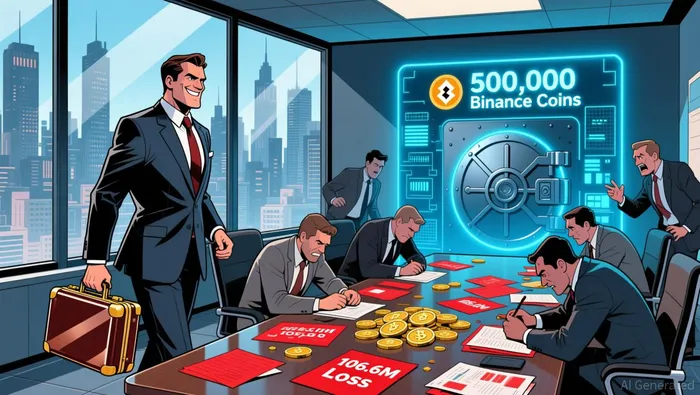
This scenario is reminiscent of classic pump-and-dump tactics. The CEO is being compensated to exit just as the company grapples with a severe breakdown in internal controls and has reported a quarterly loss of $106.6 million. The board's priorities seem to be centered on managing internal power struggles rather than focusing on long-term shareholder value. When leadership is rewarded for leaving amid a collapse in company fundamentals, it becomes clear that the real beneficiaries are the board and their advisors—not the shareholders.
Recent insider trading data reveals no clear evidence that insiders have increased their holdings over the past three months. In a company with strong prospects, insiders typically accumulate shares, betting on a recovery. The absence of such activity suggests that those with the most insight are either staying out or quietly divesting. This lack of insider commitment is a strong warning sign for outside investors.
Institutional Activity and Related-Party Transactions
Institutional investors are notably absent, with the real movement occurring in related-party transactions that appear to benefit insiders. Recent disclosures show millions in fees paid to an entity controlled by a current director. Such arrangements are classic indicators of a board more interested in rewarding themselves than in building shareholder value, effectively channeling company funds to connected parties. In a healthier environment, institutional investors would be positioning for a turnaround, but here, major holders seem to be heading for the exits.
The company’s transition to a digital asset treasury—now holding over 500,000 Binance coins—has been undermined by a recent decline in yields from the platform, directly impacting the company’s core strategy for returns. This underperformance raises immediate concerns about the sustainability of the treasury model.
Absolute Momentum Long-Only Strategy: BNC Backtest Summary
- Entry: When 252-day ROC > 0 and price > 200-day SMA
- Exit: When price < 200-day SMA, after 20 days, or upon reaching +8% take-profit or -4% stop-loss
- Results:
- Strategy Return: 1.05%
- Annualized Return: 0.71%
- Maximum Drawdown: 7%
- Profit-Loss Ratio: 1.14
- Total Trades: 2 (1 win, 1 loss)
- Win Rate: 50%
- Average Hold: 2 days
- Average Win: 8.65%
- Average Loss: 7%
When the primary asset class fails to deliver, it casts doubt on the entire treasury approach.
The recent appointment of Brent Miller as CFO, accompanied by a $1 million equity incentive, is intended to align his interests with company performance. While this is a positive step for governance, it does not erase the company’s history of weak internal controls and questionable related-party dealings. Miller’s challenge will be to repair these systemic issues, not just oversee the digital asset portfolio. For now, major investors remain cautious, waiting to see if new leadership can deliver genuine change or if this is simply another episode of value extraction.
Market Response and Underlying Financials
The recent uptick in the company’s stock price—now trading near $3.17, up 2.4%—is more noise than substance. This price movement comes despite the company posting a $106.6 million quarterly loss, raising serious questions about the justification for the CEO’s $1.98 million exit package after such a short tenure.
This is not just a poor quarter—it’s a fundamental breakdown of the business model. The shift to a digital asset treasury has already faltered, with declining yields from Binance. The board’s decision to pay a premium for a CEO’s departure after only a year appears more like a final payout than a strategic leadership change. Savvy investors are not misled by the minor stock rally.
Shareholder dilution is another red flag. Over the past year, the number of shares outstanding has increased by more than 5,200%, significantly reducing the value of existing holdings. Such massive dilution often precedes further value extraction, temporarily boosting the stock price while eroding long-term value. Experienced investors recognize this as a warning, not a recovery.
Leadership instability compounds these issues. Both management and the board have an average tenure of less than a year, signaling a lack of continuity and strategic vision. Frequent turnover at the top is unsettling for investors and points to deeper organizational problems. While the new CFO’s equity stake is a positive sign, it does not change the company’s troubled history or its current financial decline.
Key Catalysts and What Lies Ahead
The situation is now clear: the board has approved a $1.98 million severance for a CEO with less than a year in the role, amid disclosures of failed internal controls and a $106.6 million loss. Major investors are holding back, waiting to see what comes next. The upcoming catalysts will reveal whether this is a genuine turnaround or just another instance of value being siphoned away.
- Board’s Public Explanation: The company has already disclosed the material weakness and the exit package in a Form 8-K. The next step is for the board to publicly justify these decisions, especially the large payout to a short-tenured CEO and the millions in related-party fees. If the explanation lacks detail or appears defensive, it will reinforce concerns about misaligned interests. A transparent, credible rationale would be a positive sign, but expectations are low given the context.
- Digital Asset Treasury Performance: With over 500,000 Binance coins in its treasury, the company’s future depends on stabilizing yields and reducing massive losses. Any improvement here would be a step toward financial recovery, while continued underperformance would confirm doubts about the digital asset strategy.
- Insider Buying Activity: The absence of insider purchases is a major concern. Investors should watch for new Form 4 filings. A sudden increase in insider buying could indicate renewed confidence, but continued selling or inactivity will suggest that insiders remain unconvinced of a turnaround.
At present, the largest holders are moving away from the company, and the outlook remains uncertain.
Disclaimer: The content of this article solely reflects the author's opinion and does not represent the platform in any capacity. This article is not intended to serve as a reference for making investment decisions.
You may also like
PPG Industries Jumps 5.45% Amid Market Swings: What’s Behind the Rally?


TruBridge CEO Offloads Shares Ahead of Accounting Scandal Disclosure — Savvy Investors Remain Cautious

Legend-Spectranet Merger: Growth Opportunity or Regulatory Challenge?

Trending news
MoreCrypto prices
More





