
Logistics Stocks Confront Tariff Deadlines and Policy Uncertainty—Strength Lies in Adaptability, Not Interest Rates

New Structural Landscape for Logistics Stocks
The logistics sector is now operating under a fundamentally altered regulatory framework. Following the Supreme Court's 2026 decision to overturn broad emergency tariffs, the administration quickly implemented a new 150-day, 15% tariff cap using Section 122. This legal change introduces a more predictable timeline for uncertainty, as the initial surcharge is set to lapse in late 2026. While this provides some clarity, it also signals an extended period of secondary risks, with U.S. policymakers expressing interest in longer-lasting, more targeted tariffs via mechanisms like Section 301 investigations. The immediate outcome is a higher, steadier cost base for imported goods, along with increased compliance challenges for companies.
This evolving environment is reshaping the risk landscape for logistics equities. The ongoing tariff pressures are accelerating the shift toward diversified supply chains and regional sourcing strategies. According to Genpact’s global supply chain leader, businesses are moving away from reliance on single-country suppliers, instead managing their supplier networks with built-in risk mitigation, much like financial portfolios. This is not a temporary adjustment but a comprehensive redesign of logistics systems, enabled by investments in visibility technologies made during the pandemic. For logistics firms, this means managing more complex, multi-modal, and often longer transport routes, which brings new operational uncertainties and greater capital requirements.
Correlation patterns for logistics stocks are also evolving. Historically, these equities sometimes acted as safe havens during market turmoil. In the current climate, however, their performance is increasingly linked to the unpredictable path of trade policy and the resulting shifts in global trade flows. This creates greater sensitivity to policy changes, potentially causing logistics stocks to diverge from broader market trends during periods of tariff escalation. Now, sector volatility is driven not just by economic cycles, but directly by the timing and nature of new tariff measures.
Portfolio Strategy: Assessing the Price of Resilience and Alpha Generation
The financial impact of adapting supply chains is now a measurable expense on corporate balance sheets. A recent STG survey revealed that 85.6% of importers accelerated shipments in 2025 to sidestep tariff costs, a tactic that brought significant operational and financial challenges. While this helped many avoid higher duties, it also led to new expenses: 42.3% faced increased storage and holding costs, and 43.7% experienced working capital strain from elevated inventory levels. This is the tangible cost of building resilience—holding more inventory reduces risk but introduces new financial complexities that must be carefully managed.
This front-loading of shipments has fundamentally altered logistics operations, introducing a new layer of volatility. The most noticeable effect is on freight seasonality. Traditionally, ocean freight’s peak season spanned July to October, but in 2025, peak volumes arrived almost a month earlier. This shift disrupts established replenishment cycles and creates quieter periods for many companies, with 26.4% reporting downstream disruptions. For portfolio managers, this is not a temporary blip but a structural change that requires new analytical models.
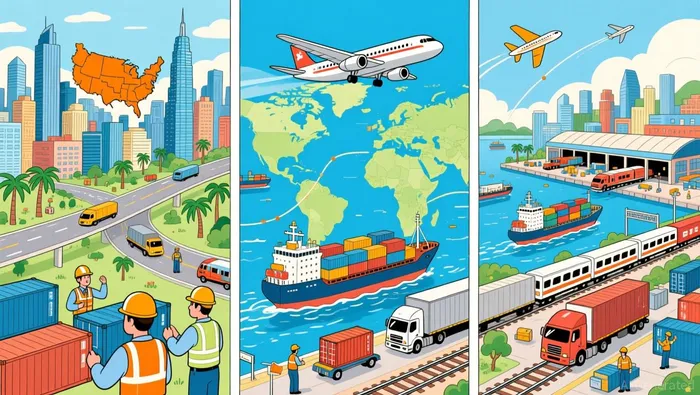
Key metrics for evaluating risk-adjusted returns in logistics now include:
- Freight seasonality trends: Persistent early peaks indicate ongoing front-loading, which can squeeze margins during subsequent slow periods.
- Inventory carrying costs and working capital: Elevated levels suggest that the cost of resilience is being transferred through the supply chain, potentially dampening demand for logistics services.
- Capital investment for supplier diversification: Nearly 80% of surveyed companies shifted at least some sourcing away from China, requiring new logistics infrastructure and partnerships.
From an investment perspective, this environment favors systematic strategies that prioritize companies with minimal operational volatility and adaptable cost structures. The opportunity for outperformance lies in identifying logistics providers capable of managing unpredictable seasonality and higher fixed costs associated with diversified supply networks.
Systematic Approaches: Company Resilience and Sector Correlations
The ongoing transformation of supply chains is creating a clear divide within the logistics industry. While the move toward regionalized, diversified networks is a long-term trend, the transition is uneven. For investors, the key is to pinpoint companies that possess both operational and financial resilience to succeed amid increased volatility, while steering clear of those most exposed to instability.
At the company level, resilience is now measured by new criteria. The ability to control the costs of resilience is paramount. In sectors like chemicals, the cycle of front-loading and inventory surges has created erratic demand for logistics services. Companies that can manage this require not just scale, but advanced visibility tools and flexible contracts. Genpact’s leader highlights that investments in control towers and scenario planning have enabled many multinationals to adapt to tariff changes without resorting to panic buying—a significant competitive edge. This underscores the value of logistics providers offering integrated visibility and risk management, as they become indispensable partners in complex supplier ecosystems.
Sector correlations are also shifting. Logistics stocks, once seen as defensive, are now more closely tied to the volatility of trade policy and global supply chain disruptions. This increases their sensitivity to policy uncertainty and can decouple their performance from the broader market during tariff escalations. Additionally, new systemic risks are emerging: geopolitical events, such as the U.S.-Israel strike on Iran, have triggered sharp increases in oil prices, with Goldman Sachs warning of potential new highs. For logistics firms, this means compressed margins from higher fuel costs and further disruption to trade routes, adding another layer of volatility that cannot be diversified away.
Financial discipline is being put to the test across the sector. The recent Chapter 11 filing by STG Logistics highlights ongoing market pressure from rate compression and financial stress. In this recalibrating market, stability and strong partnerships are more valuable than rapid expansion. Systematic strategies should therefore focus on companies with the lowest operational volatility and the most flexible cost structures, as these are best positioned to manage the sector’s new challenges.
Key Catalysts and Risks: Outlook for Portfolio Allocation
The global supply chain overhaul is reaching a pivotal stage, with upcoming events set to determine whether the sector delivers outperformance or faces widespread losses. For portfolio managers, two main catalysts stand out: a regulatory milestone and a financial stress test.
The next significant event is the April 15, 2026 deadline for public comments on new Section 301 investigations by the USTR. These investigations target excess manufacturing capacity and forced labor across a broad range of countries and products. The results could broaden tariff exposure and raise costs for many U.S. businesses, posing a potential shock to logistics stocks. The recent Chapter 11 filing by STG Logistics underscores ongoing market stress from rate compression and the need for financial discipline. If new tariffs are imposed, they could intensify these pressures, particularly for companies with slim margins and high fixed costs. Investors should closely monitor regulatory developments and their impact on freight demand and pricing power.
The second, more immediate risk is the sector’s own operational volatility. The shift to diversified networks has brought new expenses and complexities. The financial health of logistics companies is under scrutiny, as seen with STG’s restructuring. This raises the risk of further consolidation or distress among less adaptable firms, especially those lacking flexible cost structures or robust visibility tools. The key is to watch not only for tariff news, but also for signs of financial distress within the industry. A surge in bankruptcies or restructurings would indicate that the cost of resilience is becoming unsustainable for some, leading to sector-wide declines as investors reassess risk and return profiles.
In this context, the best opportunities lie with companies that can weather the turbulence—those with stable operations, adaptable cost bases, and integrated visibility solutions that clients now require. Outperformance is most likely if tariffs are managed through targeted, predictable measures, allowing logistics firms to optimize their diversified networks without severe rate shocks. Conversely, unexpected tariff expansions could exacerbate financial pressures and trigger industry consolidation. For now, portfolio construction should emphasize companies with strong balance sheets and flexible models, while treating the broader sector as a high-beta play on policy and geopolitical developments.
Disclaimer: The content of this article solely reflects the author's opinion and does not represent the platform in any capacity. This article is not intended to serve as a reference for making investment decisions.
You may also like

Valero Port Arthur Refinery: Why Investors Should Pay Attention Now
Distinguishing Routine Corporate Actions from Financial Stress in Small-Cap Stocks
NVIDIA Shares Drop After AI Factory Reaches Expected Milestone — Monitor for Rubin Rally or Market Shift

Trending news
MoreCrypto prices
More





