
The AI Trading Revolution: Changing Volumes, Results, and the Decline of Manual Cryptocurrency Trading

The Quantified Rise of AI in Global Trading
By 2025, artificial intelligence is projected to oversee nearly 89% of all trading activity worldwide. This marks a fundamental transformation in financial markets, spanning everything from stocks to cryptocurrency futures. The age of human-driven trading is rapidly fading, as automated systems now facilitate the vast majority of trades.
The supremacy of AI is rooted in its unparalleled capacity to analyze complex, massive datasets that are beyond human comprehension. Modern trading platforms utilize resources such as blockchain transaction records, news analytics, and even satellite data to uncover patterns that would otherwise go unnoticed. The competitive edge has shifted from mere speed to the richness and accuracy of data powering these algorithms. Human traders, no matter their expertise, cannot match the scale or depth of information processed by AI.
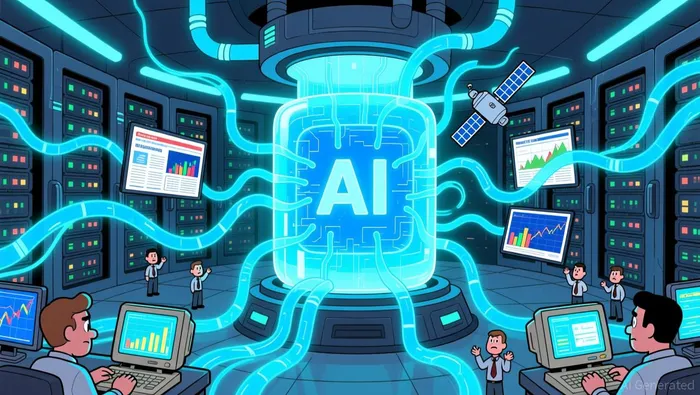
As a result, AI-powered platforms maintain a lasting advantage. Their superiority lies not only in speed but in their ability to continuously enhance their predictive models with high-quality data, creating a feedback loop that strengthens their performance. Traditional, intuition-based strategies are increasingly obsolete in a marketplace now dominated by algorithmic decision-making.
Performance Disparity: Consistency and Success Rates
The decline of manual trading is evident in the statistics. While 95% of manual cryptocurrency traders experience losses, automated trading systems have consistently delivered profits over extended periods. This dramatic difference highlights the power of removing emotional biases from trading decisions.
Automated strategies excel due to their unwavering discipline. They operate around the clock, strictly following their programmed rules without being influenced by fear or greed. In contrast, manual traders often make impulsive decisions—chasing losses or selling winners prematurely—which frequently leads to rapid account depletion. The data reveals a significant gap in performance metrics:
- Algorithmic strategies achieve an average win rate of 68%, compared to just 38% for manual traders.
- Automated systems generate average monthly returns of +4.1%, whereas manual approaches average -2.3%.
- The Sharpe ratio for AI-driven trading stands at 1.8, far surpassing the 0.3 seen with manual methods, indicating much better risk-adjusted returns.
Ultimately, the primary advantage of algorithmic trading is the elimination of human error, which has proven to be the decisive factor in today’s markets.
Next-Generation Infrastructure: The Always-On AI Trading Environment
The landscape of trading infrastructure is evolving from a focus on speed to a new emphasis on intelligent, integrated execution. Platforms such as OneBullEx are at the forefront, merging advanced AI trading engines with specialized tools tailored for futures markets. This seamless combination of intelligence, execution, and operational efficiency is becoming just as vital as basic market access.
A major catalyst is on the horizon: CME Group is set to introduce continuous, 24/7 trading for its entire suite of crypto derivatives in the second quarter of 2026. This initiative will unlock substantial liquidity that currently remains untapped during weekends, allowing for uninterrupted hedging and trading. By providing round-the-clock market access, CME is laying the groundwork for the robust infrastructure that AI systems need to operate at peak efficiency.
This development is expected to further increase institutional involvement and diminish the relevance of manual trading. With markets open at all hours, the brief periods where human traders once had an advantage will disappear. For AI, this means constant access to real-time data and trading opportunities, reinforcing its position as the driving force in a market now governed by algorithmic accuracy rather than human instinct.
Disclaimer: The content of this article solely reflects the author's opinion and does not represent the platform in any capacity. This article is not intended to serve as a reference for making investment decisions.
You may also like
Japan 10-Year Bond Yield Hits 25-Year High
Gray Media A Stuck in a Technical Limbo Amid Diverging Analyst Opinions
Complii’s $0.025 Convertible Notes Indicate a Bold Move Toward an AI-Led Recovery

HIMS.N Sinks Amid FTC Fears Despite Strong Cash Flow

Trending news
MoreCrypto prices
More





