
Tesla’s $25B Terafab Bet Sparks Concerns Over Capital Deployment and Implementation Risks

Tesla Shares Slide After Terafab Announcement Fails to Impress
Tesla's stock price dropped more than 3% on Friday, closing at $367.96—the lowest in over half a year. This decline came on the heels of CEO Elon Musk's in-depth reveal of the Terafab initiative, which did not ignite investor enthusiasm. Instead, the muted response highlights a disconnect between Musk’s bold vision and Wall Street’s concerns. Many believe the ambitious, high-cost project was already factored into the stock price, and the sell-off reflects worries about Tesla’s ability to execute and allocate capital efficiently.
Terafab: An Ambitious Undertaking
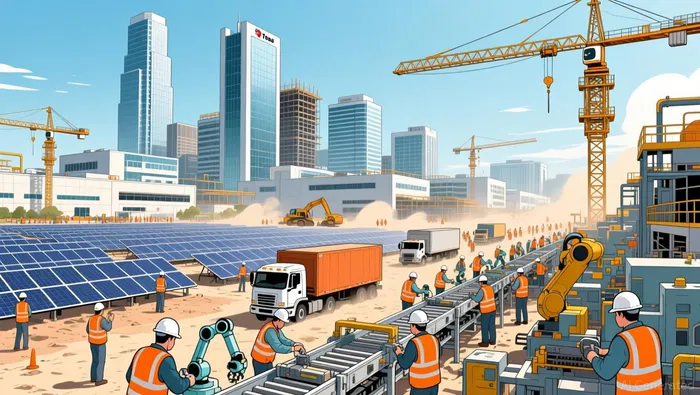
Unveiled as a partnership between Tesla, SpaceX, and Musk’s AI venture xAI, the Terafab project aims to construct two state-of-the-art chip manufacturing plants in Austin. The goal is to reach 1 terawatt of computing power per year—about 50 times the current global AI compute output. Musk described Terafab as the “missing link” in his companies’ AI ambitions, noting that current worldwide chip production falls far short of their needs. The facility is designed for complete vertical integration, handling everything from chip design to fabrication, packaging, and testing in-house.
Market Skepticism and Execution Concerns
Despite the scale of the plan, investors appear unconvinced. The drop in Tesla’s share price signals that many see Terafab as a distraction from more immediate operational challenges. Rather than being surprised by the announcement, the market seems to have anticipated it, viewing the project as a risky and expensive gamble with uncertain rewards. Analysts point out that the technology required is controlled by only three companies globally, underscoring the significant technical and financial obstacles ahead.
Why the News Triggered a Sell-Off
The Terafab announcement didn’t shock investors—it confirmed their fears about Tesla’s appetite for capital-intensive projects. The stock’s decline wasn’t due to the plan itself, but rather the expectation that it would be a costly, high-risk endeavor with no guaranteed payoff. The market had already priced in the possibility of such a move; the real concern is whether Tesla can deliver on its promises.
The Expectation Gap: Market Doubts Outweigh Musk’s Vision
There’s a clear divide between Musk’s sweeping ambitions and the market’s cautious outlook. While Terafab is pitched as a necessary long-term solution to a looming supply bottleneck, the numbers paint a daunting picture. Investors are struggling to reconcile the project’s massive costs and logistical complexity with Tesla’s current financial position.
Absolute Momentum Long-Only Strategy: TSLA Backtest
- Entry: Buy TSLA when the 252-day rate of change is positive and the closing price is above the 200-day simple moving average (SMA).
- Exit: Sell when the close drops below the 200-day SMA, after 20 trading days, or if an 8% gain or 4% loss is reached.
Backtest Results
- Total Return: -22.73%
- Annualized Return: -9.06%
- Maximum Drawdown: 41.87%
- Profit-Loss Ratio: 1.23
- Total Trades: 18
- Winning Trades: 6
- Losing Trades: 12
- Win Rate: 33.33%
- Average Hold Days: 9.33
- Max Consecutive Losses: 4
- Average Win Return: 7.62%
- Average Loss Return: 5.54%
- Largest Single Gain: 10.48%
- Largest Single Loss: 16.95%
Financial and Logistical Hurdles
The estimated $25 billion price tag for Terafab is staggering, especially on top of Tesla’s existing capital spending plans, which already exceed $20 billion for 2026. Committing an additional $25 billion to a single, untested project immediately raises questions about how Tesla will allocate its resources. The market was bracing for aggressive spending, but this level of investment signals a major shift in priorities that could divert funds from vehicle production or other initiatives.
The logistical challenges are just as formidable. Musk has acknowledged that the new facility would dwarf all other operations at Giga Texas, requiring thousands of acres and more than 10 gigawatts of power. The planned footprint could reach 100 million square feet—about three times the size of Central Park. This is not a simple expansion, but the creation of a new industrial complex, and investors are wary of Tesla’s ability to deliver on such a scale.
Retail Sentiment Turns Bearish
Retail investors are echoing Wall Street’s skepticism. The Terafab news led to a 44% surge in message volume on financial forums, with sentiment shifting sharply negative. The concerns go beyond cost—they center on whether the project is even feasible, given its reliance on technology controlled by only three companies worldwide. For many, Terafab was always seen as a high-risk, high-cost gamble, and the market’s reaction reflects that reality.
Strategic Intent: Vertical Integration or a Risky Diversion?
On paper, Terafab’s strategic rationale is compelling. Tesla aims to reduce its reliance on outside chipmakers like TSMC and Samsung, as even the most optimistic supply forecasts won’t meet its needs within the next few years. The plan to produce 1 terawatt of compute power annually would give Tesla unprecedented control over its supply chain, supporting self-driving technology, robotics, and space applications.
This strategy fits with Tesla’s broader push into “physical AI,” where hardware is the foundation for future growth. The recent $16.5 billion agreement with Samsung for chip production in Texas shows Tesla is hedging its bets. While this dual approach could be seen as prudent, it also raises questions about focus: why pursue a massive in-house project while simultaneously signing major external contracts? The market is left wondering whether this is a well-coordinated strategy or a sign of scattered priorities and diluted resources.
The sheer scale of Terafab is what makes investors uneasy. Building a facility capable of producing 1 terawatt of compute power annually means creating an entirely new industrial ecosystem. The project’s dependence on technology from just three companies adds to the risk. For now, the strategic logic is a long-term story, but the immediate reality is one of immense spending, operational complexity, and significant execution risk. Investors see the potential rewards as distant, while the costs are immediate and tangible.
Key Catalysts and Risks: What Investors Should Watch
Whether Terafab becomes a transformative investment or a costly misstep depends on several future developments. The most important catalyst will be any official funding commitment or detailed timeline from Tesla—so far, Musk has not provided these details. Investors need clarity on how much of the $20–25 billion will come from Tesla, SpaceX, or xAI, and when spending will begin. Without this information, Terafab remains an ambitious idea rather than a concrete plan.
The biggest near-term risk is that Terafab diverts capital and management focus from Tesla’s core automotive and energy storage businesses. With 2026 capital spending already projected above $20 billion, adding another $25 billion for an unproven venture would mark a major shift in priorities. If Terafab’s costs are formally included in Tesla’s guidance, it would signal that the company is prioritizing this long-term bet over short-term profitability, likely putting pressure on margins and cash flow.
Tracking the project’s progress against its own aggressive milestones will be crucial. Small-scale production is targeted for 2026, with full-scale output in 2027. Given Musk’s history of optimistic timelines and Tesla’s lack of chip manufacturing experience, meeting these deadlines will be a major test. Any delays would reinforce market doubts about the project’s feasibility.
Finally, investors should watch how Tesla manages its dual-track strategy. The company is pursuing both the $16.5 billion Samsung chip deal and the massive Terafab project. Whether this is smart diversification or a sign of overreach remains to be seen. For now, the absence of a clear timeline or funding plan leaves the stock in limbo, with investors waiting for the first concrete steps.
Disclaimer: The content of this article solely reflects the author's opinion and does not represent the platform in any capacity. This article is not intended to serve as a reference for making investment decisions.
You may also like
HTGC: Excessive Software Debt and Legal Investigations Lead to a Risk-Heavy Premium Scenario
Borr Drilling's Shallow-Water Joint Venture Strategy: Prudent Use of Capital or Potential Utilization Challenge?

SunOpta (STKL) Probe Threatens $6.50 Offer, Opens Door for Price Reassessment Before April Vote

Trending news
MoreCrypto prices
More





