
Pakistan’s High-Stakes Diplomatic Move: Will It Mediate US-Iran Reconciliation and Ease the Worldwide Energy Turmoil?

Pakistan's Expanding Diplomatic Ambitions Amid US-Iran Tensions
As friction between the United States and Iran intensifies, Pakistan is seeking to elevate its diplomatic influence in the region. Islamabad is positioning itself as a potential mediator and possible host for negotiations, leveraging its established connections with both Washington and Tehran. In recent days, Prime Minister Shehbaz Sharif has engaged in discussions with Iranian President Masoud Pezeshkian, while Pakistani officials have maintained dialogue with their American counterparts. Speculation that Islamabad could facilitate talks highlights its efforts to remain a relevant player during this rapidly evolving crisis.
This diplomatic outreach has drawn notice, especially after President Donald Trump announced a five-day postponement of planned strikes on Iranian energy assets, attributing the pause to "very good and productive" conversations aimed at reducing tensions. Although the White House has not specified which channels were used, the delay has fueled rumors that regional powers such as Pakistan, Turkey, and Egypt may be acting as intermediaries. Nevertheless, Pakistan’s precise involvement remains uncertain at this stage.
Despite these efforts, Islamabad faces significant limitations in expanding its diplomatic role. Pakistan is not universally regarded as impartial, given its deep security ties with the United States, complicated relationship with Iran, and close alliances with Gulf states like Saudi Arabia. While these connections grant access, they also restrict the extent of Pakistan’s mediation. For now, Islamabad’s diplomatic initiative appears more focused on creating opportunities for de-escalation and safeguarding its own interests than on securing a decisive breakthrough.
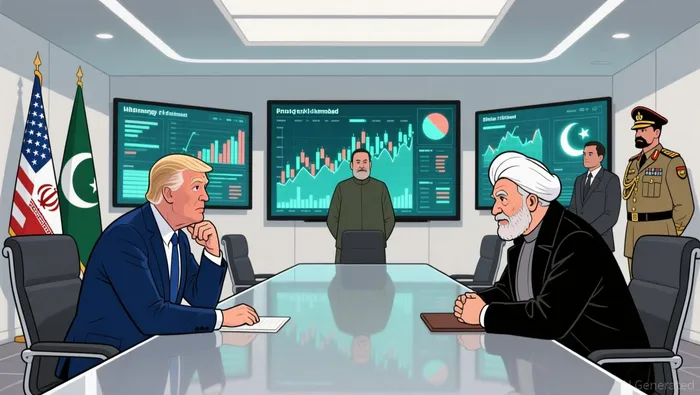
Economic Turmoil: Assessing the Impact of Global Supply Shocks
The ongoing conflict has resulted in an unprecedented disruption to the global oil supply, with the closure of the Strait of Hormuz driving energy prices sharply higher. This supply shock is now manifesting in tangible economic setbacks, prompting widespread downward revisions to growth forecasts. In the United States, inflation is expected to spike, with the Personal Consumption Expenditures (PCE) price index projected to rise by 3.7% annually in April, up from 2.5% in February. The surge in energy costs is straining household budgets, with analysts noting that increased gasoline prices have effectively erased the benefits of recent tax cuts.
The repercussions are extensive. The closure of the Strait of Hormuz has cut off 20% of the world’s oil supply, marking the largest supply shock in oil market history. Brent crude has soared to approximately $110 per barrel, compared to $67 just a month prior, and gasoline prices have jumped by nearly a dollar per gallon.
These developments have darkened the near-term outlook for the US economy, leading to tighter financial conditions, diminished wealth effects, and declining consumer confidence. Goldman Sachs has already reduced its 2026 growth projection, now anticipating inflation-adjusted growth of 2.2%, a decrease of 0.3 percentage points from earlier estimates.
The global picture is equally troubling. The World Trade Organization estimates that the conflict could trim global GDP growth in 2026 by 0.3 percentage points. Europe, heavily reliant on energy imports, is particularly exposed, with the WTO predicting its GDP could grow at least one percent less than previously forecast. The likelihood of a US recession has also increased, with Moody’s Analytics placing the probability at 49%. For regional energy exporters, the consequences are severe: a Goldman Sachs economist recently projected that if the conflict persists through April, Kuwait and Qatar could see their GDPs contract by 14% this year, with Saudi Arabia and the UAE also facing substantial downturns.
In summary, the conflict is creating a formidable obstacle to global economic growth. The energy shock represents a lasting supply constraint rather than a temporary setback, with Oxford Economics analysts not expecting oil prices to return to pre-war levels until 2028. This extended period of high energy costs will continue to fuel inflation, reduce household purchasing power, and dampen investment, reshaping the economic landscape for years to come.
Pakistan’s Challenges: Navigating Domestic and Regional Pressures
Pakistan’s diplomatic efforts are unfolding amid a complex domestic and regional environment. Islamabad is striving to maintain constructive relations with both the US and Iran during a period of heightened tension, while also facing domestic scrutiny over its handling of the crisis. Pakistan’s condemnation of US strikes on Iranian nuclear facilities in 2025 underscores the delicate nature of its position when relations with both Washington and Tehran are strained.
The challenges are not limited to diplomacy; security concerns are also mounting. Relations with Afghanistan have deteriorated following Pakistani airstrikes in Kabul. Casualty figures from the March 17 attack on a drug rehabilitation center remain contested, with the Afghan Taliban government claiming over 400 fatalities, while a UN agency reported 143 deaths. Pakistan has denied targeting the facility, asserting that its strikes were aimed at militant infrastructure. This incident has heightened cross-border tensions and compounded Islamabad’s already challenging security situation.
Economically, Pakistan is increasingly vulnerable to rising energy costs due to its reliance on imported fuel. Higher oil prices threaten to widen the trade deficit, put pressure on the rupee, and complicate efforts to control inflation. Even without direct involvement in the conflict, sustained high crude prices would exacerbate Pakistan’s existing economic difficulties.
Together, these overlapping pressures explain why Pakistan is eager to support efforts to reduce regional tensions. Rather than signaling a diplomatic breakthrough, Islamabad’s actions appear aimed at minimizing its exposure to instability while preserving flexibility in its international relationships.
Key Drivers and Future Scenarios
The coming days will be critical in determining the effectiveness of Pakistan’s diplomatic initiative. The most significant factor will be the outcome of the proposed high-level talks in Islamabad. Should a ceasefire be brokered in the capital, it would mark a major diplomatic achievement for Pakistan and help ease pressure on global energy markets. Conversely, failure to reach an agreement could escalate the conflict further, intensifying both military and economic fallout. For Pakistan, an unsuccessful mediation effort could quickly erode its diplomatic credibility and leave it more vulnerable to regional instability.
Investors should keep an eye on several important indicators to assess the economic trajectory of the conflict and the likelihood of policy changes. First, oil prices are the most immediate gauge—continued prices above $110 per barrel or a lack of significant decline would indicate that the energy shock is persistent, not temporary. This would reinforce the most pessimistic economic forecasts, including the 3.7% annual inflation rate in the US and the 0.3 percentage point reduction in global GDP growth projected by the WTO.
Second, revisions to global growth forecasts will provide insight into the conflict’s broader economic impact. Recent downward adjustments by major institutions such as Goldman Sachs and the WTO suggest a worsening outlook. Further reductions, particularly for energy-importing regions like Europe, would confirm the deepening drag of the war on economic activity. The risk of a US recession has already climbed, with Moody’s Analytics estimating a 49% probability.
Finally, any changes in US policy regarding Iranian oil sanctions will be crucial. Treasury Secretary Scott Bessent has indicated that Washington might consider easing some sanctions on Iranian oil. Such a move would be a significant step toward de-escalation, likely bringing immediate relief to oil markets and alleviating inflationary pressures. It could also shift the strategic landscape, potentially reducing the need for Pakistan’s mediation. The future will depend on these interconnected factors: the outcome of talks in Islamabad, the behavior of oil prices, and the direction of US policy. Current trends suggest a prolonged period of high energy costs and economic uncertainty, with the resolution of the conflict remaining the most decisive variable.
Disclaimer: The content of this article solely reflects the author's opinion and does not represent the platform in any capacity. This article is not intended to serve as a reference for making investment decisions.
You may also like
When is the UK Services PMI and how could it affect GBP/USD?
GBP/JPY flat lines below 213.00; looks to UK PMIs for fresh impetus
Australia’s Hostplus weighs crypto access for members
abrdn Global’s $0.23 Payout: Decline Ahead or Recovery Expected?

Trending news
MoreCrypto prices
More





