
Qatar LNG facility incident sets a baseline for European gas prices as storage levels remain fragile

European Gas Prices: Navigating Supply Shocks and Market Uncertainty
Since the onset of conflict in the Middle East, European natural gas prices have surged, with the TTF front-month benchmark climbing nearly 80%. Despite this sharp increase, prices remain far below the record highs of €320/MWh reached in 2022. This creates a striking contradiction: even with a significant supply shock, prices have not plummeted as might be expected, especially considering the current state of European gas reserves.
Europe’s gas storage is facing a notable shortfall. As the withdrawal season continues through April, EU storage facilities are only 30% full—the lowest since 2022. Under typical circumstances, such limited reserves would drive prices lower as buyers compete for scarce supply. The fact that prices remain elevated points to a powerful counteracting factor in the market.
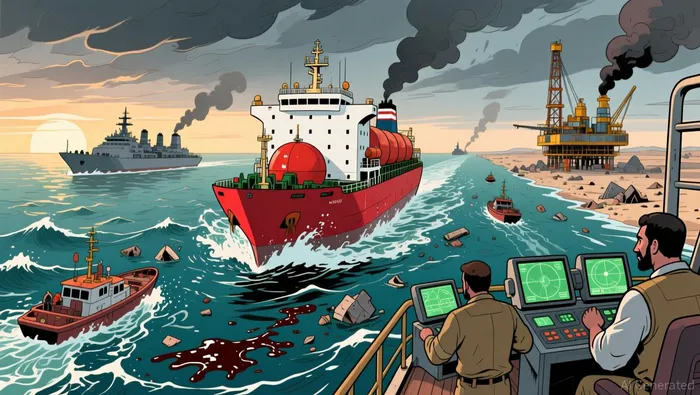
The main force preventing a price collapse is ongoing supply pressure. The conflict has severely disrupted a vital route for global LNG shipments. Iran’s closure of the Strait of Hormuz, combined with a missile attack on Qatar’s major gas facility, has removed a substantial amount of export capacity. The damage to Qatar’s Ras Laffan plant alone is expected to take years to repair, potentially removing about 12.8 million tons of LNG from the market each year. This deepens the risk of further supply shortages, which in turn limits how far prices can fall. Essentially, the market is bracing for additional disruptions, which keeps prices from dropping even as storage levels are low.
Supply Disruptions Set a Price Floor
The supply bottleneck is now unmistakable. Earlier this month, Iran launched ballistic missiles at Qatar’s Ras Laffan facility—the world’s largest LNG export plant. The attack severely damaged two of the plant’s 14 production trains and a gas-to-liquids unit, with repairs projected to take several years. This single event could remove around 12.8 million tons of LNG from the market annually for three to five years.
These disruptions are not isolated. The broader conflict has restricted traffic through the Strait of Hormuz, a passageway for roughly 20% of global LNG. As a result, worldwide LNG exports have dropped to their lowest level in six months, mainly due to reduced shipments from Qatar and the UAE. These losses have offset recent supply increases from other regions, such as the United States, creating a tangible shortfall.
This situation is especially critical for Europe, which relies on LNG as its marginal source of gas. With pipeline deliveries constrained since Russian supplies were cut, Europe depends on LNG to bridge the gap. The damage to Qatar’s facility restricts the ability of other exporters to compensate, keeping prices from falling further. Even as EU storage remains at a precarious 30% full—the lowest since 2022—these supply constraints act as a floor for prices. The ongoing risk of further disruptions keeps buyers cautious and supports the current price levels.
Balancing Weaker Demand and Persistent Supply Risks
The market is currently caught between two opposing dynamics. On one hand, European gas demand has undergone a lasting transformation. Since 2022, EU gas consumption is down 16% compared to pre-war levels, a shift driven by improved efficiency, industrial changes, and a broader transition to alternative energy sources. This structural decline in demand helps stabilize prices, as the region now requires less gas, reducing the likelihood of extreme price spikes even when supply is tight.
On the other hand, the threat of additional supply disruptions adds considerable uncertainty. The recent attack on Qatar’s Ras Laffan plant has already prompted warnings of potential contract cancellations. Qatar has indicated it may need to cancel agreements with Italy and Belgium due to force majeure, which could further reduce available supply. This looming risk of worsening shortages prevents prices from easing, even as demand remains subdued.
This push and pull defines the current trading environment. Softer demand means prices are unlikely to revisit the peaks of 2022, but ongoing supply risks—stemming from both the damaged Qatari plant and the restricted Strait of Hormuz—set a ceiling. The market is factoring in the possibility of more contract losses and extended outages, which discourages aggressive price declines despite low storage. The result is a market held up by reduced demand but capped by persistent supply threats.
Policy Actions and Market Stability
European policymakers are now responding to the price surge with new strategies. With the TTF front-month index up nearly 80% since the conflict started, leaders are considering policy measures beyond market mechanisms. The European Commission is actively weighing options such as subsidizing or capping gas prices to alleviate energy costs—a move championed by President Ursula von der Leyen to provide immediate relief. This follows the 2023 “market correction mechanism,” a price cap that was never triggered and has since expired.
While such interventions could help stabilize prices in the short term, they also risk distorting the market signals that are currently managing scarce LNG supplies. Price spikes serve to ration limited cargoes, especially as Europe competes with Asia for LNG. Imposing a cap could reduce the incentive for European buyers to secure spot market cargoes, weakening the region’s ability to rebuild its critically low storage, which remains at just 30% full.
Ultimately, political interventions are blunt tools in a complex market. While they may offer short-term relief, they could undermine the energy security that current market dynamics are striving to maintain. The focus now is on how long the disruptions in the Middle East will last. Unlike 2022, these supply shocks are viewed as temporary, but the extent of their impact depends entirely on the duration of the damage to Qatar’s Ras Laffan plant and the closure of the Strait of Hormuz. For now, the market is pricing in this uncertainty, and any policy measures will need to carefully balance immediate relief with the realities of physical supply constraints.
Disclaimer: The content of this article solely reflects the author's opinion and does not represent the platform in any capacity. This article is not intended to serve as a reference for making investment decisions.
You may also like
Tesla Surges 3.5%: Market Responds to February's 10% Increase in European Sales

BTQ Technologies: An In-Depth Look at a Quantum-Focused Stock

Global XRP Accumulation Is Happening. Here’s the Latest
Trending news
MoreCrypto prices
More





