
Eurozone Slips Into Stagflation as ECB's Influence Over Oil Prices Fades

Eurozone Economic Growth Stalls Amid Mounting Uncertainty
The eurozone's economic expansion has slowed noticeably. In the last quarter of 2025, the region's GDP increased by 0.2%, falling short of the anticipated 0.3% and decelerating from the previous quarter's 0.3% growth. This loss of momentum is evident across several sectors. Investment in fixed assets, a key driver for future productivity, dropped to 0.6% from 1.3%. Government expenditure also moderated, rising by just 0.5% compared to 0.7% earlier. Household consumption managed a 0.4% uptick, but this was insufficient to counteract the negative impact from inventory reductions and weaker trade, both of which shaved 0.1 percentage points off overall growth.
The chief factor behind this slowdown is the ongoing conflict in the Middle East, which has injected fresh uncertainty into the economic outlook. The war has led to surging energy costs and disrupted vital shipping lanes, raising import expenses and undermining business sentiment. The European Central Bank (ECB) has acknowledged these risks, noting that its baseline forecasts are now heavily influenced by volatile energy prices through mid-2026. This leaves the eurozone's modest growth vulnerable to further external shocks.
Inflation Pressures Intensify: The Cost Shock
The Middle East conflict is not only a geopolitical crisis but also a major driver of inflation. The turmoil has sent global energy prices higher, with ECB projections suggesting oil could average nearly USD 90 per barrel by the second quarter of 2026. These increases are already being felt by consumers, as the euro area's annual inflation rate rose to 1.9% in February 2026, up from 1.7% in January, reflecting the pass-through of higher energy costs.
Manufacturing is bearing the brunt of these pressures. Input costs for factories soared to a 38-month high in February, fueled by expensive energy and supply chain issues. While factory output is recovering—evidenced by the strongest increase in new orders since April 2022 and 11 months of consecutive growth—companies are being forced to hike prices at the fastest rate since March 2023 to protect their margins. This creates a challenging environment: manufacturing is supporting growth, but rising costs are squeezing profitability.
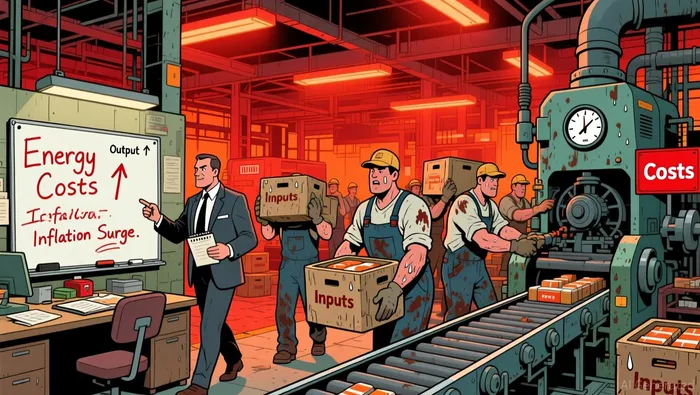
The wider impact is twofold. Elevated energy prices are eroding consumers' purchasing power, which the ECB warns will weigh on GDP, particularly in the near term. At the same time, persistent cost increases are making it harder for businesses to plan ahead. Although manufacturing employment remains relatively stable—suggesting firms are absorbing costs rather than cutting jobs—this resilience is fragile. The sector's ability to maintain growth without significant layoffs depends on whether companies can continue to pass on higher costs, a process that could be hampered if consumer demand weakens further.
Policy Crossroads: Stagflation Risks and Central Bank Strategy
The Middle East war has placed eurozone policymakers in a difficult position, facing the classic challenge of stagflation. The ECB's latest forecasts highlight the scale of the problem: inflation for 2026 is now expected to reach 2.6%, up 0.7 percentage points from previous estimates. However, the ECB has cautioned that if energy disruptions persist, inflation could climb as high as 3.5% or even 4.4% in 2026. Meanwhile, growth projections have been cut to just 0.9%, barely above stagnation.
This dilemma is stark. On one side, surging energy prices threaten the ECB's inflation target, with President Christine Lagarde warning of "upside risks for inflation" and the potential for broader, harder-to-control effects. On the other, these same energy shocks are expected to undermine economic activity by reducing real incomes and denting business confidence. The ECB itself has acknowledged this tension, noting that the conflict brings both inflationary and growth risks.
Such conditions are a textbook case of stagflation—something central banks are eager to avoid. Recently, major central banks in the G7 have adopted a cautious approach, keeping interest rates unchanged while signaling readiness to respond if needed. The ECB, in particular, has shifted to a stance of "watchful patience" with a more hawkish tone. Analysts now believe the ECB is more likely to raise rates this year, abandoning earlier expectations of rate cuts.
Financial markets have responded accordingly: the euro has strengthened, European stocks have slipped, and oil prices have surged. The ECB now faces the challenge of curbing inflation without causing a deeper slowdown. As President Lagarde has emphasized, the outlook is "significantly more uncertain," and the bank's next steps will depend on whether persistent inflation or a sharp downturn emerges as the greater threat. For now, the ECB is holding steady, but time is running short.
Key Factors and Future Scenarios
The eurozone's outlook will be shaped by three main factors, each capable of altering the region's economic path. The first is the length and severity of supply disruptions from the Middle East. Current ECB projections assume energy prices will peak in the second quarter and then decline, envisioning only a temporary setback. However, the situation remains highly uncertain, and prolonged disruptions—especially in critical areas like the Strait of Hormuz—could keep energy prices elevated and push inflation higher.
The second crucial element is the ECB's policy response. While the central bank has kept rates at 2% and signaled vigilance, markets are now anticipating two rate hikes by year-end, reflecting concerns about persistent inflation. The ECB is wary of repeating its 2022 mistake of reacting too slowly to an energy shock and is prepared to tighten policy if necessary. Its own projections show inflation could reach 3.5% or even 4.4% in 2026 in adverse scenarios, which would likely force its hand.
The third and most subtle risk is the potential for second-round effects, where initial energy price increases spill over into wages, services, and core inflation. President Lagarde has warned that sustained high energy costs could trigger broader inflationary pressures, making it harder for the ECB to keep prices in check. While manufacturing has so far managed to avoid major job losses by absorbing higher costs, this could eventually lead to increased wage demands, further fueling inflation.
In summary, the eurozone is treading a fine line. While the baseline scenario anticipates only temporary difficulties, the risks are clearly tilted to the downside. Policymakers must closely monitor the conflict, inflation trends, and any signs of wage-price spirals. Any shift in these factors could quickly transform a mild slowdown into a more severe period of stagflation. For now, the ECB is projecting confidence and flexibility, but its window for action is narrowing.
Disclaimer: The content of this article solely reflects the author's opinion and does not represent the platform in any capacity. This article is not intended to serve as a reference for making investment decisions.
You may also like
Power struggle hits Bitcoin network over anti-spam proposal with claims of ‘faked’ node support
USD/CAD: Range resistance caps gains – Scotiabank
Gold market continues to struggle even as U.S. economic activity drops to 11-month low
MiCA-compliant stablecoins are becoming increasingly vital for the growth of tokenized finance in Europe
Trending news
MoreCrypto prices
More





