
Copper Quest’s AI Uncovers Concealed Porphyry Center—Is Kitimat Poised to Transform Exploration Strategies?

AI Uncovers Major Subsurface Target at Kitimat
Advanced artificial intelligence analysis at Copper Quest's Kitimat property has revealed a significant underground anomaly, potentially solving a persistent geological mystery. The AI model pinpointed a conductive structure roughly 1.5 kilometers in both length and width, starting just 50 meters beneath the surface. Its dimensions and position within a productive volcanic arc suggest it could be a hidden porphyry copper-gold deposit. This anomaly may be the elusive source behind the strong copper-gold mineralization previously intersected at the nearby Jeannette Zone, which had not been fully explained until now.
In response, Copper Quest swiftly expanded its land holdings at Kitimat by 130%, now totaling 6,801 hectares. This enlarged claim encompasses the AI-identified target and adjacent areas, strengthening the company’s exploration footprint. Past drilling at Jeannette produced notable results, such as hole J7 with 117.07 meters grading 0.54% copper and 1.03 g/t gold. These findings, confirmed by a 2020 verification program, indicate a robust mineralized zone typical of porphyry systems, where the main mineralizing intrusion is often buried deeper.
However, in terms of global commodity supply, this discovery is still at an early stage. The anomaly represents a single promising lead within a vast property, and its potential effect on worldwide copper markets is currently negligible. The project is likely many years from production, and the actual copper content remains undetermined. While it could transform Copper Quest’s future, it does not impact the current global copper supply-demand balance or price trends.
Copper Market Outlook: Surplus or Deficit?
There is considerable debate in the market regarding copper’s supply and demand fundamentals. On one hand, Goldman Sachs Research anticipates a global surplus of 300,000 tonnes in 2026, up from a previous estimate of 160,000 tonnes. This projection is largely based on expectations of a US tariff on refined copper, which has led to aggressive stockpiling in the US and a temporary shortage elsewhere, supporting prices for now. Goldman attributes the recent 22% price rally to this dynamic, but expects the effect to diminish once a tariff decision is finalized, likely by mid-2026.
Conversely, J.P. Morgan Global Research forecasts a global refined copper shortfall of about 330,000 tonnes in 2026. Their analysis highlights ongoing supply disruptions, such as the fatal mudslide at Indonesia’s Grasberg mine, which has forced a prolonged shutdown, and reduced output at Chile’s Quebrada Blanca. These factors, along with lower global mine supply growth, are seen as the main drivers behind the recent price surge, rather than tariff speculation alone.
This divergence in outlooks has created a highly volatile market environment. Copper prices are particularly sensitive to US policy decisions, with significant swings expected until the tariff situation is resolved. While the deficit scenario points to demand outpacing supply, the surplus view suggests current tightness is temporary and policy-driven. For Copper Quest’s Kitimat project, this context is critical. If the deficit scenario materializes, a new large-scale discovery could eventually help ease supply constraints. If the surplus outlook prevails, the project’s impact would be minimal, as the market would already be anticipating ample supply. The significance of Kitimat’s discovery depends on which narrative ultimately proves accurate.
Structural Challenges in Copper Supply
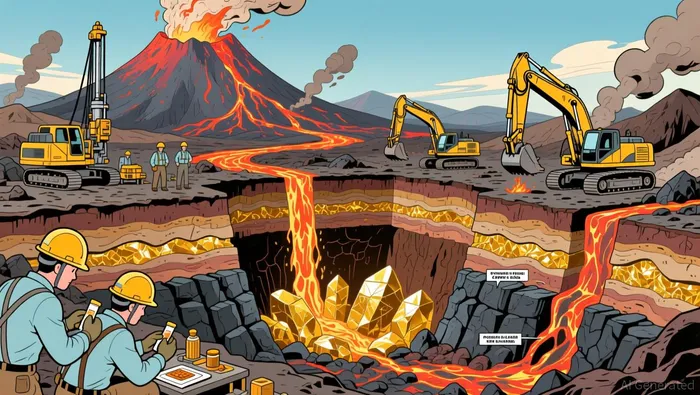
The Kitimat find underscores a fundamental issue in the copper industry: the urgent need for new sources of supply versus the substantial challenges in bringing them online. While a major porphyry discovery could, in theory, help address future shortages, its true value depends on both the quality of the deposit and the cost of extraction. More importantly, the timeline for developing new mines—often five to ten years—does not align with the immediate concerns over supply and demand for 2026.
This disconnect is a major constraint. Industry-wide issues such as declining ore grades at existing operations and increasingly lengthy permitting processes cannot be resolved by a single exploration success, regardless of its size. Recent price increases, driven by events like the Grasberg mudslide and reduced output from Quebrada Blanca, reflect a physical shortage that new projects like Kitimat cannot address in the short term. Instead, discoveries of this nature are potential solutions for long-term supply challenges, not quick fixes for current imbalances.
Ultimately, the importance of Kitimat will depend on its economic viability. The AI-identified anomaly is an intriguing lead, but its grade and copper content are still unknown. Historical drilling at Jeannette has shown strong results, including 117.07 meters at 0.54% copper and 1.03 g/t gold. If the new target proves to be a high-grade porphyry center, it could help alleviate long-term supply pressures. If not, it may simply join the ranks of undeveloped prospects.
In summary, Kitimat is a classic exploration opportunity, not a solution to immediate supply issues. It adds to the pool of potential future copper sources, but does not influence the 2026 market balance. The current volatility, driven by tariff speculation and supply disruptions, will play out regardless of this discovery. For now, the project’s value remains speculative and its path to production is a lengthy one.
Financial Position and Project Execution
Copper Quest has secured the necessary funding to advance its exploration efforts, but the journey from discovery to production is long and fraught with uncertainty. In the past two months, the company has raised about 4 million CAD, including a recent strategic private placement. This capital will support an Induced Polarization survey and drilling program at Kitimat in 2026. The company’s expanded land package, now 6,801 hectares, provides a strong foundation for ongoing exploration.
Despite this progress, the project is still in its early stages. The AI anomaly offers a promising target, but its actual mineral content and grade have yet to be determined. The planned 2026 exploration will be a crucial step in testing the hypothesis, but it marks only the beginning of a multi-year process. Success will require navigating a complex permitting environment in British Columbia and competing with the global trend of declining ore grades. These are industry-wide challenges, not unique to Copper Quest.
The company’s healthy financial position is an advantage, allowing it to pursue exploration without immediate pressure to dilute shareholders. However, the focus will shift to the results of the 2026 drilling. While Copper Quest is well-positioned to advance the project, the capital required to develop a mine—should the anomaly prove to be a high-grade deposit—will be far greater than current funding. The present financing is intended for exploration, not for mine development.
From a market perspective, Copper Quest faces heightened execution risk due to ongoing volatility. The company is working on a project that could eventually bolster long-term supply, but the debate over a 2026 deficit or surplus is unfolding on a much shorter timeline. If a deficit persists, a new discovery could help ease supply constraints. If a surplus emerges, the project’s significance would be diminished. For now, Copper Quest remains an exploration-focused story, with a long road ahead before any production is realized.
Key Catalysts and Risks Ahead
The transition from a promising AI-identified anomaly to a meaningful contributor to copper supply is both lengthy and uncertain. The immediate focus is on the outcome of Copper Quest’s planned exploration activities. The company is set to conduct an Induced Polarization survey and drilling at Kitimat in 2026, which will test whether the buried conductive body is indeed a high-grade porphyry center. Positive results would be a crucial first step, potentially validating the project’s scale and grade. Conversely, disappointing findings could relegate the anomaly to a geological footnote.
The primary risk lies in shifts within the global copper market. While recent price increases have been driven by acute shortages, the outlook remains uncertain. Goldman Sachs projects a global surplus of 300,000 tonnes in 2026, largely due to anticipated US tariffs. Should the market move decisively toward surplus, copper prices could decline, making new, higher-cost projects like Kitimat less attractive. Thus, the project’s potential is closely tied to broader macroeconomic trends.
- Exploration Results: The 2026 IP survey and drilling will provide the first concrete test of the AI-identified target.
- US Tariff Decisions: The outcome of US refined copper tariff discussions, expected by mid-2026, will heavily influence copper prices and investor sentiment.
For Copper Quest, the timing of these events is crucial. While the company is advancing a project with long-term potential, the immediate market debate over supply and demand for 2026 operates on a different schedule. The project’s future will depend on both its exploration success and the resolution of broader market uncertainties.
Disclaimer: The content of this article solely reflects the author's opinion and does not represent the platform in any capacity. This article is not intended to serve as a reference for making investment decisions.
You may also like
MDA SPACE PROVIDES MARKET UPDATE

Satellite Stock Could Soon Enjoy an Almost 20% Pop
BMO believes that gold’s upward trend has not ended, but is merely on hold due to the Iran conflict
Purple Innovation to Report Fourth Quarter and Full Year 2025 Results on March 25, 2026

Crypto prices
More





