
Zimbabwe Keeps 35% Rate Unchanged: Central Bank Prioritizes Trust Over Expansion to Safeguard ZiG Currency

Central Bank Holds Rates Steady: Market Expectations Disrupted
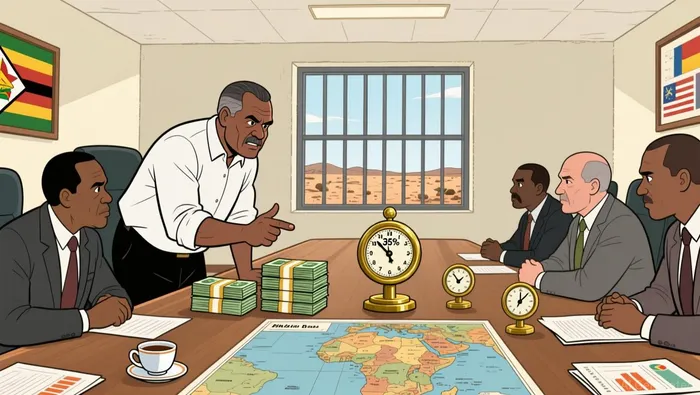
The central bank’s choice to keep interest rates at 35% defied market expectations, which had anticipated a shift toward lower rates following a sharp decline in inflation to 3.8% year-on-year in February. With the economy showing robust recovery and real GDP growth projected between 6.0% and 6.6% for 2025, many investors expected a move to support further expansion. Instead, the decision to maintain the world’s highest policy rate—over five times the regional average—caught the market off guard, even though it aligned with the central bank’s internal strategy.
According to Governor John Mushayavanhu, the central bank’s main objective is to ensure inflation remains under control before considering growth-focused measures. This approach is intended to reinforce confidence in the gold-backed ZiG currency, a new initiative designed to restore stability after years of hyperinflation and reliance on foreign currencies. By keeping rates elevated despite easing inflation, the central bank is emphasizing that economic stability is paramount, and that premature stimulus could jeopardize the credibility of the new monetary system.
Absolute Momentum Long-Only Strategy: ZWJ Backtest Overview
- Entry Criteria: Enter when the 252-day rate of change is positive and the closing price is above the 200-day simple moving average (SMA).
- Exit Criteria: Exit if the closing price falls below the 200-day SMA, after 20 trading days, upon reaching an 8% profit, or if losses reach 4%.
- Backtest Period: March 24, 2024 – March 24, 2026
Performance Highlights
- Strategy Return: -1.02%
- Annualized Return: -0.09%
- Maximum Drawdown: 12.9%
- Profit-Loss Ratio: 1.88
Trade Statistics
- Total Trades: 9
- Winning Trades: 3
- Losing Trades: 6
- Win Rate: 33.33%
- Average Holding Period: 17.89 days
- Maximum Consecutive Losses: 4
- Average Gain per Win: 5.06%
- Average Loss per Trade: 2.57%
- Largest Single Gain: 9.49%
- Largest Single Loss: 4.85%
There is a clear disconnect between market hopes for a rate cut to boost growth in 2025 and the central bank’s signal that high rates are here to stay until inflation is firmly under control. This cautious stance is intended to safeguard the country’s monetary framework, even if it means putting growth ambitions on pause for now.
The Iran Conflict: Assessing External Risks
Renewed tensions in the Middle East have introduced significant external risks, most notably through rising global oil prices. Forecasts now suggest Brent crude could average $113 per barrel in the second quarter. For Zimbabwe, which imports oil, this surge directly increases costs and fuels inflation. The Reserve Bank has already cautioned about the risk of cost-driven inflation, with fuel prices climbing 16.4% in recent weeks—an immediate challenge for the country’s inflation outlook.
Whether the market views this as a short-term shock or a lasting shift will determine the response. The central bank’s commitment to stability means it is proactively guarding against inflationary spillovers from global price hikes by maintaining high rates. This move signals that the bank will not be pressured into reactive policy changes by external events.
Current projections suggest the conflict may cause about two months of disruption before conditions stabilize. The central bank’s guidance, which frames high rates as the new standard, is designed to provide a cushion against these risks. If the shock is contained and inflation remains subdued, the policy rate can absorb the impact without further adjustment. However, if the conflict persists or triggers broader wage and price increases domestically, the bank’s resolve will be tested. For now, the market is watching the central bank’s determination rather than the external crisis itself, with stability already factored into expectations.
Domestic Confidence: Balancing Credibility and Political Uncertainty
Investor confidence in the ZiG currency hinges on the central bank’s promise of policy consistency. The bank’s acknowledgment that stability is due to “ZERO borrowing from Government” sends a strong message, attributing past hyperinflation to domestic missteps rather than external forces. This stance is seen as a safeguard for the future, with the market expecting the central bank to maintain strict boundaries and shield the monetary system from political interference.
However, the durability of this credibility is uncertain. Recent U.S. sanctions in March, targeting President Emmerson Mnangagwa, his wife, and other officials, have intensified Zimbabwe’s economic isolation, complicating efforts to move away from the U.S. dollar and attract foreign investment. While these sanctions are officially aimed at addressing human rights and corruption, they add pressure to the economy. The market’s confidence depends on the central bank’s ability to resist both external and internal political pressures that could undermine its policies.

The real challenge lies in maintaining the commitment to “zero borrowing” amid potential fiscal or growth-driven political demands. For now, the market is betting on stability and focusing on the central bank’s credibility, but this trust could be tested if the political landscape shifts.
What Could Prompt a Change in Policy Guidance?
The central bank’s recent guidance has set a high threshold for any policy change. The main factor that could trigger a shift is new inflation data. The bank has indicated that its cautious approach to adjusting rates aligns with global best practices, suggesting it will wait for clear, sustained evidence of lower inflation before considering a rate cut. Although inflation has recently dipped into single digits, the key test will be whether this trend is durable without requiring a reversal in policy.
Investors should watch for any updates from the Reserve Bank of Zimbabwe regarding the timing of its next policy review. The central bank has described the high rate as a buffer against risks, including sudden changes in exchange rates. A clear signal that future reviews depend on inflation and other indicators would help clarify the path ahead. While the bank is currently taking a wait-and-see approach, it cannot afford to appear indecisive, as market patience depends on visible progress in reducing inflation.
Several risks could force a temporary policy reversal. A sharper-than-expected increase in global oil prices—beyond the Brent forecast of $113 per barrel—would directly challenge the central bank’s strategy. The effects are already being felt, with fuel prices up 16.4% recently. If the Iran conflict lasts longer than anticipated or sparks widespread wage and price increases at home, the central bank’s credibility could come under strain. In such a scenario, maintaining high rates might become necessary to counter imported inflation rather than simply anchoring expectations.
In summary, while the central bank has established a stable policy environment, the market is now waiting for tangible proof. The roadmap is straightforward: monitor inflation for sustained improvement, look for any changes in the bank’s review schedule, and stay alert for external shocks that could reignite inflation concerns. Until one of these triggers prompts a formal policy shift, the 35% rate is likely to remain in place, prioritizing currency stability over immediate growth.
Disclaimer: The content of this article solely reflects the author's opinion and does not represent the platform in any capacity. This article is not intended to serve as a reference for making investment decisions.
You may also like
CRCL Price Decline: Examining the Stalemate in the CLARITY Act
TEL Surges 2.8% in Pre-Market: What's Fueling the Breakout?

Karyopharm Drops 20.9% – Is This Decline an Opportunity or a Red Flag?

Oil supply disruption triggers stock market sell-off as Strait of Hormuz shutdown causes unprecedented imbalance
Trending news
MoreCrypto prices
More





