
Robinhood’s $1.5B Buyback Signals Conviction in a Discounted, High-Volatility Rebound Play

The market has delivered a severe dislocation for RobinhoodHOOD-4.70%, creating a setup where a large buyback signals deep conviction. The stock has fallen 51.75% over the past 120 days and is down 38.92% year-to-date, trading near its 52-week low of $29.66. This collapse has occurred even as the company posted a 25% revenue increase over the trailing year, highlighting a stark compression in valuation multiples. The core business is facing clear headwinds, with Q4 2025 revenue growth slowing to 27% year-over-year and a critical segment in decline: cryptocurrency trading revenue fell 38% from the prior year.
The result is a classic multiple contraction. Despite the underlying top-line expansion, investors have sharply reassessed the quality and sustainability of that growth. As noted in a recent analysis, the P/E multiple shrank nearly 40% between September 2025 and March 2026, even as revenue climbed. This disconnect between earnings power and stock price is the institutional signal. It suggests the market is pricing in a prolonged period of lower growth and margin pressure, particularly from the volatile crypto segment, while the company's strategic pivot to higher-margin, recurring revenue streams like its Gold subscription service is still in the early innings.
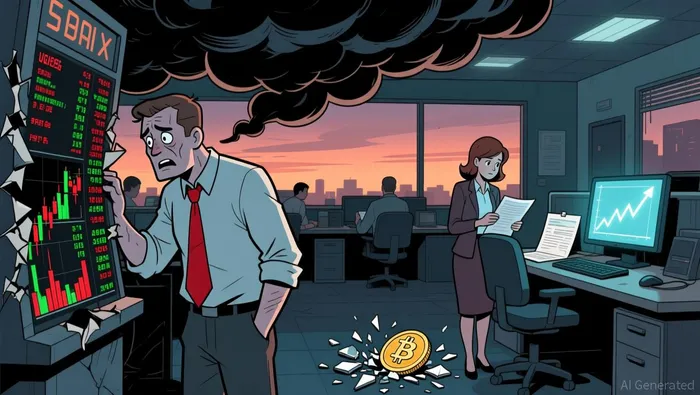
For a portfolio allocator, this volatility creates a tension between risk and opportunity. The stock's steep decline has erased a significant portion of its premium, but the fundamental challenges-slowing growth, crypto dependency, and margin compression-are real and recent. The $1.5 billion buyback is a high-conviction act, implying management believes the current price offers a compelling risk-adjusted return that the market is overlooking. It's a bet that the company's long-term financial super app strategy will eventually justify a premium, even if the near-term path is rocky.
Capital Allocation: A Strategic Commitment vs. Liquidity Preservation
The $1.5 billion buyback announcement is a clear strategic commitment, but it is executed with a disciplined eye on balance sheet flexibility. Management has simultaneously bolstered its liquidity position, creating a buffer that allows for aggressive capital return without sacrificing operational runway.
The new authorization replaces prior buyback programs and adds more than $1.1 billion of incremental capacity. The company expects to execute these repurchases over about three years, providing a measured cadence that avoids a sudden, disruptive cash outflow. This multi-year timeline is a key feature for institutional investors, as it spreads the impact on the share count and embeds the buyback into the company's long-term capital allocation plan.
To fund this commitment, Robinhood has secured a substantial and flexible credit facility. The subsidiary entered a 364-day senior secured revolving credit facility with a total commitment of $3.25 billion, which may be increased by up to $1.625 billion. This provides a significant liquidity cushion, with the facility's pricing tied to overnight benchmarks plus margins and a 0.45% fee on undrawn amounts. This cost is a tangible price for the optionality the facility provides.
The trade-off here is clear. The company is committing to a large, discretionary equity buyback while paying a fee to maintain a massive, undrawn credit line. For a portfolio allocator, this setup signals confidence in the company's ability to navigate its current challenges. The liquidity buffer mitigates the risk of being forced to sell assets or delay strategic investments if market conditions deteriorate further. It allows management to pursue the buyback at its discretion, potentially stepping in to buy shares at more attractive prices during periods of volatility.
Viewed structurally, this is a balanced approach. The buyback is a high-conviction signal that management believes the stock is undervalued. The credit facility is the institutional hedge that ensures the company can afford to be patient and strategic in executing that signal. The 0.45% fee is a small cost for the strategic value of having that liquidity on tap, especially given the stock's recent dislocation.
Portfolio Construction Implications: Sector Weight and Risk-Adjusted Return
The $1.5 billion buyback is a direct signal to the market on capital structure. By authorizing the repurchase of up to $1.5 billion of its own Class A common stock, Robinhood is committing to a meaningful reduction in shares outstanding. While the exact percentage is not specified, the scale of the program-adding more than $1.1 billion of incremental capacity-indicates a substantial, multi-year commitment to returning capital to shareholders. This action directly enhances earnings per share and concentrates ownership, a move that can be particularly attractive when the stock trades at a steep discount.
For portfolio construction, this setup presents a high-conviction, high-risk bet. The stock represents a strategic wager on management's capital allocation discipline versus persistent sector headwinds. On one side, the buyback is a powerful signal of internal confidence, suggesting executives see a compelling risk-adjusted return at current prices. On the other, the underlying business remains vulnerable to the same speculative trading patterns that drove its recent collapse. As noted, investors who use the Robinhood platform have a history of engaging in speculative, high-risk trading, creating an unstable revenue base that has led to a 51.75% drop over the past 120 days. A portfolio allocator must weigh the conviction of the buyback against the fundamental quality of the earnings stream it aims to boost.
The valuation compression itself suggests a potential risk premium. The stock's severe dislocation-falling 37% between September 2025 and March 2026 despite a 25% revenue increase-has created a gap between price and perceived intrinsic value. This gap is the source of the potential premium. However, this is not a low-risk opportunity. The risk lies in the company's ability to successfully pivot to higher-margin, recurring revenue from initiatives like its Gold subscription service, which is still in the early innings of its growth trajectory. The buyback, funded by a massive credit facility, provides the tactical flexibility to act during volatility, but the long-term payoff hinges on this strategic execution.
In a diversified portfolio, Robinhood's role is that of a concentrated, high-conviction position. It is not a core holding for stability but a tactical allocation for investors willing to accept the volatility of a sector facing structural challenges. The setup demands a view that management's capital allocation is superior to the market's, and that the company's financial super app strategy will eventually close the valuation gap. For the institutional investor, the decision is less about the buyback itself and more about the conviction required to place a bet on that future.
Catalysts, Risks, and Forward-Looking Scenarios
The buyback thesis hinges on a clear set of catalysts and risks that will determine whether the current valuation dislocation is a temporary anomaly or a sign of deeper structural issues. The primary catalyst is a stabilization or rebound in cryptocurrency trading volumes. This segment remains a major driver of volatility, having declined 38% from the prior year in Q4 2025. A recovery in crypto activity would directly address the core revenue drag, support the company's transaction fee base, and validate management's confidence in the platform's long-term utility. Without this, the buyback's value proposition is purely speculative, resting on future strategic execution rather than near-term operational improvement.
A key risk is the continued erosion of the high-margin, speculative trading base that has historically fueled Robinhood's growth. The company's revenue model is built on speculative, high-risk trading in crypto and options, creating an inherently unstable foundation. If this user behavior wanes further, it could force management to prioritize preserving liquidity over executing the buyback. The massive credit facility provides a buffer, but it is not infinite. A sustained decline in trading activity would pressure margins and cash flow, potentially leading to a reassessment of capital allocation priorities away from shareholder returns and toward operational survival.
Another forward-looking risk is the beta test of the social trading feature. Robinhood is beta testing a new social feature that allows users to share and discuss trades. While the company is taking a cautious approach by limiting automation and access, this move introduces new regulatory and competitive risks. The feature sits in a more uncertain regulatory environment in the U.S., where sharing trades at scale can be interpreted as investment advice. If the feature fails to drive meaningful user engagement or triggers regulatory scrutiny, it could become a costly distraction. Conversely, a successful rollout could be a catalyst for growth, but it remains an unproven variable in the near term.
The bottom line is that the buyback is a bet on a turnaround. For the thesis to hold, the company must navigate these catalysts and risks: a crypto rebound, stabilization of speculative trading, and a successful, low-risk integration of new features. Until then, the stock remains a high-conviction, high-volatility position where the buyback's success is inextricably linked to the company's ability to stabilize its core, cyclical revenue streams.
Disclaimer: The content of this article solely reflects the author's opinion and does not represent the platform in any capacity. This article is not intended to serve as a reference for making investment decisions.
You may also like

Netflix Shares Plummet 2.63% as $2.65 Billion Volume Ranks 26th in Daily Trading
GE Vernova’s Accumulating Gas Turbine Orders Indicate AI-Driven Grid Infrastructure Expansion

Trending news
MoreCrypto prices
More





