
Currency Market Fatigue Signals a Deep Credibility Gap in US-Iran Diplomacy

The currency market's muted behavior is the clearest signal yet of trader fatigue. After a week of volatile headlines, the response to the latest U.S. diplomatic overture has been a yawn. In early Asian trade on Wednesday, the euro edged higher, up 0.1% at $1.1619, while the British pound was up 0.1% at $1.3428. Most other pairs were flat. This is not a market making a decisive bet; it is treading water, reflecting a deep-seated skepticism about the durability of U.S. efforts to end the Iran war.
The contrast with other asset classes is stark. Just one day earlier, a single statement from President Trump-announcing a delay in strikes-sparked a risk-on rally that sent equity futures soaring and crude oil prices plunging. That reaction showed how sensitive markets are to any perceived de-escalation. Yet the currency market's subsequent range-bound trading reveals a crucial difference: it saw the move not as a trend, but as a tactical pause. As one strategist noted, an element of fatigue is now firmly setting in for those chasing every headline.
This low conviction is most evident in the dollar's sharp but shallow moves. On March 24, the currency nursed steep losses against major currencies after Trump's postponement announcement. Yet the move lacked follow-through. The dollar index only dipped to a two-week low before rebounding, and the broader trend remained unresolved. The key point is that the dollar's decline was driven by a single policy announcement, not a sustained shift in fundamentals. This pattern-sharp reversals on thin conviction-raises the risk of whipsaw volatility if the diplomatic narrative falters again. In a market that has seen Tehran deny direct talks while the U.S. claims progress, the currency's range-bound stance is a direct reflection of a credibility gap.
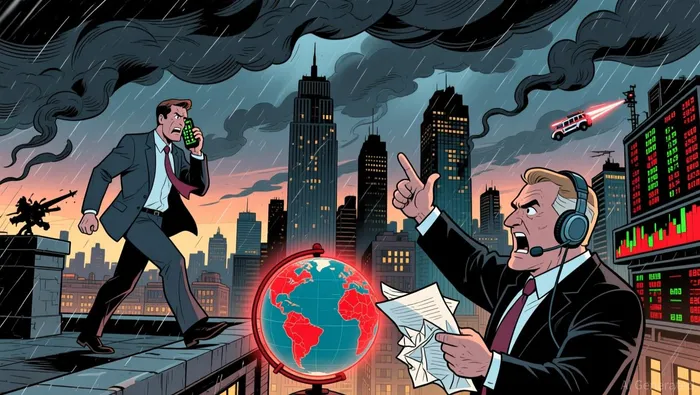
The Credibility Gap: US Statements vs. Market Reality
The market's low conviction stems from a clear and unresolved factual contradiction. On one side, President Trump declared on March 24 that the U.S. was making "very good and productive" conversations with Iran about a "complete and total resolution." On the other, Tehran categorically denied any direct negotiations have taken place. This isn't just a diplomatic standoff; it's a direct clash of narratives that leaves traders with no reliable signal to follow.
The pattern of market behavior confirms this skepticism. A single policy shift-Trump's postponement of strikes-sparked a sharp, risk-on reaction. Yet the subsequent range-bound trading shows markets are not buying the narrative of imminent peace. Instead, they are pricing in a high probability of conflict escalation. The currency market's muted response to the latest U.S. claim is the clearest indicator that traders see this as another tactical pause, not a fundamental pivot.
This dynamic is reinforced by the broader regional context. As one analysis notes, senior Gulf officials have long viewed this conflict as not a matter of if, but when. The region has been living under a sustained shadow war for years, with Iran's missile and drone campaign a persistent threat. In this light, a U.S. diplomatic overture that contradicts Iran's public stance appears less like a breakthrough and more like a temporary de-escalation tactic. Markets, which must price in the risk of a sudden return to full-scale hostilities, are simply waiting for the other shoe to drop.
The bottom line is that the credibility gap is real and material. When official statements and on-the-ground denials are in direct conflict, the market defaults to the more stable, if pessimistic, baseline: that the underlying conflict remains unresolved. This fuels the fatigue and caution we see, as traders recognize that the next headline-whether a new U.S. threat or a surprise Iranian concession-could just as easily reverse the recent calm. For now, the market is treading water, and that's the most rational stance given the facts.
Monetary Policy Implications and Forward Scenarios
The geopolitical stalemate is now a direct inflationary force, complicating the path for central banks worldwide. The core shock is to global energy markets. Since the conflict began, Iranian attacks have dramatically reduced traffic in the Strait of Hormuz, a chokepoint for about 20% of global oil and gas861002+1.75% supplies. This disruption has sent prices soaring, with Brent crude up more than 40% from its pre-war level. The inflationary impulse is already material. As one analysis notes, prices of refined products from petrol to jet kerosene have seen significant increases, a cost that will filter through to consumer goods and transport, pressuring already elevated inflation.
This creates a clear dilemma for monetary policy. Central banks, including the Fed, are grappling with the risk of a higher chance of a rate hike as war spurs inflation, even as they face pressure to cut rates elsewhere. The persistence of this supply shock means that disinflationary forces from other sectors may be overwhelmed. The market's low-conviction state-where traders wait for the next headline-reflects a belief that this inflationary pressure will endure until the conflict is resolved. In other words, the currency market's fatigue is a symptom of a broader policy paralysis, where central banks are caught between a hawkish inflationary impulse and a dovish economic outlook.
The primary catalyst for stabilization is straightforward but elusive. A credible breakthrough, whether through direct talks or a ceasefire proposal, would remove the immediate threat to energy flows and reset market expectations. Without it, the setup is clear: the currency market's range-bound trading will persist, reflecting ongoing uncertainty, while the inflationary pressure from disrupted oil and gas supplies will keep central banks on hold or even nudging policy toward restriction. The bottom line is that geopolitical risk has now become a structural inflationary headwind, and until that risk is materially reduced, it will constrain the policy options of central banks for the foreseeable future.
Disclaimer: The content of this article solely reflects the author's opinion and does not represent the platform in any capacity. This article is not intended to serve as a reference for making investment decisions.
You may also like
WTI Price Forecast: Flat lines below $88.00; 200-hour SMA breakdown remains in play
Polyplastics' POM Enters Heavy-Duty Industrial Applications—A Key Milestone for the Upcoming Industrial S-Curve


Trending news
MoreCrypto prices
More





