
Arctic Fox Secures $1.62M Funding, Highlighting Bold Lithium Venture in a Competitive Market

Arctic Fox Completes Initial Private Placement
On March 24, 2026, Arctic Fox finalized the first phase of a private placement, securing $1.62 million through the issuance of 6.74 million units at $0.24 per unit. The funds raised are earmarked for general corporate expenses, administrative needs, transaction-related costs, and exploration activities at the Shipshaw Property and other company assets. While such financing is typical for junior mining companies, the timing and scale of this placement are particularly notable.
With a market capitalization of roughly $11.8 million, this capital injection is substantial relative to Arctic Fox’s current valuation. On the day of the announcement, shares closed at $0.355—well above the placement price. The deal also included warrants, each allowing the holder to purchase a share at $0.315 within 24 months, which could result in further dilution if exercised.
Although this financing step is routine, it comes at a pivotal moment as the lithium market transitions from oversupply to a looming shortage. For a small exploration company like Arctic Fox, securing capital now is essential to continue operations and advance its projects. Investors must consider whether this funding round is enough to carry the company through the next market phase, or if additional capital will be required as conditions become more challenging.
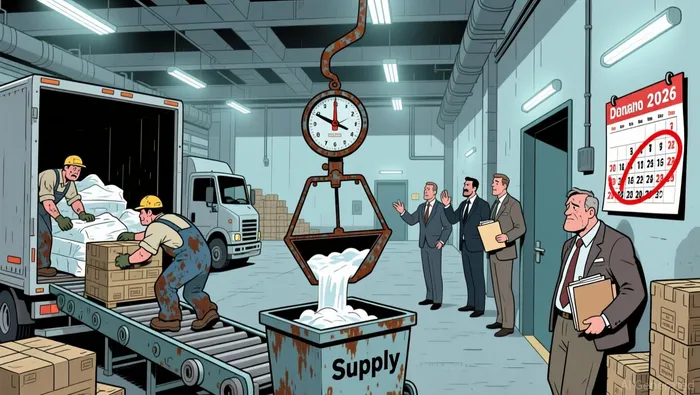
Lithium Market Dynamics: From Surplus to Shortage
Arctic Fox’s fundraising occurs against a backdrop of significant change in the lithium sector. After years of excess supply and depressed prices, the market is now heading toward a critical deficit. Projections indicate that the global surplus of lithium carbonate will shrink dramatically in 2026, dropping to an estimated 109,000 metric tons LCE from 141,000 mt in 2025. This tightening is due to demand outpacing supply—consumption is expected to grow by 13.5% year-over-year, while supply increases by only 9.9%.
Leading financial analysts predict that this imbalance will result in a structural shortage by 2026, with deficits potentially reaching 80,000 tonnes. This marks a sharp reversal from the oversupply that peaked at 175,000 tonnes in 2023. The shift has been driven by production cuts in response to falling prices, while demand—especially from electric vehicles and energy storage—continues to accelerate.
Backtested Trading Strategy: RSI Oversold Long-Only
- Entry: Buy when RSI(14) falls below 30
- Exit: Sell when RSI(14) exceeds 70, after 20 trading days, or if take-profit (+15%) or stop-loss (-10%) thresholds are met
- Tested on: AFX.CN (March 25, 2024 – March 25, 2026)
Key Performance Metrics
- Total Return: 43.43%
- Annualized Return: 20.26%
- Maximum Drawdown: 17.65%
- Profit-Loss Ratio: 1.07
- Total Trades: 13 (9 wins, 4 losses)
- Win Rate: 69.23%
- Average Holding Period: 16.08 days
- Largest Single Gain: 11.89%
- Largest Single Loss: 10.57%
Evolving Demand: Beyond Passenger EVs
The sources of lithium demand are broadening. While electric passenger vehicles remain the main driver, their growth is stabilizing. The most rapid expansion now comes from electric heavy-duty trucks—sales in China have surged over 190% this year—and from battery energy storage systems (BESS). The BESS sector is expected to grow rapidly, with some forecasts predicting 40%–60% annual growth in China. For Arctic Fox, this diversification means that lithium demand will be supported by a wider array of applications, not just consumer vehicles.
For junior explorers, this tightening market underscores the importance of advancing projects now, before capital becomes even more difficult and expensive to obtain. Arctic Fox’s recent fundraising is a strategic move to remain active as the supply-demand balance shifts in favor of scarcity.
Project Portfolio and Strategic Approach
Arctic Fox’s assets are split between a recently acquired, near-term exploration project and a high-risk, early-stage lithium target. The company’s future depends on how well it can manage this mix as the lithium market tightens.
The Shipshaw Property, acquired in February 2026, is a rare earth and niobium exploration project located just 5 kilometers from the producing Niobec Mine. Its main advantages are its proximity to established operations and encouraging historical drill results, including intercepts with up to 3.7% TREE oxides and 0.251% Nb2O5. For Arctic Fox, this represents a lower-risk, potentially quicker-to-develop asset. The company has already filed a technical report, but the project’s value is tied to rare earth and niobium prices, which are not directly linked to lithium market trends.
The Kana Lake Lithium Project in James Bay, Québec, is a classic high-risk, high-reward exploration play. Covering 113 claims over nearly 6,000 hectares, the project sits on a 6-kilometer pegmatite trend identified by the provincial government. The geology is promising, with outcrops containing minerals indicative of lithium potential, but no lithium sampling has yet been conducted. The project is in its earliest stages, and significant investment in surveys and drilling will be required to unlock its value.
Given the current market, Arctic Fox’s portfolio offers both opportunity and challenge. Shipshaw could provide near-term value, but is not a direct lithium play. Kana Lake is a pure lithium prospect, but is years from production and requires substantial funding. The recent capital raise is not enough for a major exploration program at Kana Lake, so the company must prioritize survival and selective progress, using its limited resources to keep both projects moving forward until further funding can be secured.
Key Catalysts, Risks, and Investor Considerations
Arctic Fox’s success now depends on several critical factors. The most important catalyst is exploration progress—defining a resource at Shipshaw or confirming lithium at Kana Lake through planned surveys and sampling. Positive results could attract new investment or strategic partners, providing the capital needed to advance development.
However, the company faces significant execution risk. With only $1.62 million raised, and exploration costs high, any delays or overruns could force Arctic Fox to seek additional, potentially more dilutive funding. Spreading limited resources across two projects could also slow progress on both fronts.
Investors should keep a close eye on two external factors: lithium spot prices and the pace of global supply growth. Lithium prices have rebounded sharply—up 57% from June 2025 lows in China—and continued strength would support the case for new lithium projects. Conversely, a price decline would pressure the sector. If new supply comes online faster than expected, the anticipated shortage could be delayed, impacting the urgency for exploration.
In summary, Arctic Fox is operating in a challenging environment. Its future will be determined by its ability to deliver exploration results and manage its limited capital. The next several months will be crucial, as the company works to turn geological promise into tangible value amid a market that is finally shifting away from oversupply.
Disclaimer: The content of this article solely reflects the author's opinion and does not represent the platform in any capacity. This article is not intended to serve as a reference for making investment decisions.
You may also like

Bitcoin Price Prediction: Cardone Sees $280K
Bitcoin steadies above $71,000 as oil falls below $100 after U.S. drafts 15‑point Iran peace plan

SEC Approves Private Investments in 401(k) Plans—Yet Quality Factor Remains the Sole Strong Buy

Trending news
MoreCrypto prices
More





