
True Value Closures Underscore Challenges in Retail Sector: Key Insights for Investors

Harpeth True Value Hardware to Close After Over Five Decades
- After serving the Tennessee community for 54 years, Harpeth True Value Hardware will permanently shut its doors on April 1, 2026. The store's closure comes after a significant downturn in its lumber sales, which previously accounted for the majority of its revenue.
- True Value, now operating under the Do It Best cooperative, declared bankruptcy in 2024 and was subsequently purchased for $153 million. This acquisition underscores the mounting difficulties faced by retailers, especially with fierce competition from giants like Home Depot, Lowe's, and Amazon.
- Independent hardware stores are finding it increasingly hard to stay profitable amid rising costs, inflation, supply chain disruptions, and a consumer shift toward online shopping.
In 2026, independent retailers such as True Value are feeling the impact of industry changes. Harpeth True Value Hardware, a family-run store in Franklin, Tennessee, will close in early April. The store's owner, Mike Outlaw, pointed to the loss of key lumber customers and the inability to find a new owner as primary reasons for shutting down. The lumber business, once the store’s foundation, has dwindled, making it difficult to compete in the current market.
This situation is part of a larger pattern. Since True Value’s bankruptcy in 2024, the brand has faced ongoing challenges. Although Do It Best acquired the cooperative, independently owned stores like Harpeth True Value were not included in the deal. The hardware retail sector has seen major players like Home Depot and Lowe's consolidate their dominance, leveraging their scale and online capabilities. Meanwhile, Amazon’s expanding role in home improvement continues to raise the bar for customer expectations, increasing the pressure on smaller businesses.
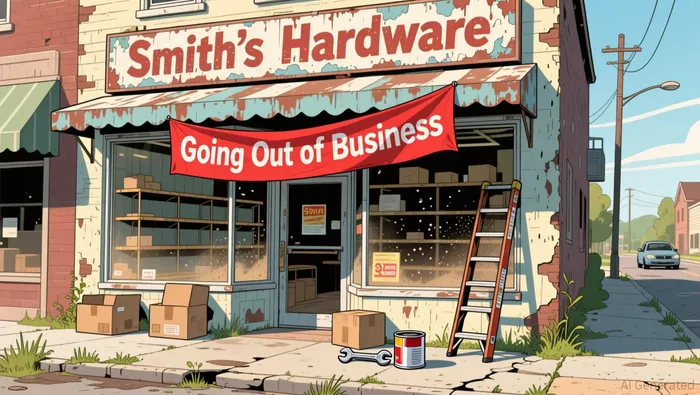
Key Factors Behind the Wave of True Value Store Closures
The closure of Harpeth True Value Hardware illustrates a broader shift in the retail landscape. Smaller hardware stores are struggling to keep up with the convenience, pricing, and digital services offered by larger competitors. The lumber trade, which relies heavily on established relationships, suffered when long-term clients left with previous ownership, causing a sharp drop in revenue. Despite efforts to sell the business, Outlaw was unable to find a buyer, reflecting waning confidence in the independent hardware model.
This is not just a local challenge. The True Value network as a whole has experienced financial strain. After filing for bankruptcy in 2024, the cooperative was bought by Do It Best, which operates differently from the traditional True Value model. While Do It Best has made some progress in revitalizing the brand, the ongoing closure of independently owned stores like Harpeth True Value suggests that the traditional small hardware store model may be unsustainable in today’s economic climate.
Challenges Facing Hardware Retailers in 2026
The hardware retail industry is contending with a range of obstacles. Inflation has driven up the cost of goods and rent, putting pressure on profit margins. Ongoing supply chain issues have made it difficult to keep shelves stocked and meet customer needs. At the same time, more consumers are turning to online platforms for their home improvement purchases, where large chains and e-commerce leaders dominate.
The rise of e-commerce is transforming the home improvement sector. Amazon, with its competitive pricing, rapid shipping, and user-friendly shopping experience, has become a formidable rival. For instance, apparel retailer Torrid recently announced the closure of 151 stores in 2025 and plans to shutter an additional 30 in 2026 as it pivots to focus on online sales. This shift mirrors trends in hardware retail, where physical stores are increasingly replaced by digital-first approaches.
Investors should pay close attention to how hardware retailers adapt. Will established names like Ace Hardware or Do It Best continue to support independent operators? How will the growing influence of Amazon and other online marketplaces reshape the sector? These are critical questions as the industry evolves to meet new consumer demands and competitive pressures.
What Lies Ahead for Retail Investors in 2026?
The retail landscape in 2026 is increasingly defined by digital transformation and e-commerce. Businesses that fail to embrace these changes may be forced to close stores or overhaul their strategies. For investors, this means that traditional retailers must clearly demonstrate their value—whether through unique products, exceptional service, or local convenience—to remain viable. For hardware stores, integrating digital solutions such as online ordering, mobile applications, and tailored promotions could be key to survival. Those who successfully blend online convenience with in-store experiences are likely to have the best prospects. Investors should watch how these companies invest in technology and customer engagement as indicators of future success.
In the months ahead, expect to see more closures and strategic changes within the hardware retail sector. The story of Harpeth True Value Hardware is emblematic of the broader challenges facing small, independent retailers as they navigate an increasingly digital and competitive marketplace.
Disclaimer: The content of this article solely reflects the author's opinion and does not represent the platform in any capacity. This article is not intended to serve as a reference for making investment decisions.
You may also like
Middle East conflict: worldwide economic consequences
Ripple's RLUSD Pilot: A $2.5T Trade Finance Play for a $1.4B Stablecoin

WMTX Token Launches On Interport Finance, Advancing DeFi Cross-Chain Liquidity For World Mobile Chain
NFT buyers surge 100% weekly, Ethereum dominates sales volume
Trending news
MoreCrypto prices
More





