
Prudential Falls Short of Earnings Expectations as 11% Analyst Downgrade Threatens Company Valuation

Prudential’s 2025 Results: Market Response and Performance Analysis
Prudential’s 2025 financial report was met with indifference from investors, as reflected in the stock’s unchanged price. Although headline revenue surpassed expectations, the underlying profitability metrics did not meet the market’s elevated standards. This scenario illustrates how a revenue beat can be overshadowed when core earnings fall short of what investors anticipate.
In the fourth quarter, Prudential reported $14.52 billion in sales, matching Wall Street’s consensus. However, the adjusted operating profit per share—a crucial indicator for future performance—was $3.30, falling 1.9% below analyst expectations. This earnings shortfall explains why the stock failed to rally despite strong revenue.

Book value per share, an important measure of an insurer’s intrinsic value, increased to $92.05 year-over-year but still lagged behind the forecasted $101.08. The market had anticipated more robust capital appreciation, so the actual results were disappointing.
Quarterly net income per share was $2.55, missing expectations. Although full-year net income reached $3.576 billion—a notable improvement from the previous year—the quarterly results were overshadowed by revised guidance on profitability and book value. When core earnings fail to meet expectations, even strong revenue can be disregarded by cautious investors. Ultimately, Prudential met the minimum requirements but did not exceed the high standards set for its premium valuation.
Interpreting Guidance and the Sustainability Narrative
Prudential’s 2025 performance demonstrated reliable execution, with double-digit growth in key areas such as a 12% rise in new business profit and a 12% increase in adjusted operating profit per share. While this consistency is commendable, it also indicates that the market had already anticipated this level of achievement. Meeting guidance often means the results are simply what was expected, leaving little room for positive surprises.
The company’s expanded focus on sustainability, highlighted by its commitment to a “just and inclusive transition” for emerging markets, positions climate action as a strategic priority. This approach acknowledges the unique challenges faced by these markets and sets a gradual path toward decarbonization. For investors, this may signal a slower reduction in portfolio carbon intensity and more measured ESG-driven revaluation.
Since the Q4 report, analyst forecasts for earnings per share have dropped by 11%. This downward revision reflects the market’s adjustment to new profitability and book value guidance. While the sustainability narrative is important for long-term positioning, it is not expected to drive near-term earnings growth. Instead, it suggests steady capital allocation and moderate expansion.
MA Crossover Long-Only Strategy: Backtest Summary
- Entry: When the 50-day SMA crosses above the 200-day SMA
- Exit: When the 50-day SMA crosses below the 200-day SMA, after 252 trading days, or upon reaching a 10% profit or a 5% loss
- Backtest Period: Last 2 years
Backtest Results
- Strategy Return: -5.03%
- Annualized Return: -2.51%
- Maximum Drawdown: 5.92%
- Win Rate: 0%
Trade Metrics
- Total Trades: 1
- Winning Trades: 0
- Losing Trades: 1
- Average Hold Days: 22
- Max Consecutive Losses: 1
- Profit/Loss Ratio: 0
- Average Win Return: 0%
- Average Loss Return: 5.03%
- Max Single Return: -5.03%
- Max Single Loss Return: 5.03%
PRU Stock Trend Snapshot

Code: PRU
Name: Prudential Financial
Price: 95.260
Exchange: NYSE
Change: +0.460 (+0.49%)
Pre-Market: 95.260 (0.00%)
Outlook: Steady Growth and Valuation Challenges
Prudential’s guidance points to stable, capital-efficient growth, supported by its sustainability initiatives. However, for a stock priced on high expectations, this steady performance may not be enough to excite investors. The 11% reduction in EPS estimates indicates the market is now expecting a more modest trajectory, making future outperformance on this lowered baseline even more significant.
The key question for investors is whether Prudential’s projected 7.8% annual earnings growth can offset recent valuation pressures. The muted market response to mixed results suggests a “sell the news” mentality, with the bar for positive surprises now set lower. In this context, simply maintaining steady growth may not trigger a re-rating.
Analysts anticipate earnings per share to rise at 7.8% per year, with a return on equity expected to reach 13.2% in three years. While this is a solid path for a financial services leader, it follows a quarter where profitability and book value missed expectations. The market now treats this growth rate as the standard, not an upside surprise. For shares to advance, Prudential must consistently exceed these forecasts—a challenge that goes beyond merely meeting them.
Investors should closely watch the execution of Prudential’s sustainability strategy and whether future guidance can support a higher valuation. The focus on a “just and inclusive transition” for emerging markets is a long-term vision, not an immediate earnings driver. It sets a slower, pragmatic path for decarbonization, which may moderate expectations for portfolio revaluation. The real test will be whether upcoming quarterly results can deliver earnings growth above the 7.8% forecast, providing the kind of positive surprises needed to reset market sentiment. For now, Prudential’s outlook is one of steady, predictable growth, with little margin for error.
Disclaimer: The content of this article solely reflects the author's opinion and does not represent the platform in any capacity. This article is not intended to serve as a reference for making investment decisions.
You may also like
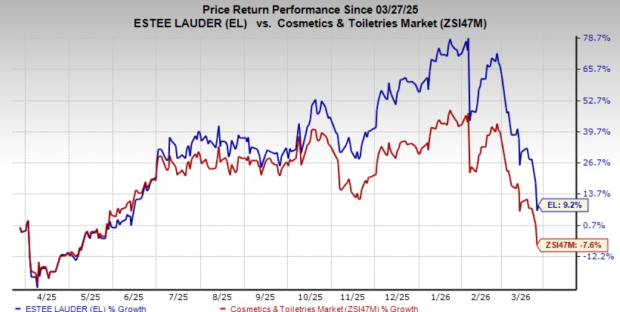
The Estee Lauder Companies Expands Its Leadership in the Category: What Lies Ahead?
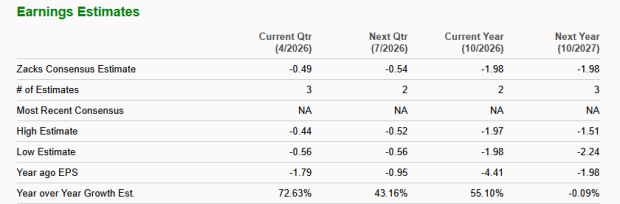
FuelCell Energy: Can Expansion Counterbalance FCEL's Immediate Challenges?
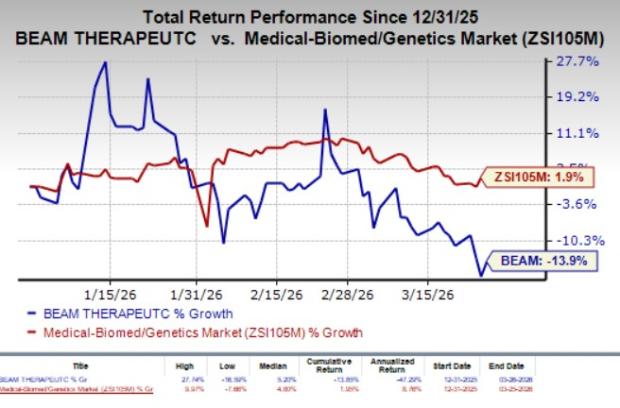
BEAM Looks to Broaden AATD Research Worldwide Following Promising Initial Results
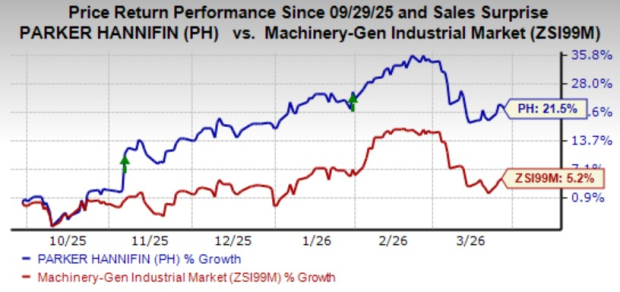
Here’s Why Parker-Hannifin Shares Might Be a Smart Investment Choice
Trending news
MoreCrypto prices
More





