
Assessing Liquidity Reduction: An Examination of Congressional Trading Limitations Through Flow Analysis

Overview of the Proposed Congressional Stock Trading Ban
The proposed legislation seeks to address the issue of information-driven trading by lawmakers. If enacted, it would bar members of Congress, their spouses, and dependent children from acquiring new shares in publicly listed companies. The intent is to close off a pathway where confidential legislative or regulatory insights could be exploited for personal financial gain.
Additionally, the bill mandates a waiting period before any stock sales can occur. Lawmakers would be required to publicly announce their intention to sell at least seven days, but no more than fourteen days, in advance. This built-in delay is designed to curb rapid, information-fueled selling and to limit the ability to quickly act on privileged knowledge.
To further deter violations, the legislation imposes significant penalties. Offenders would face a fine of $2,000 or 10% of the transaction value—whichever is higher—and would also have to surrender any profits made from the sale. This transforms what could be a low-risk, high-reward activity into one with substantial financial consequences.
Assessing the Scope and Potential Market Effects
The introduction of this bill reflects concerns about the scale of insider trading among lawmakers. While comprehensive data on congressional trading activity is not publicly available, the bipartisan nature of the proposal and the breadth of its restrictions suggest that legislators view this as a meaningful problem that warrants intervention.
The primary objective is to eliminate a specific form of arbitrage, where access to confidential legislative information could be leveraged for market advantage.
Support for the bill is robust. The House version boasts 126 cosponsors, and 79 representatives have signed a discharge petition to force a vote. This broad coalition, spanning both conservative and progressive lawmakers, underscores the seriousness with which the issue is regarded and suggests that the scale of the problem is significant enough to prompt major legislative action.

The bill’s reach extends beyond lawmakers themselves, encompassing their immediate families. By including spouses and dependent children, the legislation aims to prevent the indirect use of privileged information for trading, thereby addressing a wider network of potential abuse. Although this type of trading may represent a small portion of total market activity, it is highly concentrated and information-sensitive, which is precisely what the bill seeks to eliminate.
Key Developments, Risks, and What Lies Ahead
The most significant trigger for change would be the bill’s passage in the Senate and subsequent approval by the President. At present, the legislation has been introduced in the House and introduced in the Senate, but it has not yet become law. Only upon enactment would the restrictions become enforceable, effectively shutting down the targeted channel of information-based trading. While bipartisan backing and prominent endorsements are encouraging, the bill remains in the proposal stage.
One of the main obstacles is the risk of legislative deadlock. Previous attempts to pass similar measures have languished for years due to political disagreements and insufficient leadership support. Despite current momentum, significant opposition persists, and the bill’s prospects in the Senate remain uncertain. Should the legislation stall, trading based on privileged information would continue unchecked, leaving the underlying issue unresolved.
Observers should monitor the bill’s journey through the House Administration Committee and any proposed amendments. The committee has already advanced the bill with changes, clearing a major procedural hurdle. The next pivotal moment will be a full House vote. Pay close attention to any revisions regarding the notice period for sales or the penalty structure, as these elements directly influence the deterrent effect and could shape the bill’s impact on market behavior.
Disclaimer: The content of this article solely reflects the author's opinion and does not represent the platform in any capacity. This article is not intended to serve as a reference for making investment decisions.
You may also like
Top Trader Says XRP Was Never Designed to be “Cheap.” Here’s the Designated Price
Liquidated Hyperliquid Whale Returns With $400K HYPE Buy
Is HYPE Cheap at $40? Expert Thinks the Market Is Pricing This Wrong
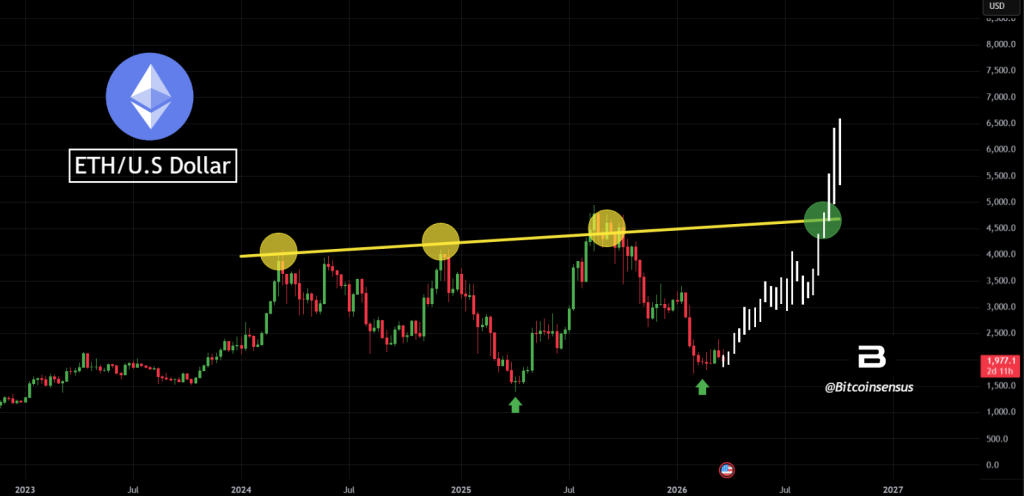
Ethereum Price Prediction: $6.3B Smart Money Inflows Signal Major ETH Breakout Ahead
Trending news
MoreCrypto prices
More





