
Tyson Foods: Is a 100 Price-to-Earnings Ratio Enough to Support a Recovery After Three Consecutive Losses and Tight Supply?

Tyson Foods: Navigating a Challenging Transition
Tyson Foods is currently facing a difficult period, with recent financial results highlighting ongoing challenges rather than a swift recovery. In the first quarter of fiscal 2026, the company posted a GAAP earnings per share (EPS) of $0.24, representing a sharp 76% drop compared to the previous year. Adjusted EPS came in at $0.97, down 15% year-over-year. Notably, this marks the third straight quarter of losses, with the company's adjusted operating margin at just 4.0%. While some segments show resilience, overall profitability remains under significant strain.
Prepared Foods Segment Shines Amid Broader Weakness
Leadership has placed emphasis on the Prepared Foods division, which has emerged as a positive outlier. This segment reported a 4.7% year-over-year increase in EBIT, reaching $244 million. However, gains here are being offset by losses in other areas, resulting in a mixed financial picture. The stock has remained stagnant, with analysts maintaining a Hold rating and price targets close to current levels. Investors appear to be waiting for clear evidence of sustained margin improvement before reassessing the company's valuation. Tyson (TSN) continues to implement cost reductions and portfolio adjustments, but has yet to deliver the robust, profitable turnaround needed for a significant re-rating.
Market Sentiment: Valuation Outpaces Fundamentals
There is a notable disconnect between Tyson's share price and its operational performance. The market is assigning a premium valuation, seemingly expecting a flawless turnaround despite ongoing obstacles. The most striking metric is the trailing price-to-earnings (P/E) ratio, which has soared to 100, up from 18.5 a year ago. This places Tyson in the realm of growth stocks, a category typically reserved for companies with strong future earnings prospects. This valuation is a significant departure from its historical average and stands in sharp contrast to competitors such as Hormel Foods (P/E of 25.7) and Pilgrim's Pride (P/E of 6.84). The market is paying for a growth story that has yet to materialize in the fundamentals.
Strategy Backtest: Long-Only Bollinger Bands
- Enter a long position in TSN when the closing price exceeds the 20-day upper Bollinger Band.
- Exit when the closing price falls below the 20-day lower Bollinger Band, after 20 trading days, or if take-profit (+8%) or stop-loss (−4%) is triggered.
- Backtest period: March 28, 2024 to March 27, 2026.
Backtest Results
- Strategy Return: -15.06%
- Annualized Return: -7.67%
- Maximum Drawdown: 20.81%
- Profit-Loss Ratio: 0.71
- Total Trades: 10
- Winning Trades: 3
- Losing Trades: 7
- Win Rate: 30%
- Average Hold Days: 12.5
- Max Consecutive Losses: 4
- Average Win Return: 2.26%
- Average Loss Return: 3.22%
- Max Single Return: 3.84%
- Max Single Loss Return: 4.33%
Operational Challenges and Cost Pressures
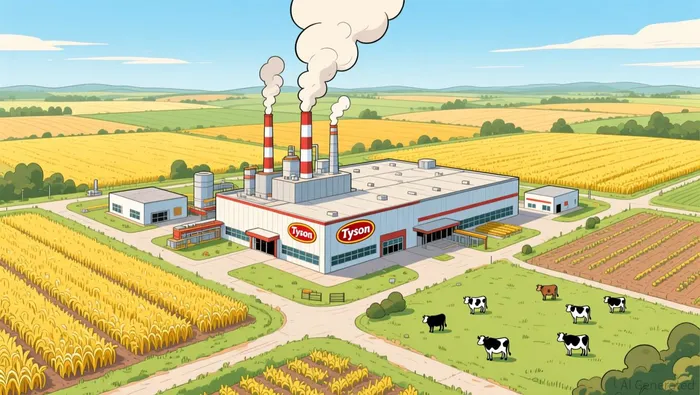
Tyson is contending with a significant shortage of U.S. cattle, which has led to higher input costs and squeezed margins. The company’s decision to close a major plant in Nebraska is a direct response to these pressures, aiming to manage expenses but also highlighting the difficulty in securing supplies. These are not minor setbacks—they represent fundamental challenges to the company’s profitability. For the current valuation to be justified, investors must believe Tyson can not only withstand these headwinds but also rapidly grow its earnings to match the elevated multiple.
Stock Performance Reflects Mixed Sentiment
Despite the lofty P/E ratio, Tyson’s share price has declined 10.3% year-to-date, signaling investor caution amid ongoing earnings pressure. This drop suggests that not everyone is convinced by the turnaround narrative. Nevertheless, the high valuation persists, indicating that many still expect a swift and decisive recovery in earnings. The risk is that the market has priced in perfect execution—rapid cost reductions and a quick resolution to supply shortages—while the reality is likely to be more gradual and uncertain.
Structural Drivers: Global Protein Demand and Execution Risk
Tyson’s long-term growth prospects are supported by strong external factors. The global protein market is expected to grow at an 8.5% compound annual rate, reaching nearly $27.5 billion by 2034. This trend is driven by a rising flexitarian population and increased demand for high-protein foods. Tyson has the opportunity to capitalize on this demand, especially through export growth to free trade agreement partners. For example, Mexico has seen record pork demand for several years, offering a potential offset to domestic challenges and a path to higher-margin international sales.
Restructuring and Operational Risks
To seize this opportunity, Tyson is undergoing a costly and complex restructuring, closing less efficient plants and shifting production to larger facilities. While necessary for cost control, this transition introduces significant operational risks. The company must maintain high fill rates and service levels to avoid losing customers. Recent data shows fill rates above 98% for two consecutive quarters, indicating some operational discipline. However, the broader context remains challenging, with ongoing losses and severe shortages of raw materials.
Ultimately, the market is betting on Tyson’s ability to execute this turnaround smoothly and profitably. The elevated valuation reflects confidence that the company can manage internal restructuring and fully benefit from global protein demand. However, operational challenges—such as plant closures, supply chain management, and service continuity—could undermine the cost efficiencies Tyson is pursuing. The opportunity is substantial, but the path to sustained, profitable growth is fraught with execution risk.
Key Catalysts, Risks, and Monitoring Points
Tyson’s stock is positioned for a high-stakes outcome, with the market pricing in a nearly flawless turnaround. The future depends on several critical catalysts and risks that will determine whether the current valuation is sustainable or if a correction is likely.

What Could Drive a Recovery?
- Improvement in beef and pork margins, which have been the main sources of weakness.
- Relief from supply constraints and successful execution of Tyson’s restructuring efforts.
- The USDA’s forecast for a slight decline in cattle prices is encouraging, and plant closures are intended to manage these pressures.
- If these actions, along with industry-wide herd rebuilding, result in lower input costs and higher margins, Tyson could deliver the earnings growth needed to support its premium valuation.
- Maintaining high fill rates (above 98%) during production shifts is crucial for locking in cost savings.
Main Risks to Watch
- Failure to meet the high earnings expectations implied by the 100 P/E ratio.
- Persistent high raw material costs and weaker demand.
- Any renewed competition for cattle could quickly reverse recent price declines.
- Continued losses in beef and pork segments or a slowdown in global protein demand could disappoint investors.
- The stock’s 10.3% year-to-date drop already reflects some skepticism; failure to deliver could trigger a sharp re-rating.
Cash Flow and Guidance: The Critical Indicator
Beyond headline earnings, cash flow is a vital metric. Tyson reported free cash flow of $690 million last quarter, providing a financial cushion. With liquidity at $4.5 billion at year-end, attention now turns to management’s guidance. Investors need clear, forward-looking statements on cash flow generation to fund restructuring, service debt, and support strategic initiatives. Any reduction in guidance or sustained cash flow decline would signal deeper operational issues and further disconnect the valuation from reality.
Conclusion: High Expectations, High Risks
The risk/reward profile for Tyson is heavily skewed. The upside depends on resolving supply challenges and executing cost reductions flawlessly—outcomes the market is already anticipating. The downside is more likely, given the tough operating environment and a valuation that leaves little room for mistakes. Tyson’s future will be determined by its ability to consistently deliver on quarterly catalysts and maintain strong cash flow to support its turnaround efforts.
Disclaimer: The content of this article solely reflects the author's opinion and does not represent the platform in any capacity. This article is not intended to serve as a reference for making investment decisions.
You may also like
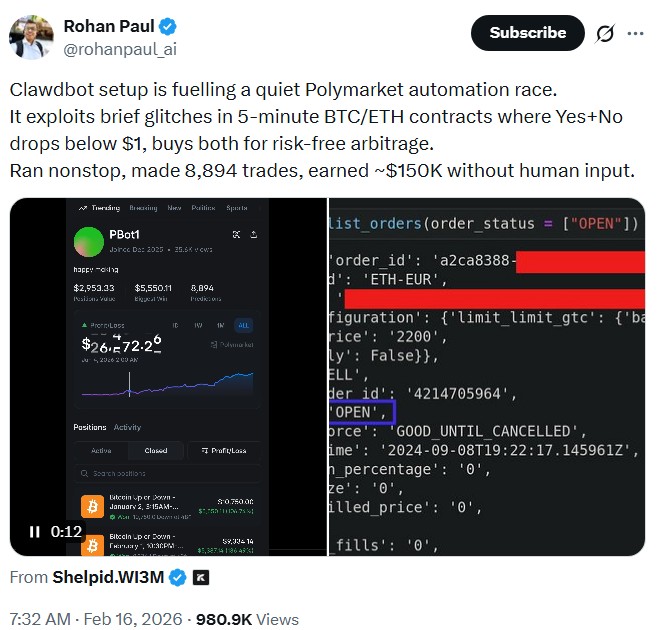
How AI agents can reshape arbitrage in prediction markets
XRP Global Distribution Shows The Major Holders And What It’s Being Used For

Vanguard VCR’s 40% Amazon-Tesla Bet Risks Derailing Its Consumer Discretionary Hedge Role
Meet the Value Stock With a 6.6% Dividend Yield That's Begging to Be Bought in April
Trending news
MoreCrypto prices
More





