
USD: BBH Sees Downside Risks Fueled by Relief

US-Iran Ceasefire Sparks Market Optimism
Elias Haddad of Brown Brothers Harriman observes that the recent ceasefire between the United States and Iran has brought a wave of optimism to financial markets. Brent crude prices have dropped significantly, while stocks and bonds have rallied. Meanwhile, the US Dollar has experienced a notable decline. Haddad suggests that if ceasefire negotiations remain stable, the Dollar could continue to weaken, aligning with US-G6 interest rate differentials. Investors are now focusing on the March FOMC meeting minutes for clues about upcoming Federal Reserve decisions.
Improved Risk Appetite Drives Dollar Lower
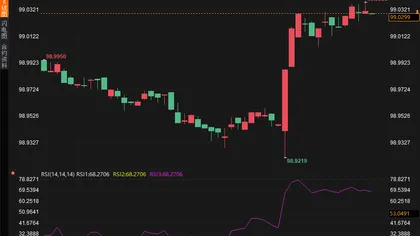
Markets have shifted into a risk-on stance, with Brent crude oil tumbling by about 16%. Global equities and bonds have seen strong gains, and the US Dollar has fallen broadly, especially against currencies sensitive to economic cycles.
As long as discussions around the ceasefire progress without interruption, the Dollar is likely to adjust downward, reflecting the levels suggested by US-G6 rate spreads.
Attention is now on the release of the Federal Open Market Committee's March 17-18 meeting minutes, scheduled for 7:00pm London time (2:00pm New York)(UTC+8). These minutes are expected to provide further insight into the likelihood and timing of future interest rate hikes.
Disclaimer: The content of this article solely reflects the author's opinion and does not represent the platform in any capacity. This article is not intended to serve as a reference for making investment decisions.
You may also like
Paramount Sky Dance (PSKY.US) faces "regulatory resistance" in merger with Warner Bros., may sell Turner Network for $8 billion to break the deadlock
Analysts say that Paramount may acquire Turner Network Television for $8 billion.

According to reports, Nvidia acquires Hugging Face for $12.9 billion, triggering a full-scale battle for the AI “middleware” layer.
Nvidia acquired the open-source AI platform Hugging Face for $12.9 billion, approximately 80 times its annualized revenue. This move aims to control the core node of the open-source ecosystem, hedge against the threat of in-house chips developed by closed-source giants like OpenAI, and provide a new entry point for its cloud business.
Crypto prices
More


