
RAIL reaches new 2026 high as privacy narrative returns

A return to the privacy narrative drove the recent RAIL rally, while trading volumes reached $7.5M, about 10 times their usual levels. In the year to date, RAIL is up more than 128%, after having its steepest rally for the past few months.
What makes RAIL an exception is that it is mostly traded on decentralized exchanges, and has remained a relatively niche project. Now, Railgun, the Ethereum-based mixer and privacy platform, has taken the spotlight once again.
RAIL peaked at $4.51, before retreating to $4.05, with increased volatility in the past day. The token is close to its all-time peak above $5, and expects to enter price discovery and a new price range. Despite this, Railgun remains a relatively small project, with limited liquidity compared to other privacy assets.
More than 60% of RAIL trading depends on Uniswap pairs and direct on-chain trading. RAIL has not been listed by any centralized exchanges, and has turned into the privacy layer of Ethereum.
Why is RAIL rallying?
RAIL has received more mentions from crypto influencers, driving attention to the privacy narrative. The token has also benefited from the rising activity around ZEC and XMR, as well as a general attempt to return crypto usage to privacy. Recently, Bary Silbert, Chairman of Grayscale, revived the privacy narrative in crypto, just after the fund accelerated its ZEC exposure.
The “privacy” era in crypto has officially begun
— Barry Silbert (@BarrySilbert)
As a result, RAIL has increased its mindshare by 208% based on social media activity as measured by Messari.
The recent rise of RAIL popularity follows a general trend of increased usage. As Cryptopolitan reported, Railgun was already setting new records of value locked. As of May 2026, railgun holds over $97M in notional value locked, due to the drop of value in ETH.
RAIL also has a relatively limited free float, with 57M of tokens in circulation out of a total supply of 100M tokens.
Unlike other mixers, Railgun is not entirely free to use. The way Railgun achieves privacy is to pre-vet its transaction sources and ban some addresses. Despite this, Railgun has also been used to mix funds in hacks, as the reaction time to blacklist addresses is still relatively long.
Railgun may benefit from the recently rising wallet integration narrative. Currently, Railgun shields up to $5B in trading volumes, building a small sub-section of private DeFi on Ethereum. The protocol also produces $4.13M in fees.
Will Railgun bring mainstream veiled transactions?
Railgun offers scalable privacy for Ethereum, Polygon, and Binance Smart Chain (BSC). The protocol allows for pre-vetting and compliance, unlike the permissionless approach of ZCash (ZEC) and Monero (XMR).
Recently, Railgun was added to Ethereum’s Kohaku SDK, which is a step away from mass wallet integration. MetaMask has already signaled support for the privacy feature, and any wallet could add Railgun transactions as one of its options. So far, real in-wallet usage of Railgun’s veiled transactions is still a future narrative.
Railgun mostly mixes WETH, USDC, and USDT in its ecosystem based on Dune Analytics data, but the in-wallet upgrade may add other tokens and expand for all DeFi purposes.
Disclaimer: The content of this article solely reflects the author's opinion and does not represent the platform in any capacity. This article is not intended to serve as a reference for making investment decisions.
You may also like
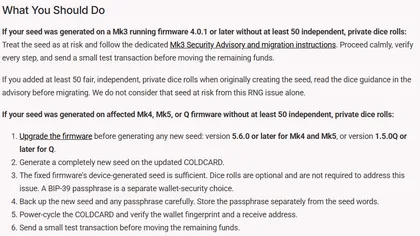
Coldcard Hardware Wallet Flaw Drains $38M — Emergency Action Required Users
Long-term US Treasury pressure remains after US PCE data: 30-year yield nears 5.2%, yield curve steepens
After the release of Thursday's U.S. PCE data, the 30-year U.S. Treasury yield remained near a 19-year high of around 5.20%; the yields on 2-year to 5-year Treasuries fell by about 5 basis points, hitting the week's lows. The spread between 5-year and 30-year Treasuries widened to 84 basis points, reaching its highest level since May. Analysts pointed out that the decision by Walsh to hold steady this time has raised doubts in the market about his determination to fight inflation.
AI "Prodigy" Flops on Wall Street: OpenAI Former Researcher's Fund Reportedly Liquidated, Citadel Takes Over $16 Billion Stock Assets
Situational Awareness, a hedge fund managed by Aschenbrenner, who became famous for aggressive AI investments, achieved a 439% return in the first half of this year, with assets under management once reaching $20 billion. According to reports, due to heavy losses from AI investments, the fund urgently initiated negotiations with several large institutions this Wednesday, hoping to sell some assets or raise new funds. Major multi-strategy funds such as Millennium participated in the bidding, and a deal was reached with Citadel within 24 hours.
Yen surges over 3% intraday! Market speculates Japan intervened again, analysts say “taking action with the trend” is a smart move
The Japanese yen saw its largest intraday gain against the US dollar in two and a half years. From late April to late May this year, Japan conducted a record-sized intervention totaling approximately $73.2 billion, but the depreciation pressure on the yen has not been fundamentally eased. Market attention is now focused on whether officials confirm this latest intervention, although relevant data is typically released weeks later, so yen volatility is expected to remain high in the short term. Citi predicts the yen will weaken in the near term and suggests going long on USD/JPY ahead of the Bank of Japan meeting, as the central bank governor is unlikely to deliver a more hawkish stance than expected.
Crypto prices
More


