
Tether’s former CIO plans sale of stake in stablecoin giant

Zagury departs Tether executive team, stake sale planned
Zagury’s departure from Tether’s C-suite preceded this planned stake sale. After serving as CIO, he pivoted to leading Bitcoin mining initiatives through Elektron Energy, a venture that aligns with Tether’s own expanding footprint in mining operations.
The specifics of the sale, including the size of the stake, potential buyers, and timeline, remain unclear.
When a former top executive at a company sitting on more than $187 billion in reported assets decides to sell, the market pays attention. Tether doesn’t trade on public markets. It doesn’t file quarterly earnings with the SEC. The only real window into its financials comes from periodic attestation reports and the occasional headline. A stake sale, even a private one, forces some level of price discovery.
The Tether empire keeps expanding
Under CEO Paolo Ardoino, who took the top job in late 2023 after serving as CTO, Tether has been on an aggressive expansion tear. The company’s reserve assets are primarily held in US Treasuries.
Tether has made equity investments in firms like Rumble, the video platform, and Bit2Me, a European crypto exchange. It has pushed deeper into Bitcoin mining. And it has explored potential mergers tied to treasury operations and mining infrastructure.
Tether’s parent company, iFinex, retains considerable voting power in affiliated entities. That governance structure means even as individual stakeholders like Zagury look to cash out, operational control likely stays concentrated among a small group of decision-makers.
What this means for investors
A $500 billion valuation would make Tether more valuable than all but a handful of US banks. Whether the market ultimately supports that number depends heavily on regulatory outcomes. US stablecoin legislation has been working its way through Congress, and the final shape of those rules will determine whether Tether can continue operating with its current level of autonomy or faces new compliance burdens that crimp margins.
The broader stablecoin competitive landscape is heating up. Circle, the issuer of USDC, has been pursuing its own public listing. PayPal already launched PYUSD. Every new entrant chips away at the argument that Tether’s dominance is permanent, even if USD₮ currently commands the lion’s share of stablecoin market capitalization.
Disclaimer: The content of this article solely reflects the author's opinion and does not represent the platform in any capacity. This article is not intended to serve as a reference for making investment decisions.
You may also like
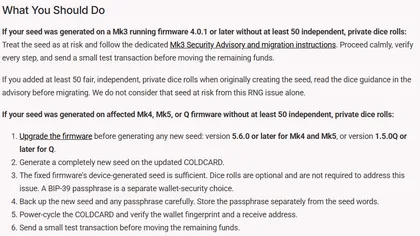
Coldcard Hardware Wallet Flaw Drains $38M — Emergency Action Required Users
Long-term US Treasury pressure remains after US PCE data: 30-year yield nears 5.2%, yield curve steepens
After the release of Thursday's U.S. PCE data, the 30-year U.S. Treasury yield remained near a 19-year high of around 5.20%; the yields on 2-year to 5-year Treasuries fell by about 5 basis points, hitting the week's lows. The spread between 5-year and 30-year Treasuries widened to 84 basis points, reaching its highest level since May. Analysts pointed out that the decision by Walsh to hold steady this time has raised doubts in the market about his determination to fight inflation.
AI "Prodigy" Flops on Wall Street: OpenAI Former Researcher's Fund Reportedly Liquidated, Citadel Takes Over $16 Billion Stock Assets
Situational Awareness, a hedge fund managed by Aschenbrenner, who became famous for aggressive AI investments, achieved a 439% return in the first half of this year, with assets under management once reaching $20 billion. According to reports, due to heavy losses from AI investments, the fund urgently initiated negotiations with several large institutions this Wednesday, hoping to sell some assets or raise new funds. Major multi-strategy funds such as Millennium participated in the bidding, and a deal was reached with Citadel within 24 hours.
Yen surges over 3% intraday! Market speculates Japan intervened again, analysts say “taking action with the trend” is a smart move
The Japanese yen saw its largest intraday gain against the US dollar in two and a half years. From late April to late May this year, Japan conducted a record-sized intervention totaling approximately $73.2 billion, but the depreciation pressure on the yen has not been fundamentally eased. Market attention is now focused on whether officials confirm this latest intervention, although relevant data is typically released weeks later, so yen volatility is expected to remain high in the short term. Citi predicts the yen will weaken in the near term and suggests going long on USD/JPY ahead of the Bank of Japan meeting, as the central bank governor is unlikely to deliver a more hawkish stance than expected.
Crypto prices
More


