
Silver has been "halved", but analysts set a $130 target: The sharp decline may be forming a bottom

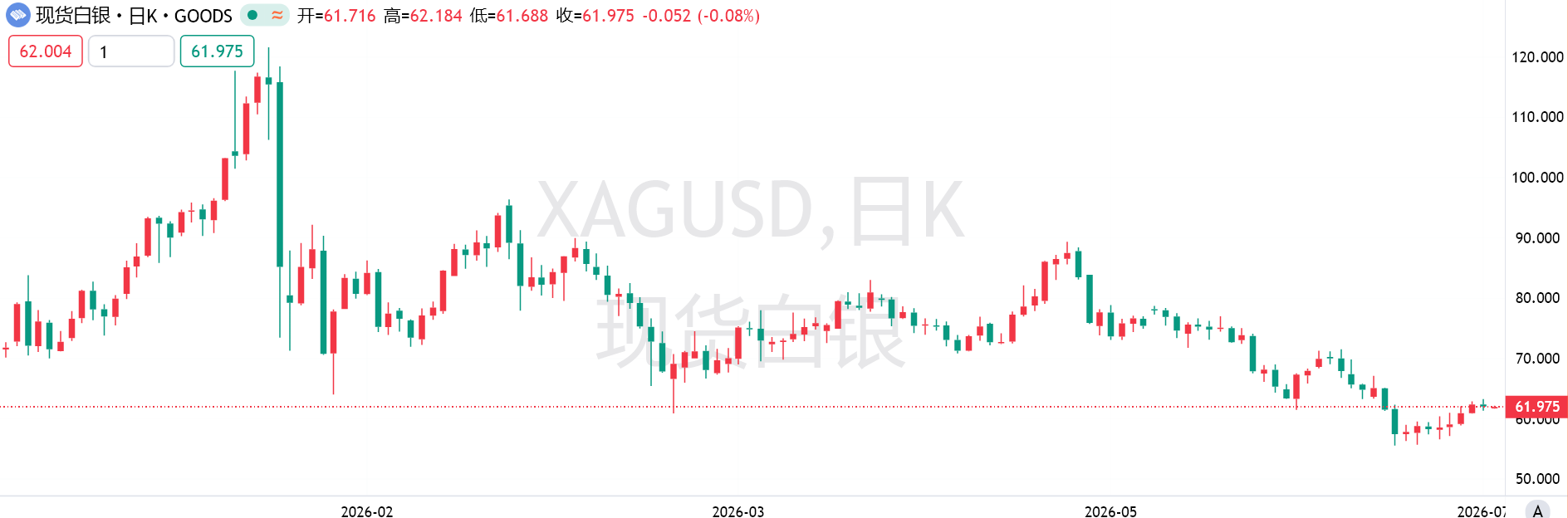
In January of this year, silver prices surged to a historic high. According to data from Dow Jones Market Data, the intraday high reached $121.79 per ounce, with a settlement high of $115.50. However, prices quickly retreated, now dropping nearly half from the peak to around the $60 range.
After hitting the peak, silver prices saw a single-day drop of over 30%, marking one of the largest one-day declines in nearly 50 years. Though silver is known for its volatility, some analysts have described this year’s trend as resembling “meme stock” trading activity.
GoldCore’s research director Jan Skoyles told MarketWatch that the sharp price fluctuations have not altered the demand fundamentals, emphasizing that silver’s “core demand story” still stands. She pointed out that the futures market currently treats silver more as a tool sensitive to interest rate changes, while governments and industry increasingly regard it as a key resource.
This divergence in perception has resulted in a noticeable gap between financial market pricing and physical demand. Skoyles believes that especially as paper silver—such as futures and other financial products—is being sold off, the importance of physical silver is instead rising.
She also mentioned that the market was generally surprised by the scale and speed of the price’s sharp drop from above $120 to below $60, given that there was no corresponding deterioration in demand. While shifts in interest rate expectations, a stronger dollar, and position adjustments certainly impact pricing, they cannot fully explain such dramatic volatility.
Silver possesses dual attributes as both a precious and an industrial metal, with applications spanning electronics, solar, electric vehicles, artificial intelligence data centers, and defense. These sources of demand have not significantly weakened recently.
Solomon Global analyst Nick Cawley told MarketWatch that the “parabolic rise” at the end of January was likely driven primarily by momentum rather than fundamentals, making a sharp correction inevitable at the end of the rally. He believes that a nearly 50% pullback may begin to attract the attention of long-term value investors.
However, Cawley also cautioned that investors should avoid aggressively adding to silver positions while global interest rates could continue rising to curb inflation.
From an annual perspective, silver has dropped about 15% this year, a steeper decline than gold’s roughly 4%, with both metals pressured by a strong dollar and expectations that the Federal Reserve may raise rates further.
Robert Minter, ETF Investment Strategy Director at Aberdeen Investments, analyzed that factors driving silver’s rise earlier this year included: India allowing pension funds to invest in gold and silver for the first time in early December, market concerns over Chinese export restrictions (with about 60% of global supply coming from China), and a prolonged supply deficit.
He noted that these factors attracted considerable short-term capital inflows, but most investors exited quickly once prices started to weaken. However, the withdrawal of speculative funds may actually stabilize the market structure.
In terms of longer-term supply and demand, silver’s fundamentals remain broadly positive. Mike Parkin, Vice President of Strategy and Investor Relations at Hecla Mining, said the company agrees that silver demand remains robust, citing forecasts from the Silver Institute that 2026 will mark the sixth consecutive year of supply deficit, with mine production unable to keep up with demand growth.
The price correction is also seen by some market participants as a necessary process. Paul Mladjenovic, author of Investing in Gold and Silver for Dummies, told MarketWatch that the market “frenzy” at the beginning of the year pushed prices into triple-digit territory too quickly, so a pullback to the $58–62 per ounce range will help “build a bottom.”
He believes that future trends may be reflected more in mining stocks, with those companies expected to deliver strong earnings. Data shows that as of Monday, Wheaton Precious Metals shares have fallen about 2% this year, and Hecla Mining by nearly 14%. However, over an 18-month period, the former rose by about 100% and the latter by around 214%.
Mladjenovic also pointed out that the latest September Comex silver futures are around $62.50 per ounce, a level that is attractive. He expects silver prices might rebound to around $80 by year-end and test the $110–130 range next year.
Disclaimer: The content of this article solely reflects the author's opinion and does not represent the platform in any capacity. This article is not intended to serve as a reference for making investment decisions.
You may also like
Assessing ASTER’s price action after $1.37M token unlock — What’s next?
trade.xyz repays traders after a stock glitch erased $60M in crypto longs
Kioxia kicks off “massive buyback” – Is the “buyback bull market” for storage giants on the way?
Japanese NAND giant Kioxia saw its operating profit in the first quarter surge 28-fold year-on-year and announced a share buyback of up to 800 billion yen, along with a 50% total return target, setting an industry precedent. Supported by AI demand, Kioxia's profits have soared. Meanwhile, Nomura predicts that South Korean stock market giants will also usher in the largest share buyback wave in history, as the memory sector kicks off a cross-market bull market driven by "corporate buybacks" revaluing the sector.
Focus Universal Inc. stock swings from $8.42 to $17.59 as RSI hits 87.3
Crypto prices
More


