
The Dow Jones plunged 1,100 points late at night, the Philadelphia Semiconductor Index fell 5.33%, Microsoft surged after hours thanks to cost-cutting, Meta was sold off due to "burning cash", and capital expenditure became a litmus test.

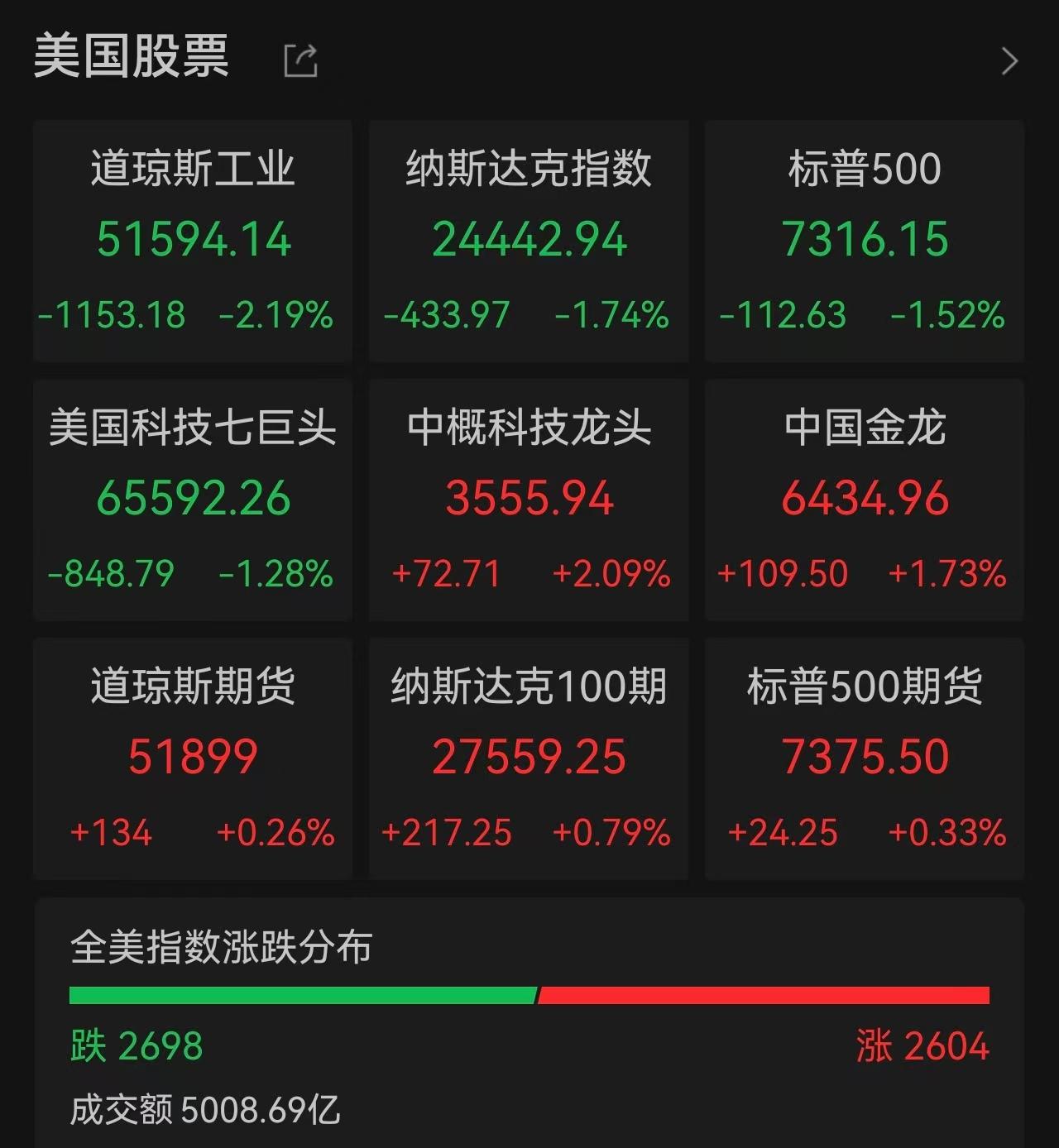
The Federal Reserve maintained its stance, while the sudden escalation of geopolitical tensions in the Middle East caused violent fluctuations in global financial markets on July 29. All three major U.S. stock indexes plunged in late trading, with the Dow Jones falling more than 1,100 points in a single day—its largest drop in over a year. The 30-year U.S. Treasury yield broke through the 5.2% mark, hitting its highest level since 2007, and international oil prices soared nearly 8% in one day, further fueling concerns about inflation.
This July FOMC meeting of the Federal Reserve ended with 9 votes in favor and 3 against, marking the fifth consecutive time that the benchmark interest rate was held steady in the 3.50%-3.75% range. The presidents of the Dallas, Minneapolis, and Cleveland Federal Reserve Banks all advocated for a 25 basis point rate hike—this is the first time since 2016 that three dissenting votes in the same direction have appeared, highlighting the rising hawkish sentiment internally. At the press conference, Chair Walsh reiterated the Fed’s commitment to the 2% inflation target, but maintained the communication style of dropping forward guidance, providing no clear hint about the future policy path.
After hours, tech giants’ earnings reports were a mixed bag: Microsoft’s shares surged on better-than-expected cloud growth and disciplined capital expenditure guidance, while Meta was sold off by the market due to profit declines and a sharp drop in cash flow. In a single night, a combination of policy ambiguity, recurring inflation risks, and anxiety over AI investment returns began to reshape the pricing logic for global risk assets.
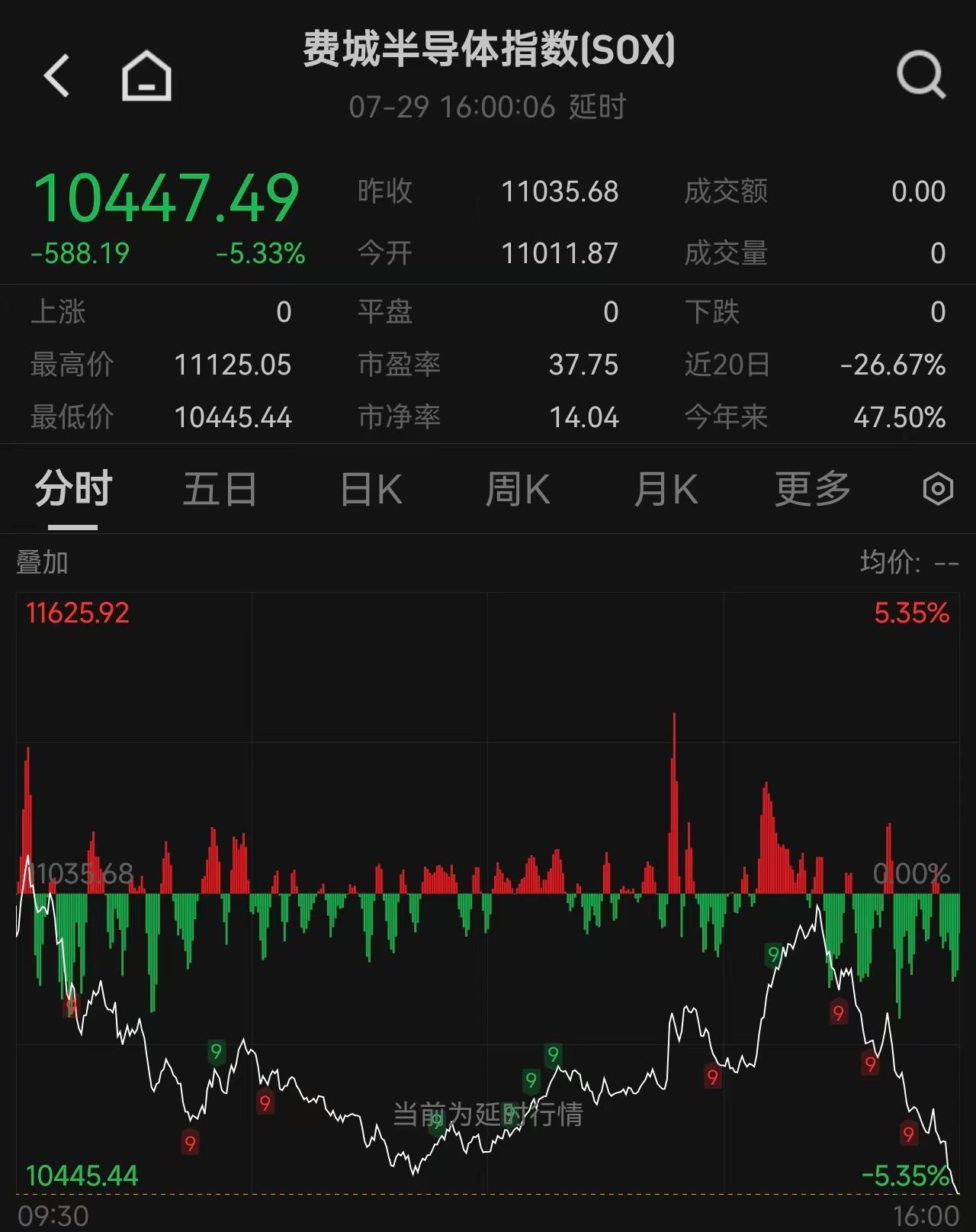
Philadelphia Semiconductor Index falls 5.33%, records five consecutive days of losses
At the sector level, semiconductors were the hardest hit. The Philadelphia Semiconductor Index fell 5.33% in a single day, logging its fifth consecutive losing session and down more than 11% for the month. On the individual stock level, Kioxia fell over 10%, Micron Technology dropped nearly 10%, Applied Materials was down 8.40%, and AMD declined 5.5%. The core of market concerns is that surging long-term rates are compressing growth stock valuations, while debates over the return on downstream AI capital expenditures are casting a shadow over upstream chip sector earnings expectations.
Leading tech stocks generally weakened, with the Wind U.S. Tech Big Seven Index falling 1.28%. Nvidia led losses with a 3.55% drop, Tesla fell nearly 3%, and only Google closed up 0.95%. Consumer stocks were also under pressure: Procter & Gamble fell 1.87% after single-quarter revenue missed expectations, while Ford rallied 2.14% on better-than-expected earnings and an upgraded full-year guidance.
In sharp contrast to the overall downturn in U.S. equities, China concept stocks staged a strong countertrend performance. The Nasdaq Golden Dragon China Index rose 1.73% for the day, led by the education sector, with New Oriental surging over 15% and TAL Education rising more than 4%. The e-commerce and internet sector also rebounded, with Pinduoduo up 3.05%, JD.com and NetEase gaining over 1%, and Li Auto up more than 4%.
Microsoft’s “lightened load” embraced, Meta’s “cash burn” sold off
The release of two heavyweight tech earnings after hours further amplified market divergence and sharply reflected the core contradiction in the current AI narrative—efficiency and return on capital spending.
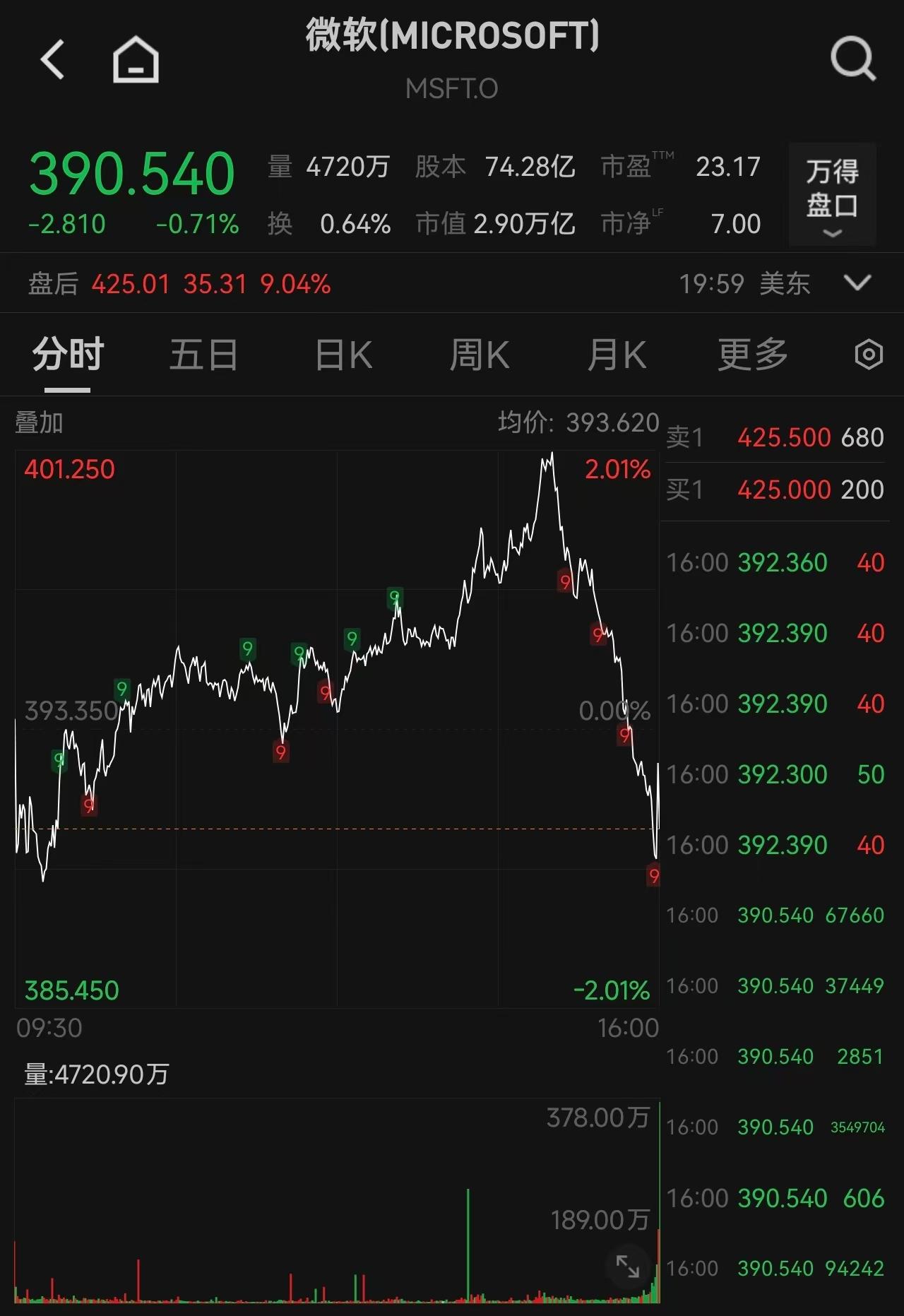
Microsoft’s fourth-quarter results comprehensively exceeded market expectations. Quarterly revenue was $90.001 billion, up 18% year-on-year; net profit was $35.77 billion, with diluted earnings per share of $4.81, both notably above analyst consensus. The core growth driver Azure Cloud Computing business posted 43% year-on-year revenue growth, accelerating from the previous quarter, and broke $100 billion in annual revenue for the first time in FY2026. AI commercialization on the B2B side also accelerated: Microsoft 365 Copilot paid seats topped 30 million, up 10 million in just one quarter. What excited the market even more was the capital spending guidance: Microsoft lowered its FY2027 capex forecast from $190 billion to $175 billion and pledged to maintain positive free cash flow. Driven by this, Microsoft shares jumped over 9% after hours.
On the other hand, Meta’s results reignited market concerns. Second quarter revenue stood at $60.8 billion, up 28% year-on-year, only slightly beating expectations; but net profit dropped 14% year-on-year to $15.8 billion, markedly below market consensus, as costs and expenses soared 55% year-on-year—mainly due to litigation and layoff severance costs. More notably, free cash flow deteriorated rapidly, plunging from $8.55 billion in the same period last year to just $784 million this quarter—a 91% decline, with consensus expecting it to turn negative next quarter. Meanwhile, Meta raised the lower limit of its full-year capex guidance from $125 billion to $130 billion, and its Q3 revenue guidance midpoint was also below market expectations. After the results, Meta shares fell over 7% after hours, having already dropped for ten consecutive sessions prior.
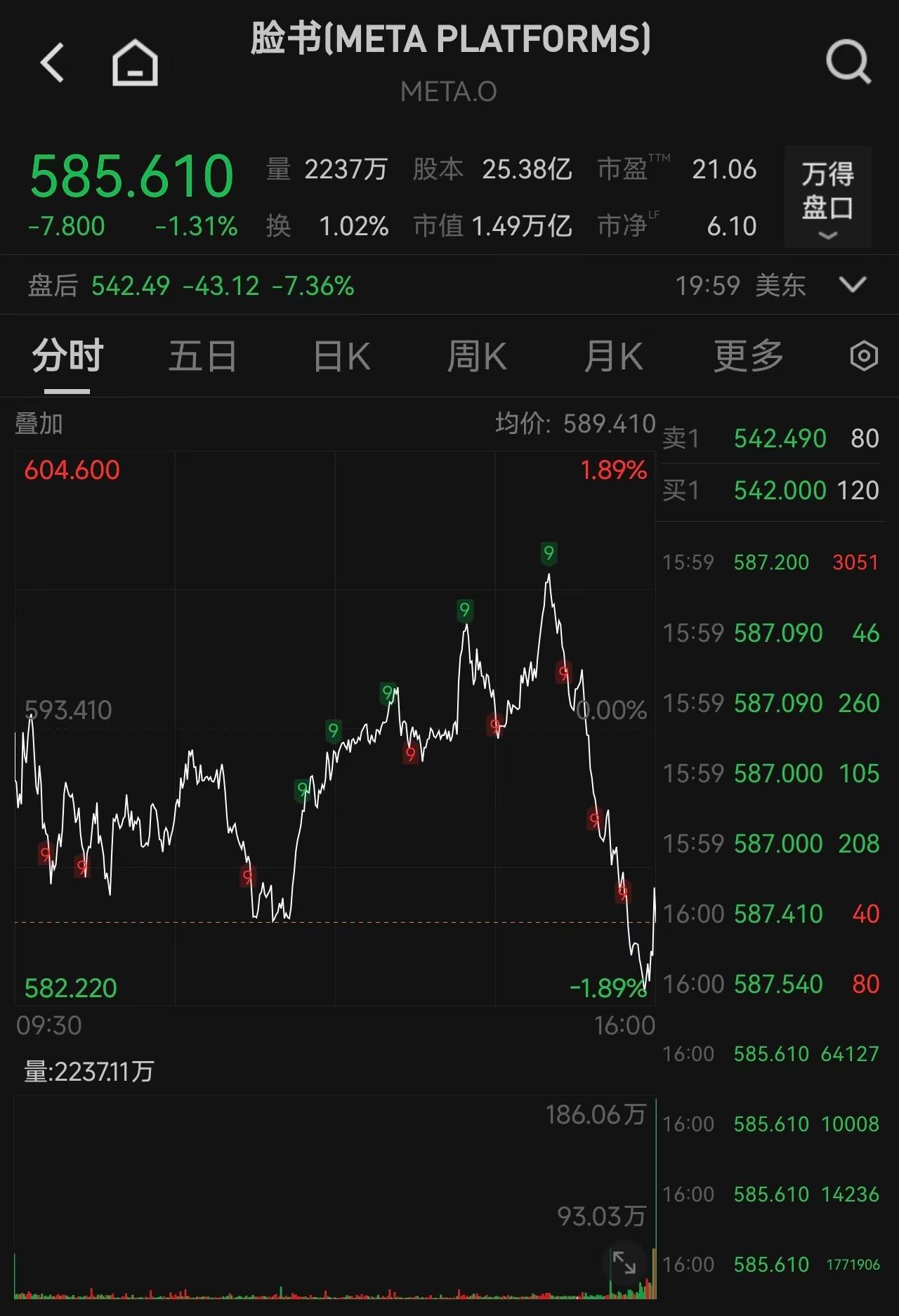
In the past two years, the market held an accommodating attitude toward tech giants’ AI capital spending, viewing heavy investment as necessary to secure future tracks. But as global AI computing power construction has reached unprecedented scale, investors are now scrutinizing return on investment. Microsoft’s capex forecast cut triggered the surge mainly because it signaled to the market a “rational investment with profitability in mind”; by contrast, Meta’s continual spending increases and deteriorating earnings and cash flow have fueled worries that “AI investments may not deliver returns.”
International oil prices surge nearly 8%, fueling inflation rebound expectations
Meanwhile, ongoing Middle East tensions are forming a new inflationary force. After Iran attacked U.S. targets on the 29th local time, U.S. President Trump made it clear retaliation would follow, and concerns of escalating Middle East turmoil and oil supply disruption quickly intensified in the market.
New York oil futures jumped 6.56% in one day; Brent crude rose 7.91%. The oil rebound directly elevated expectations for a future inflation rebound, making Federal Reserve policy even more difficult—staying put could let inflation rebound, while a hasty rate hike could impact the economy and financial markets.
Carson Group’s chief market strategist Ryan Detrick said the key issue now is how much pressure there really is for a September rate hike: “Inflation remains high, and with oil prices surging, the market now expects the next rate hike will happen in September.”
Disclaimer: The content of this article solely reflects the author's opinion and does not represent the platform in any capacity. This article is not intended to serve as a reference for making investment decisions.
You may also like
Focus Universal Inc. stock swings from $8.42 to $17.59 as RSI hits 87.3
United States Oil Fund stock holds bullish trend, eyes $140.81 breakout
US stocks see "better-than-expected" earnings growth this earnings season; tech giants experience simultaneous increases in "capital expenditure and AI returns"
Goldman Sachs stated that the U.S. stock market delivered strong Q2 earnings, with S&P 500 EPS rising 26% year-on-year after excluding one-off items, and AI infrastructure contributing about one-third of the profit growth. Cloud giants' cloud business growth surged to 48%, and capital expenditure is expected to exceed $1 trillion by 2027. Robust fundamentals are providing support for the AI market rally.
The AI unicorn IPO feast has been put on hold! OpenAI reportedly postpones its listing until 2027, SpaceX's plunge becomes the most glaring warning.
According to reports, after SpaceX's unsuccessful debut, OpenAI is considering postponing its IPO until 2027.

Crypto prices
More


