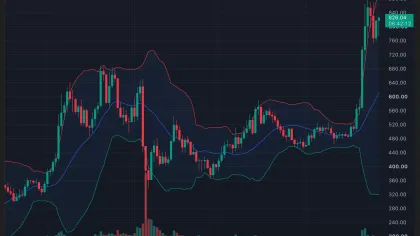
CoinMarketCap’s Altcoin Season Index has fallen to 35, a five-point drop from the previous day, signaling that Bitcoin is currently outperforming most major altcoins. The index, which tracks the price performance of the top 100 cryptocurrencies by market capitalization (excluding stablecoins and wrapped tokens), is a widely watched gauge of market sentiment. A reading below 50 typically indicates a ‘Bitcoin season,’ while a reading above 75 suggests a strong altcoin season.
Understanding the Altcoin Season Index
The Altcoin Season Index is calculated by comparing the 90-day performance of Bitcoin against the top 100 altcoins. When at least 75% of those altcoins outperform Bitcoin, the index moves toward 100, indicating a shift in investor preference toward alternative cryptocurrencies. Conversely, a reading near 0 signals that Bitcoin is dominating the market, often as a safe-haven asset during periods of uncertainty or when institutional money flows into BTC.
The current reading of 35 suggests that while some altcoins are still performing well, the overall market is favoring Bitcoin. This is a notable shift from earlier in the year when several altcoins, including Ethereum and Solana, posted significant gains. The index’s decline over the past 24 hours reflects a broader market trend where Bitcoin’s price stability has attracted more attention, possibly due to macroeconomic factors or regulatory developments affecting the crypto space.
Why This Matters for Investors
For traders and investors, the Altcoin Season Index is more than just a number. It helps in asset allocation and timing. A lower index reading often prompts investors to rotate funds into Bitcoin or hold cash, while a higher reading encourages altcoin exposure. The recent dip could signal a period of consolidation, where Bitcoin leads the market before a potential altcoin rally later.
However, the index is a lagging indicator, reflecting past performance rather than predicting future trends. It is also sensitive to the selection of coins in the top 100, which changes frequently. Therefore, it should be used in conjunction with other metrics like trading volume, on-chain activity, and market sentiment.
Broader Market Context
The decline in the Altcoin Season Index comes amid a mixed week for cryptocurrencies. Bitcoin has maintained its position above key support levels, while several mid-cap altcoins have experienced sharp corrections. This divergence is typical in a maturing market where investors become more selective, favoring projects with strong fundamentals over speculative tokens.
Additionally, the regulatory environment continues to influence market dynamics. Recent clarity on Bitcoin ETFs and institutional adoption has reinforced Bitcoin’s status as a digital gold, drawing capital away from riskier assets. Meanwhile, altcoins face increased scrutiny from regulators, which may be contributing to their underperformance.
Conclusion
The Altcoin Season Index’s drop to 35 underscores a period of Bitcoin dominance, but it is not necessarily a negative signal for altcoin investors. Historically, Bitcoin seasons have preceded altcoin rallies, as profits from BTC often rotate into smaller cryptocurrencies. The key is to monitor the index over the coming weeks, along with other market indicators, to identify potential turning points. For now, the market appears to be in a wait-and-see mode, with Bitcoin leading the charge.
FAQs
Q1: What is the Altcoin Season Index?
The Altcoin Season Index is a metric by CoinMarketCap that compares the 90-day performance of Bitcoin to the top 100 altcoins (excluding stablecoins and wrapped tokens). A reading above 75 indicates altcoin season, while a reading below 50 suggests Bitcoin season.
Q2: Why did the index drop by 5 points in one day?
The index is based on 90-day performance, so daily changes reflect the rolling window. A drop can occur when Bitcoin’s recent performance strengthens relative to altcoins, or when several altcoins underperform Bitcoin over the past 90 days.
Q3: How should investors use this index?
Investors use the index to gauge market sentiment and adjust their portfolios. A low reading may encourage Bitcoin accumulation, while a high reading might signal a good time to consider altcoin exposure. However, it should be used alongside other analyses, as it is a lagging indicator.