

The Federal Reserve has signaled a willingness to increase interest rates if inflation does not show clear signs of slowing in the near future. Fed Governor Michael Barr stated that policymakers remain concerned about persistent price pressures, with inflation stuck above the central bank’s 2% target for more than five years.
Fed’s Barr warns interest rates could rise if US inflation fails to cool
By:Cointurk
Bitget offers one-stop trading for cryptocurrencies, stocks, and gold. Trade now!
A welcome pack worth 6200 USDT for new users! Sign up now!
Fed leadership signals readiness for rate hikes
During remarks at a banking forum in Washington, Barr emphasized the importance of concrete evidence that inflation is moderating. He noted that if upcoming data inspire confidence in a return toward the 2% target, officials may take additional time to assess the current policy stance. However, without such progress, he said he would support swift measures to raise rates.
“If trends in the data give me some confidence that inflation is moderating on a path to 2%, then I think we can take a bit more time to assess our policy stance. However, if inflation appears not to be moderating sufficiently, then I think we should act decisively to raise rates.”
The current federal funds rate target range is set at 3.50% to 3.75%. Mortgage rates are also high, with 30-year fixed rates averaging around 6.66% to 6.68%.
Hawkish tone sparks debate among economists
Fed Chair Kevin Warsh addressed policymakers last week at the annual Jackson Hole symposium, stating that officials would “have work to do” if they lacked confidence in a sustainable return to the 2% inflation goal. Warsh’s statement was interpreted by analysts as his clearest indication yet that further tightening may be necessary.
ETH
SOL
BSC
ROBINHOOD
PAY
USDT
RECEIVE
AAPL
Barclays and other major financial firms responded to Warsh’s remarks by describing them as notably hawkish and suggesting a strong inclination toward additional monetary tightening. Barclays noted that Warsh offered an implicit case for raising rates, even while he refrained from providing explicit forward guidance. The brokerage also observed that while it foresaw softer monthly inflation readings, challenging base effects would likely complicate further progress through the rest of the year.
Kevin Warsh has served as the Chair of the Federal Reserve since 2026, overseeing monetary policy and financial stability for the United States central bank.
Mini dictionary: Jackson Hole symposium, an annual meeting of central bankers, economists, and policymakers held in Jackson Hole, Wyoming, where major monetary policy topics are discussed and key policy signals are often given.
US inflation remains above target
Recent inflation data revealed that headline prices rose 3.7% over the last 12 months, or 3.3% when excluding food and energy costs. These figures highlight the continued distance from the Fed’s 2% objective. The central bank is set to receive one more round of inflation data next week, when the latest consumer and producer price indexes are released.
The Federal Reserve’s next policy meeting, where officials will decide on any rate changes, is scheduled for September 16.
Metric Current Value Target/Reference
| Fed funds rate | 3.50%–3.75% | Set by Fed |
| 30-year mortgage rate | 6.66%–6.68% | Market average |
| Headline inflation (annual) | 3.7% | Fed target: 2% |
| Core inflation (annual) | 3.3% | Fed target: 2% |
0
0
Disclaimer: The content of this article solely reflects the author's opinion and does not represent the platform in any capacity. This article is not intended to serve as a reference for making investment decisions.
Understand the market, then trade.
Bitget offers one-stop trading for cryptocurrencies, stocks, and gold.
Trade now!
You may also like
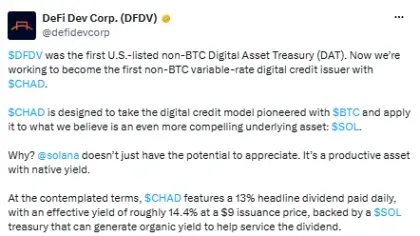
DFDV uses CHAD stock to buy more SOL: A new catalyst for Solana’s $150 target?
AMBCrypto•2026/09/01 19:36
Gold collapses as US-Iran strikes send Oil, US yields higher
FXStreet•2026/09/01 19:33
XRP could target $2.10 if breakout above $1.43 confirmed, analyst says
Cointurk•2026/09/01 19:30
Ark spreads $37.4M of Block across three ETFs to stay under its 10% cap
Cryptopolitan•2026/09/01 19:18
Crypto prices
More
Bitcoin
BTC
$77,298.86
-2.22%

Ethereum
ETH
$2,420.05
-2.61%

Tether USDt
USDT
$0.9995
-0.03%

BNB
BNB
$680.83
-1.71%

XRP
XRP
$1.36
-1.90%

USDC
USDC
$0.9998
-0.02%

Solana
SOL
$100.09
-3.79%

TRON
TRX
$0.3233
-3.12%

Hyperliquid
HYPE
$81.91
-2.38%

Dogecoin
DOGE
$0.08209
-1.48%
How to buy BTC
Bitget lists BTC – Buy or sell BTC quickly on Bitget!
Trade now
Become a trader now?A welcome pack worth 6200 USDT for new users!
Sign up now