
Oil Price Storm Sweeps the Aviation Industry! Europe’s Largest Low-Cost Airline Ryanair Warns: Jet Fuel May Reach $140 This Winter, Will Cut Capacity to Preserve Profits

The energy shock is accelerating its transmission from the commodity markets to the real economy, with the aviation industry feeling the pressure first.
On Wednesday, reports indicated that Europe's largest low-cost airline, Ryanair, announced a reduction in its winter capacity and warned that if jet fuel prices remain high, the European aviation industry will face greater cost pressure, which could lead to a "substantial increase" in short-haul ticket prices in Europe next year.
Ryanair stated that the company has already hedged approximately 80% of its jet fuel needs, making it one of the airlines with the highest hedge ratio in the industry, yet it still faces unhedged exposure equivalent to jet fuel priced at $140 per barrel. In this high oil price environment, the company chose to proactively reduce winter flights to lower fuel costs, estimating savings of 70 to 100 million euros (approximately $81 million to $116 million) as a result.
This decision sends a more noteworthy signal: when an airline has already locked in most of its fuel costs in advance yet still feels the need to cut capacity to protect profits, it means that the energy price shock is no longer just a trading theme in the commodity markets, but has begun to substantively affect corporate operational decisions.
Moreover, the pressure facing the aviation industry is not merely due to rising crude oil prices. The repeatedly changing situation in the Strait of Hormuz is simultaneously pushing up the prices of gasoline, diesel, jet fuel, and European natural gas, making it difficult for companies to alleviate cost pressure solely through a decline in crude oil prices. Brent crude oil is currently still around $95 per barrel, with a cumulative increase of more than 55% this year.
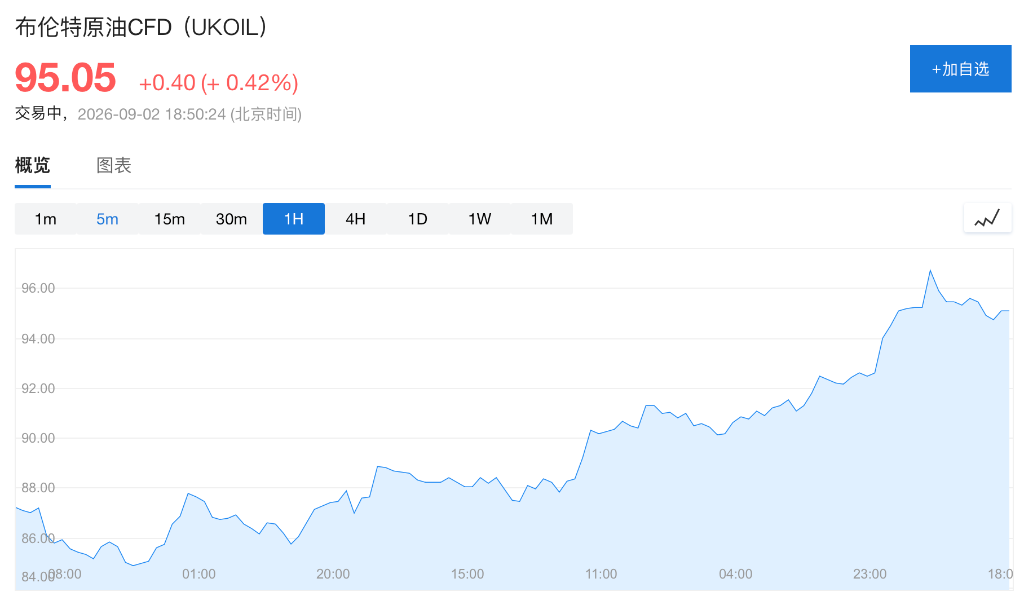
Jet Fuel Costs Surge, Even High Hedge Ratios Struggle to Shield Airlines
Ryanair’s capacity reduction directly illustrates how energy prices are being transmitted to airline profit margins.
The company has managed to lock in around 80% of its jet fuel requirements through hedging, but the remaining portion is still exposed to a high oil price environment. Rather than maintaining all flights as fuel costs soar, Ryanair chose to proactively reduce capacity, thus securing more room for cost and profit control.
Carlyle Group senior advisor and renowned commodity analyst Jeff Currie previously warned that the market may underestimate the pressure faced by the refined oil market. On August 18, he said in an interview that the market should not focus only on crude oil prices, since what consumers actually use are gasoline, diesel, and jet fuel, and the supply-demand situation in these refined oil markets "looks much worse."
This means that even if crude oil prices later decline, cost pressures on the aviation industry may not ease accordingly.
Tensions in Hormuz Spread the Energy Shock from Crude Oil to Refined Products
The situation in the Strait of Hormuz remains the key variable driving this round of energy price increases. Negotiations over passage through the Strait have repeatedly broken down, causing expectations for a rapid easing of tensions to be continually dashed.
Rich Privorotsky, head of One Delta Trading at Goldman Sachs, pointed out in his daily briefing to clients on Tuesday that each previous surge in oil prices was generally accompanied by intervention, diplomatic efforts, or other forms of cooling attempts. But recently, the situation has changed, as the U.S. launched strikes on Iranian targets while oil prices were already up and during trading hours—further intensifying market concerns.
More notably, the shock is no longer limited to crude oil. Privorotsky stated that even if the U.S. subsequently takes steps to de-escalate the situation, crude oil would just be part of the issue, as prices for distillates, gasoil, diesel, and European natural gas have all surpassed critical levels.
For airlines, this means that what really warrants vigilance is not just Brent crude oil, but rather the continued pressure on the refining and refined products markets, which pushes jet fuel prices even higher.
Low U.S. Strategic Petroleum Reserves Limit Policy Buffer
The sustained rise in oil prices is also putting growing pressure on the U.S. government.
U.S. Secretary of Energy Chris Wright said on Tuesday that about 17 million barrels of crude oil were transported through the Strait of Hormuz on Monday, which has not significantly declined from the pre-crisis average of around 20 million barrels per day. However, Privorotsky believes this data remains highly contentious.
Treasury Secretary Bassent stated that as overland pipeline routes gradually bypass the Strait of Hormuz, the Strait could become "worthless" within two years.
In the short term, however, there is not much policy buffer that the U.S. can utilize. The country's strategic petroleum reserves have now dropped to about 286 million barrels, far below the maximum capacity of about 730 million barrels and approaching the estimated operating safety range of 250 to 300 million barrels.
Disclaimer: The content of this article solely reflects the author's opinion and does not represent the platform in any capacity. This article is not intended to serve as a reference for making investment decisions.
You may also like
Gold, silver rebound as soft ADP tempers Fed-hike trade - Kitco AM Report
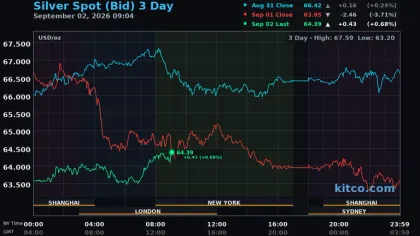
Silver rebounds above $64 as weak US jobs data challenges hawkish Fed bets
DeFi faces real-world limits as centralization risks persist across key layers
Vertiv to Acquire Utility Innovation in Up to $2.6 Billion Deal
Crypto prices
More


