

The Bank for International Settlements (BIS), the coordinating institution for central banks globally, has officially confirmed it is leveraging the XRP Ledger (XRPL) to power a pilot designed to boost the integrity of official statistical data.
BIS confirms XRPL as blockchain backbone for official data pilot
By:Cointurk
Bitget offers one-stop trading for cryptocurrencies, stocks, and gold. Trade now!
A welcome pack worth 6200 USDT for new users! Sign up now!
New blockchain data verification pilot
A newly published working paper from the BIS Monetary and Economic Department details how the group built and tested a proof-of-concept system using XRPL as its blockchain infrastructure. The report, titled “Verifiable Official Statistics: A Blockchain-Based Approach,” outlines a method for anchoring statistical datasets to a public blockchain in a cryptographically secure manner.
Crypto researcher SMQKE publicly shared the report, emphasizing that XRP was mentioned 101 times throughout the paper. The document, released in September 2026, makes clear the BIS relied specifically on XRPL due to its minimal fees, rapid consensus finality, and accessible developer tools.
This pilot details a system where official statistics in SDMx format are processed through cryptographic hashing, creating a unique fingerprint that is then recorded on the XRP Ledger for tamper-proof verification.
Technical operations and infrastructure choice
BIS engineers describe their process as “anchoring,” wherein every dataset is linked to an on-chain record. According to the paper, anchoring a single dataset costs roughly $0.000003 in transaction fees and achieves confirmation within one or two seconds under test conditions. The entire process, from publication to on-chain recording, takes three to five seconds.
ETH
SOL
BSC
ROBINHOOD
PAY
USDT
RECEIVE
AAPL
The institution credits XRPL’s cost-efficiency and reliable transaction throughput as critical factors behind its selection for the pilot. Anchoring guarantees that published data cannot be surreptitiously modified, providing traceable and transparent evidence of authenticity.
Feature XRPL Metric
| Average transaction fee | $0.000003 |
| Data verification time per dataset | 1–2 seconds |
| Publication latency | 3–5 seconds |
Potential impact on XRP adoption
The BIS, often regarded as the “central bank for central banks,” is responsible for oversight and innovation in financial systems for over 60 member banks worldwide. Previously, XRP has appeared in prominent institutional documents, but this pilot marks a rare occasion of direct integration.
The working paper highlights several future use cases based on this blockchain foundation, including real-time data verification for artificial intelligence applications, regulatory reporting automation, and connectivity to tokenized finance products like inflation-linked bonds and derivatives. The BIS outlined that verified SDMx datasets could serve as programmable inputs, allowing digital assets to automatically adjust conditions based on changing economic indicators.
Each scenario would require continued XRPL activity, inferring that wider institutional use could increase the utility and transaction volume of XRP on a global scale.
Mini dictionary: BIS (Bank for International Settlements) – An international financial institution comprised of central banks, aiming to support monetary and financial stability worldwide.
Institutional testing and transparency
The report stressed that the XRPL-based pilot is not just theoretical. BIS developers built, implemented, and measured the real-world performance of their on-chain anchoring mechanism, releasing both their findings and the open-source code for public review. This transparency is notable within institutional circles, where pilot projects commonly remain unpublished or inaccessible for external evaluation.
The BIS’s pilot demonstrates how public blockchain infrastructure and verifiable record-keeping can work alongside global financial data systems, creating opportunities for programmable finance and trusted statistics.
Market participants responded with enthusiasm, viewing the BIS’s move as validation of XRPL’s capabilities and utility beyond crypto-native ecosystems. Observers stated that such institutional adoption may lay groundwork for future applications in core financial infrastructure.
0
0
Disclaimer: The content of this article solely reflects the author's opinion and does not represent the platform in any capacity. This article is not intended to serve as a reference for making investment decisions.
Understand the market, then trade.
Bitget offers one-stop trading for cryptocurrencies, stocks, and gold.
Trade now!
You may also like
Why did Nvidia spend $13B on Hugging Face acquisition?
Cryptopolitan•2026/09/03 18:24
Tokenized equity addresses hit record 1.9M: Will this fuel Bitcoin’s September run?
AMBCrypto•2026/09/03 18:03

CFTC Advisory Sets Expectations For Tokenized Collateral At Clearinghouses
Newsbtc•2026/09/03 18:00
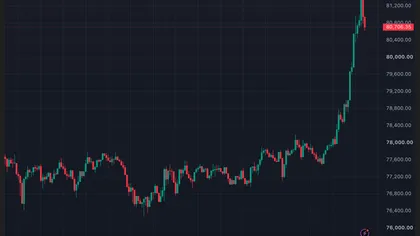
The Bull Market Heated Up After the Fed’s Statement: Bitcoin Price Surpassed $81,000 – What’s Going On?
CryptoNewsNet•2026/09/03 17:54
Crypto prices
More
Bitcoin
BTC
$81,030.83
+4.68%

Ethereum
ETH
$2,505.4
+4.66%

Tether USDt
USDT
$1
+0.04%

BNB
BNB
$722.13
+5.12%

XRP
XRP
$1.46
+9.21%

USDC
USDC
$0.9999
+0.00%

Solana
SOL
$104.78
+5.38%

TRON
TRX
$0.3312
+2.21%

Hyperliquid
HYPE
$84.09
+2.80%

Zcash
ZEC
$957.82
+18.00%
How to buy BTC
Bitget lists BTC – Buy or sell BTC quickly on Bitget!
Trade now
Become a trader now?A welcome pack worth 6200 USDT for new users!
Sign up now