
High-beta U.S. stocks surge, Snowflake up 26% intraday, Tesla up nearly 8%, AI earnings and Waller's dovish shift ignite risk appetite

Dell rebounded nearly 25% from pre-earnings levels, with its results showing that AI spending continues to flow into servers, networks, and data center infrastructure. Snowflake delivered strong earnings and raised its full-year guidance, further fueling momentum: AI is becoming a new growth engine for software. The “power shortage” logic for AI data centers gained traction again, with Bloom Energy surging nearly 10% intraday. Robinhood, bitcoin whale Strategy, and other cryptocurrency-related stocks jumped double digits intraday, highlighting a return of risk appetite. However, Broadcom fell nearly 7% after its earnings, reflecting the market's higher expectations for AI performance.
On Thursday, September 3rd Eastern Time, risk appetite rebounded significantly across the US stock markets, with high-beta growth stocks becoming the most eye-catching assets on the board.
During the session, all three major US stock indices rose over 1%. AI data cloud leader Snowflake, which had just released an outstanding earnings report, surged as much as 26%. Beneficiary of the AI infrastructure boom Bloom Energy once rose nearly 10%, Tesla jumped nearly 8% ahead of its Cybercab press conference, and cryptocurrency concept stocks such as bitcoin whale Strategy saw double-digit gains.

Behind this wave of high-beta gains are two key drivers: on one hand, Dell Technologies and Snowflake have both released earnings far above expectations, reinforcing market confidence in AI infrastructure and enterprise AI demand; on the other hand, Federal Reserve Governor Waller sent out relatively dovish policy signals, stating that if August inflation data continues to improve, he would lean towards supporting keeping interest rates unchanged. As a result, expectations for a September rate hike cooled significantly, US Treasury yields retreated, and high-valuation, high-volatility growth stocks gained upside space.
However, not all AI-related trades benefited equally. Although Broadcom's third-quarter AI semiconductor revenue soared 221% year-on-year with overall results surpassing expectations, the company's Q4 revenue guidance was slightly below market expectations and the AI revenue outlook only marginally exceeded forecasts, causing its stock price to drop nearly 6.8% during the session. This indicates that after previous strong rallies, the market's requirements for AI companies to deliver earnings are becoming even stricter.
Dell Fires the First Shot: AI Server Orders Hit a Record, Full-Year Guidance Sharply Raised
The fundamental catalyst for this market round began after hours on Tuesday when Dell Technologies reported earnings.
Dell's second-quarter revenue reached $47 billion, up 58% year-over-year; non-GAAP earnings per share were $7.04, up 203% year-over-year, both strong performances. More importantly, the company's AI-optimized server business continued to boom: Q2 AI-optimized server revenue reached $16.4 billion, up 100% year-over-year, AI server orders hit a record $60.9 billion, and quarter-end backlog orders hit $95 billion.
Driven by accelerating AI demand, Dell sharply raised its guidance for fiscal year 2027: full-year revenue is now expected at $192 billion, up from $167 billion; AI-optimized server revenue guidance rose from $60 billion to $74 billion; and non-GAAP EPS guidance was increased from $17.90 to $25.50.
This set of numbers sent a very direct signal to the market: AI capital expenditure has not slowed down and is continuing to spill over into servers, networking, and data center infrastructure.
This is also an important backdrop for Thursday's high-beta rally—investors are again seeking more cyclically leveraged beneficiaries in the AI investment cycle, not just traditional large-cap tech stocks.
As Dell hit new intraday highs on Thursday, it was up 7.8%, and nearly 24.9% higher than Tuesday's close before the earnings release—a cumulative gain of nearly 25% from the earnings announcement to Thursday's intraday high.

Snowflake Adds Fuel to the Fire: AI Is Becoming a New Engine for Software Growth
After the close on Wednesday, AI data cloud leader Snowflake released another strong earnings report.
Snowflake's Q2 product revenue reached $1.49 billion, up 37% year-over-year and beating expectations; the company also raised full-year product revenue guidance to $6.07 billion, higher than the previous $5.84 billion.
Even more noteworthy for the market, its AI business is clearly accelerating. CEO Sridhar Ramaswamy stated that AI contributed about half of the recent growth acceleration. New products such as the AI programming assistant Cortex Code and enterprise chat solution CoWork have also seen rapid adoption. Reuters noted that demand for Snowflake's AI products is driving overall growth acceleration and has led at least 34 brokerages to raise their price targets.
The market reacted extremely positively: Snowflake hit a new intraday high, surging over 25.7%—making it one of the most dazzling stocks of the day.
AI software trades quickly followed: ServiceNow rose as much as 7.5% intraday; Salesforce hit a new high up 4.4%; Adobe jumped nearly 4.8%.
This shows that the market is trading on a broader logic than just “strong AI server demand”: AI capital expenditure is not only benefiting hardware vendors like Nvidia, Dell, and Broadcom—it is also increasingly translating into revenue growth for enterprise data, cloud computing, and software companies.
Broadcom: "The Stronger, The Sharper the Decline": Market Now Demands Even More from AI Results
Yet as Snowflake ignited software stocks, Broadcom, which also reported earnings after Wednesday's close, told another story.
Broadcom's Q3 revenue was around $29.6 billion, up 86% year-on-year; AI semiconductor revenue reached $16.7 billion, up 221% year-over-year and up 54% sequentially, both significantly surpassing expectations.
Nevertheless, the stock price slumped.
The reason: the market is now focused on the next quarter.
Broadcom expects Q4 revenue to be about $34.8 billion, while market estimates were around $35 billion; Q4 AI revenue is forecast at around $21.7 billion, which, while still fast-growing, is only slightly above expectations.
As a result, Broadcom's stock dropped as much as 6.8% to the intraday low on Thursday, later narrowing losses to close down less than 3%.

This is a phenomenon worth noting: even with AI semiconductor revenue up 221% year-over-year and results exceeding expectations, the share price can still drop sharply.
This does not mean the market is suddenly bearish on AI. On the contrary, it shows that the “bar” for AI trades is now higher than ever—for core AI companies with already lofty valuations, even “beating expectations” may not be enough; the market demands even stronger forward guidance, clearer growth certainty, and faster earnings realization.
Waller Sends Key Signal: If Inflation Cooperates, He Prefers to Stay Put
The real driver of Thursday’s rise in risk sentiment is the shift in Federal Reserve policy expectations.
Fed Governor Waller stated that if the upcoming August inflation readings continue the improvement seen in June and July, he would support maintaining current rates; but if inflation shows a clear rebound, he is still open to a rate hike.
On the surface, Waller is keeping the option to hike, but what the market noticed is his attitude has changed compared to before.
Nick Timiraos, known as the “new Fed mouthpiece,” pointed out that Waller’s policy stance shows a subtle shift: previously, he was more worried about inflation risks and favored hikes; now, he appears more optimistic and, if inflation stays under control, leans towards leaving rates unchanged.
This is especially crucial for markets.
Previously, a hawkish message from Fed’s Waller at Jackson Hole pushed up short-term Treasury yields and put rate hike risk back on the table; now, Waller’s remarks have partially offset those tightening expectations.
Market pricing adjusted rapidly. On Thursday, traders’ probability for a 25bp rate hike in September dropped from nearly 70% the previous day to about 50%.
The 10-year Treasury yield also retreated from recent highs near 4.8%, falling intraday to around 4.75%.
For high-beta growth stocks, this amounts to a simultaneous tailwind in both fundamentals and valuation.
From Snowflake to Robinhood: High-Beta Trades Spread Broadly
As upward pressure on rates eased for now, capital began rotating from core AI assets to even higher volatility, more leveraged targets.
Cryptocurrency concept stocks were particularly active. Robinhood hit a session high with gains approaching 17%, Strategy rose 15.4%, and Coinbase climbed 11.9%. Bitcoin rebounded near $80,000, further reinforcing this risk-on trade.

Meanwhile, Tesla surged nearly 7.6% at its intraday peak, Meta rose nearly 4.5%, and Nvidia hit a new high up nearly 2.7%.

This is already more than just an “AI earnings rally”—it is beginning to take on the characteristics of a typical high-beta risk-on comeback.
Specifically, Tesla's gains were further catalyzed by its own event—on that day, the company was set to hold its Cybercab-related press conference, and the market anticipated that AI narratives around self-driving and Robotaxi could become new valuation drivers.
AI Data Center “Power Shortage” Narrative Heats Up Again, Bloom Energy Surges Nearly 10% Intraday
Another noteworthy high-beta stock is Bloom Energy.
The stock rallied more than 9.7% intraday, noticeably outperforming the market as well as other fuel cell peers.

The market traded not just on the traditional clean energy theme, but more on the power bottleneck of AI data centers.
With AI compute infrastructure expanding rapidly, data centers require ever more reliable power, while grid expansion and integration take time in some parts of the US. Bloom Energy’s on-site fuel cell power generation is thus seen by some investors as a potential beneficiary of the AI data center “power shortage” problem.
Analysis from 247 Wall St also pointed out that an important backdrop for Bloom Energy's rally Thursday was overall market risk appetite returning, along with renewed focus on the theme of AI data center power demand.
Thus, Bloom Energy’s rally actually represents another AI trading chain:
AI compute expansion → data center power demand surges → grid supply bottleneck → on-site power generation demand → high-beta power stocks sought after by capital.
This logic also explains why on Thursday, flows did not just stick with AI chip leaders like Nvidia, but instead spread further to AI infrastructure, power, and even fuel cell stocks with higher leverage.
Waller’s "dovish shift" is just a catalyst—Friday's Nonfarm Payroll Is the Next Test
As of intraday Thursday, this high-beta party still cannot simply be understood as the Fed turning dovish.
Waller’s main condition remains “if August inflation continues to improve.” August CPI will be released September 11, just ahead of the September 15-16 FOMC meeting, so it remains the key data point for policy direction.
Meanwhile, US jobs data due Friday will also continue to influence the market’s assessment of the Fed.
Therefore, a more accurate description of Thursday's market action is not that “rate cut trades are fully back,” but rather: rate-hike trades have cooled off.
With strong earnings from Dell and Snowflake reigniting confidence in AI growth, and Waller’s comments temporarily alleviating fears of further Fed tightening, funds flowed back to high-beta assets like Snowflake, Robinhood, Strategy, Coinbase, Tesla, Bloom Energy, and Palantir.
But Broadcom’s decline likewise reminds investors: risk appetite can rebound quickly, but the valuation threshold for AI trades is not coming down.
Disclaimer: The content of this article solely reflects the author's opinion and does not represent the platform in any capacity. This article is not intended to serve as a reference for making investment decisions.
You may also like
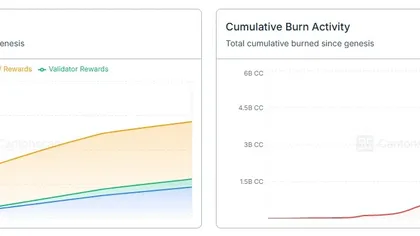
CC Price Eyes Recovery as Burn Activity Gains Ground
SEC Approves Options Trading For WisdomTree Bitcoin Fund
Global investors' US dollar hedging ratio hits a ten-year low, increasing selling pressure on the dollar
Global large institutional investors hold approximately $4.6 trillion in U.S. assets, but the forex hedging ratio is only 41%, the lowest since 2015. The simultaneous weakening of both declining hedging costs and the U.S. dollar’s safe-haven status is undermining the main rationales behind low hedging strategies. If market sentiment reverses, every 5 percentage point increase in the hedging ratio could trigger about $230 billion in selling pressure.
Uniswap surges 6% as tokenized stock transactions hit $2 billion in two weeks
Crypto prices
More


