(Kitco News) – Gold prices saw another volatile week, as a sharp midweek rebound driven by softer yields, a weaker U.S. dollar, and less-hawkish Fed commentary was largely erased on Friday after stronger-than-expected U.S. payrolls revived expectations for a September rate hike.
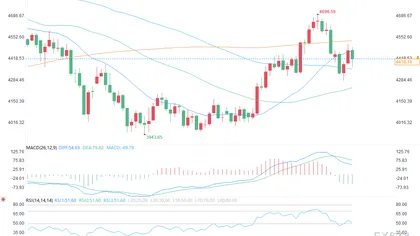
Spot gold kicked off the week trading at $4,439.15 per ounce on Sunday evening, and the yellow metal initially came under pressure as traders continued to digest the prior week’s sharp selloff, elevated Treasury yields, and lingering inflation concerns tied to oil prices and the U.S.-Iran conflict. The decline accelerated Tuesday, with gold breaking below $4,300 overnight to set the weekly low of $4,282.61 per ounce before buyers emerged.
Gold prices recovered Wednesday, and rallied sharply on Thursday after softer private-sector labor data, easing Treasury yields, and less hawkish comments from Fed Governor Christopher Waller helped traders trim expectations for an imminent Fed hike. The move carried spot prices back above $4,500, where gold set its weekly high at $4,511.08 per ounce on Thursday.
But the rebound failed Friday morning after the August nonfarm payrolls report showed the U.S. economy added 162,000 jobs, well above expectations, while the unemployment rate held at 4.1%. The stronger labor market data pushed the U.S. dollar and short-term Treasury yields higher, revived the Fed rate-hike trade, and sent gold sharply lower in the minutes after the release, with spot prices falling as low as $4,365.57 per ounce.
After recovering part of the post-payrolls selloff but failing to reclaim $4,500, spot gold was last trading at $4,432.33 per ounce Friday afternoon, leaving the yellow metal marginally lower on the weekly chart
The latest Kitco News Weekly Gold Survey showed Wall Street split between bulls, bears, and fence-sitters after gold’s mercurial week, while Main Street pared back its bullish majority following another failed breakout.
“Gold looked ugly at the end of the previous week, and it saw sharp losses through the middle of last week,” said Marc Chandler, managing director at Bannockburn Global Forex. “The low was about $4283 basis spot. It bounced above $4500 when it was sold again. The technical condition still looks weak, and the momentum indicators are falling. A break of the $4280 area signals the next leg lower, possibly the $4200 area.”
“Down,” said Darin Newsom, senior market analyst at Barchart.com. “Much of this depends on how far gold sells off Friday following the release of the monthly comic relief known as jobs numbers. The August figure came in at 162,000, more than 100,000 over the pre-report guess, making the US economy seem better than it is. However, this number will be revised, whittled away, over the coming months, so in the big picture it doesn’t mean anything long-term.”
“That being said, if gold doesn’t melt down to end heading into the three-day US holiday weekend, it has some room to fall back to this week’s low of $4,396.40 with the 45-day moving average still well below near $4,320.”
“Unchanged,” said Adrian Day, president of Adrian Day Asset Management. “Gold is likely to remain in a range, without clear direction, awaiting an interest rate decision by the US Federal Reserve in less than two weeks. While the strong jobs growth report supports a rate hike–and market participants are betting that way–still the question is by no means certain, as the Fed has historically avoided major decisions ahead of elections.”
“Upcoming economic releases, including the August Consumer Price Inflation report a few days before the Fed meeting, will weigh on the decision and thus the gold market,” Day added.
“Up,” said Rich Checkan, president and COO of Asset Strategies International. “The jobs numbers may have taken the wind out of gold’s sales today, but there is more wind coming. Even if fears of interest rate hikes continue to mount, the debt continues to mount as well. Gold’s path is higher.”
Kevin Grady, president of Phoenix Futures and Options, said gold, along with the broader market, is completely focused on interest rates right now.
“Everything is predicated on interest rates, that's all people care about,” he said. “What's going on with the interest rate? That's the story in the market. Obviously, nonfarm payrolls was a big beat, great number, good for the economy, but it's just another nail in the coffin of status-quo rates. The markets read that number and they said, ‘Hey, higher rates.’”
“I think right now it's just about the rate story.”
Grady agreed that if the Federal Reserve wants to raise the interest rate this fall, it will need to act at this upcoming meeting.
“I think it would have to be September,” he said. “I think that's what they're based on, that's what everybody's looking for, and I agree. Nobody wants to do it too close to the election. I think Warsh is going to put everybody on lockdown. He doesn't want anybody speaking; he wants less information out there. So we'll have to watch some economic data, we'll watch the energy markets, and see.”
On Christopher Waller’s Thursday comments, which the markets interpreted as dovish for rates, Grady said this wasn’t a signal from Warsh or the FOMC, and the Fed governor was speaking for himself alone.
“I think it's his opinion,” he said. “I think Warsh is very clearly saying, ‘We want less out of the Fed.’ I don't think he's saying we want less out of the Fed and then subliminally sabotaging himself. I think that was just Waller.”
Aside from next Friday’s CPI report, Grady said he’ll be watching the energy markets for clues about the Fed’s next move.
“I think the energy markets are going to dictate it,” he said. “I think [Warsh] is going to be looking to see where the markets are going. He's going to be watching crude oil. The inflation story is coming from the energy markets, so the energies are the driver.”
Grady said the Federal Reserve has treated oil and gas price inflation as transitory, but once it starts showing up in the broader inflation data, they have no choice but to act.
“Regardless of the reason why inflation is up, the bottom line is there's inflation, and their mandate is to fight inflation,” he said. “They can't determine how long it's going to last, so I think they'll be a little more aggressive with it.”
This week, 16 analysts participated in the Kitco News Gold Survey, with Wall Street sentiment evenly divided between bulls, bears and the fence. Six experts, or 38%, expected to see gold prices gain ground during the week ahead, while five others, or 31%, saw the yellow metal falling further. The remaining five analysts, representing 31% of the total, expected the yellow metal to move in a volatile sideways channel.
Meanwhile, 220 votes were cast in Kitco’s online poll, with Main Street investors shaving down their bullish majority after gold’s decline. 120 retail traders, or 55%, looked for gold prices to rise next week, while 53 others, or 24%, predicted the yellow metal would lose ground. The remaining 47 investors, representing 21% of the total, expected to see consolidation or indecisive trading during the week ahead.
Next week’s holiday-shortened economic news calendar will be focused on U.S. inflation data, but market participants will also be watching key manufacturing and services sector surveys, along with two central bank rate announcements.
There will be no economic news events of note until Thursday morning, when the European Central Bank will announce its monetary policy decision, with markets priced in for a rate hike as higher energy prices continue to impact Eurozone consumer prices. Thursday morning will also see the release of U.S. PPI and existing home sales, both for August.
Then on Friday, markets will brace for the August CPI report, followed by Preliminary University of Michigan Consumer Sentiment for September.
David Morrison, senior market analyst at Trade Nation, is bearish on gold in the near term, as momentum indicators point to a test of support near $4,200.
“But it’s worth bearing in mind that just a year ago, gold was struggling to break above $3,500, and before that, $2,000 seemed like an impossible target,” he said. “Gold is still fighting the US dollar, which is getting a tailwind from the prospect of a hike in interest rates. But if that starts to get priced out again, then it will no longer be a headwind for gold.”
Adam Button, head of currency strategy at investingLive, said every data point between now and this month’s rate decision will be analyzed for its potential impact on the Fed, and today’s nonfarm payrolls was no exception.
“Nobody is looking past the September FOMC,” Button said. “The market still doesn't know what it has with the Warsh Fed. After Jackson Hole, it looked like rate hikes were coming, but then Waller pushed back strongly yesterday, so everyone's off balance, and we just keep gravitating to that kind of forty to [00:04:00] sixty percent range on Fed hike odds.”
Drilling down into the payrolls numbers, Button said there was little not to like, and the Fed voters who were worried about employment should be okay with hikes now.
“The headline mostly captures it,” he said. “There are some education jobs, a reversal last month, and hospitality looked unusually strong. But the report was strong. At the turn of the year, Waller and some others were arguing for cuts because they thought the jobs market was weakening, and that's obviously not the case. It's strange how the priors change, but he's still pretty dovish.”
Button said the market is now laser-focused on the next Fed meeting on September 16, and the Labor Day long weekend is likely also influencing Friday’s trading.
“It's a big twelve days coming up,” he said. “The weekend hits here and that could be some of the market unwinding... some fast money might have piled into the US dollar and then said, ‘You know what? I don't want to be here on the weekend.’”
Button said the gold price will continue to reflect rate expectations until markets get their answer from the central bank.
“There's a clear playbook in gold right now, and it's around figuring out the Warsh Fed,” he said. “If the Fed hikes, this is negative for gold. If it doesn't, it's positive. It's as simple as that. And you just go down the line from there, on how much they're going to hike, how serious they'll be about 2% inflation, how beholden they are to Trump.”
Button said that with Friday’s hot jobs report, the stakes are even higher for next Friday’s CPI.
“If you get 0.3%, we hike 0.2%, we hold,” he suggested. “That's one-tenth on CPI is everything. And it could just be rounding. It could be 0.24% or 0.251%.”
Button pointed out that gold had a big rally yesterday following Waller’s comments before getting slammed down today, but the yellow metal has since recovered.
“I think that indicates the latent gold bid is starting to emerge,” he said. “We had Norway talking about unloading treasuries. I just don't think there's that infinite demand for treasuries there used to be. The trend of the 21st century, the remaining 75 years of it, will be central banks returning to gold holdings. It's just a matter of the pace.”
For next week, Button said the Monday break and the slow calendar ahead of Friday will give traders the opportunity to gauge gold’s underlying strength.
“I like a quiet market,” he said. “We've had big news events all week this week, so I'd like to just see if, in the time before CPI, if there's any signs of an underlying bid – or underlying selling – in gold, assuming we can have a few days. In September, the news always gets loud, but we haven't had a real clean look at gold buying sentiment. So let's just see if there's a drift in the market.”
Alex Kuptsikevich, senior market analyst at FxPro, expects gold prices to rise next week.
“For the second Friday in a row, gold has taken a hit as markets reassess expectations for the Fed’s key interest rate,” he said. “A week earlier, Warsh had expressed concern about inflation. It took several days and a couple of speeches from other FOMC members to recoup some of gold’s losses. However, on Friday, strong August NFP figures, coupled with a significant upward revision to the disappointing July data, once again made a policy tightening in September more likely.”
Kuptsikevich pointed out that the gold price lost 5% over the past seven days and has fallen back below the 200-day moving average. “However, this has not yet disrupted the bullish trend that has developed over the past month and a half of gains in precious metals,” he noted. “Intraday, gold has been bought on dips since the start of the month, and the 50-day moving average has once again acted as support. Moreover, a strong economy is not the greatest threat to gold. Strong data is more likely to be a short-term shock, but it reinforces positive fundamentals in the medium term.”
“It may well be that the current price dip has boosted gold’s appeal to buyers, who are increasingly seeking alternatives outside the dollar-denominated sphere amid bond sell-offs and uncertainty over the outlook for equities.”
Analysts at CPM Group issued a ‘Stand Aside’ recommendation for gold on Friday, with an expected range of $4,320 - $4,670 between September 7 and 16.
“Gold and other precious metals prices have been extremely volatile lately,” they said. “CPM expects them to continue to be so over the next two weeks, as financial market participants’ opinions about U.S. interest rates jostle back and forth. In the new week, markets will fret over the August PPI and CPI to be released during that week, thinking that if there are signs of softening inflation rates maybe the Fed will not increase interest rates on 16 September, but if inflation rates look to stay elevated the Fed will raise rates.”
The following week, CPM expects more volatility as markets bounce around ahead of the Fed’s September 16 rate announcement and Warsh’s press conference. “At present the market is roughly split in half that the Fed might raise rates 25 bips on 16 September or leave rates unchanged,” the analysts said. “Markets are pondering this. A 25-bip increase will do nothing to quell inflation, but it would indicate some backbone on the part of the new Fed Chairman. This could knock precious metals prices lower at least on a short-term basis.”
CPM’s medium-term forecast for gold remains bullish. “There continues to be a number of political and economic reasons for these metals’ prices to rise,” they noted. “Prices have the potential to decline further on a short-term basis, however, based on the possibility of higher interest rates and market expectations of higher interest rates over the next two weeks, between now and the FOMC meeting 15 and 16 September.
“In this environment, CPM would advise standing aside in these Trade Recommendations, given that we use stop-loss positions to protect capital and the expected gold price volatility makes it very risky to place a long or short trade on,” they cautioned. “Without a stop-loss position, our ultra-short term inclination would be to expect prices to dip lower at times over the next two weeks.”
Michael Moor, founder of Moor Analytics, expects to see gold prices post fresh gains next week.
“In a Higher time frame: I cautioned on 8/16/18 the break above $1,183.0 warned of renewed strength,” he wrote. “We have seen $4,443.1. These are OFF HOLD. We held exhaustion with a 56268 high and rolled over $1,651.1. This is OFF HOLD. On a medium timeframe basis: The trade below 52554 projected this down $740 (+)—we attained $1,300.0. The trade below 52036 brought in $1,248.2 of pressure. The trade below 51606 brought in $1,205.2 of pressure. These are ON HOLD. We held exhaustion with a 49177 high after a pullback and rolled over $962.3. The break below 48185 projected this down $185 (+)—we attained $863.1. The trade below 47923 projected this down $205 (+)—we attained $836.9. The break below 47420 brought in $786.6 of pressure. These are ON HOLD. We held macro exhaustion with a 39554 low and bounced $799.6—if we continue in a bona fide bullish correction, the minimum target is 49636. This is OFF HOLD.”
“On a lower timeframe basis: We held exhaustion with a 40190 low and bounced $736.0,” Moor continued. “The trade above 41192 brought in $635.8. On 8/4 we left a bullish reversal—we have rallied $632.6 from the 41224. The break above 41389 projected this up 345.00 (+)—we attained $616.1. On 8/5 we left a major bullish reversal—we rallied $449.8 from 43052. These are OFF HOLD. The break below 46369 brought in $307.7 of pressure. The break below 45886 (+10.8 tics per/hour) projected this down $205 (+)—we attained $259.4. These are ON HOLD. The break above 44299 (-2 tics per/hour) brought in $128.6 of strength. We left the minor bullish reversal—we rallied $70.5 from the 45880 open. Decent trade above 45158 (-11 tics per/hour starting at 12:20 am) will project this upward $105 minimum, $250 (+) maximum, but if we break above decently and back below decently, look for decent pressure. A 'decent' penetration is $35.3 until the close.”
At the time of writing, spot gold last traded at $4,429.83per ounce for a loss of 0.36% on the week and 0.96% on the day.
See live precious metals prices for gold, silver, platinum and palladium — in USD, CAD and 12 more currencies.