
The bubble prophet warns that there are bubbles in the US housing market, gold, and US stocks. Maniac or prophet?

FXUnion, Oct. 22nd – Harry Dent, who has long warned about asset bubbles in the US, is now taking action by selling his primary residence and holding no gold. He believes the current rally is the biggest bubble in history, and that US stocks, the US housing market, and gold prices all face the risk of sharp corrections. The real estate sector is particularly pressured by demographic shifts. He plans to use triple-leveraged shorting instruments to bet on the first wave of a US stock downturn and sees long-term US treasuries as the best safe-haven asset, forecasting a prolonged deflationary period ahead, after which gold will present an opportunity when the bubble bursts.
A US market veteran who has sounded the alarm on bubbles for thirty years is now putting real money behind his predictions. He has sold his primary residence, liquidated his gold holdings, and left one message behind: this might be the only time you need to protect yourself.
Primary Residence Sold First, Firm Belief in the Biggest Bubble in History
Harry Dent is the founder of HSDent and the author of "The Sale of a Lifetime." He rose to prominence in 1993 with his book "The Great Boom Ahead," accurately predicting the bull market of the 1990s. But now, he insists that
Dent stated, "I’m selling my primary home because that house will be the most impacted. I sold my vacation home years ago." In March this year, he said that if a crash did not occur by the end of summer, he would reassess his forecast. Now, having reconsidered, his conclusion remains unchanged. He said the market is "still climbing slowly, but losing momentum, and it still looks like a top." He added, "I know this sounds crazy, but I'm telling you, this is the only time you need to protect yourself."
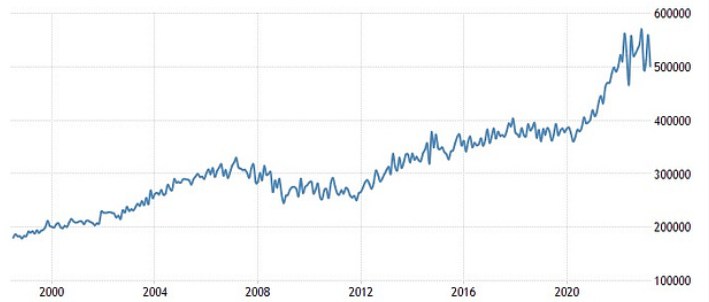
Chart: Long-term Trend of US Housing Prices
Surprising House Sale Advice: Sell the Home with the Highest Equity First
Dent’s real estate suggestion surprised many listeners the most. He says people often ask him after his talks whether they should sell their vacation home—which still has a mortgage—and his answer is: sell the one with the mortgage already paid off. Dent said, "You should sell the house where you have the highest equity, whether it's a vacation home or not, because that's where you'll lose the most money."
His logic is that if a highly leveraged house collapses in price, the bank bears most of the loss, and the borrower can even choose to walk away. But there is a cost: foreclosure will destroy the borrower’s credit, and in some states, the lender can pursue any remaining debt. The housing market is already sending warning signals: pending existing home sales in September fell 7.3% month-on-month, the lowest level since the National Association of Realtors began tracking the data in 2001, while economists polled by Bloomberg had expected only a 0.5% decline. Redfin data showed that 14.5% of home purchases fell through in September, the highest rate since the onset of the pandemic.
However, prices have not yet softened, with existing home prices up 1.3% year-over-year. Goldman Sachs estimates that over 95% of mortgage holders are paying rates lower than the current market, leaving them with little incentive to sell. Dent believes this stalemate won’t last: Freddie Mac reported that the average 30-year mortgage rate reached 7.40% in mid-October, up from just 6.27% a year ago. He said, "A 7.5% rate should already be making the market react—I think it will."
He believes the reason comes down to demographics, his area of expertise. The younger generation is too small to absorb all the homes the baby boomers will be offloading over the next twenty years. Dent says, "It’s the death of the baby boomers that will kill real estate." He expects large suburban homes to be hit first.
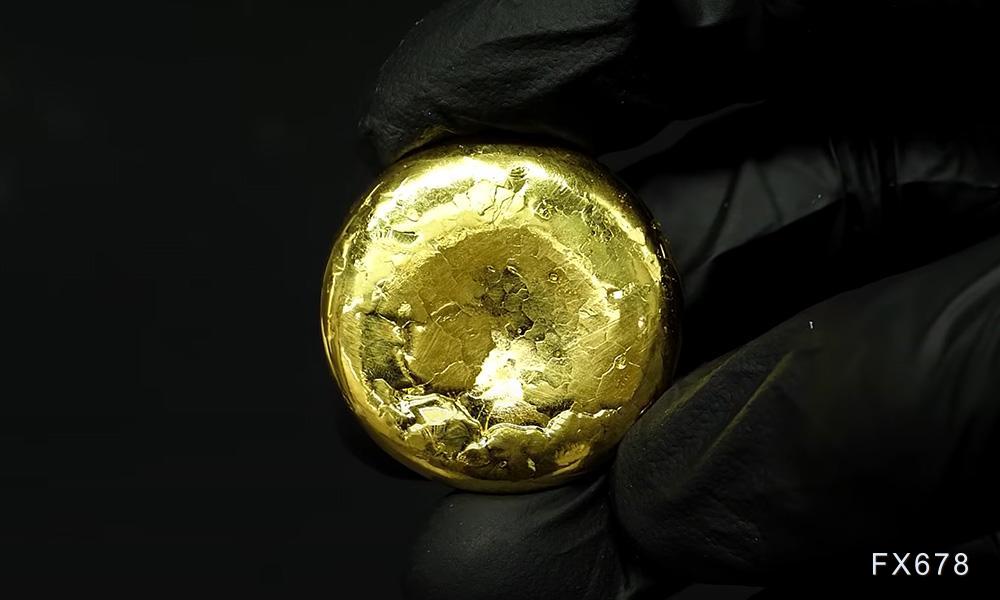
Zero Gold Holdings, Calling Out a Bubble There Too
Perhaps most startling is his own investment portfolio. When asked if he held gold, Dent responded simply: "No gold." His reason is that gold is now part of the bubble. According to CBS News, spot gold traded around $4,150 per ounce on October 20, down about 26% from its record high of $5,596 at the end of January. Dent expects gold prices to fall much further, stating, "Gold is not a safe haven here—mark my words—because it’s grown too inflated; it's due for at least a 60% to 70% correction."
Central banks are not selling. According to official data from a major Asian central bank, that bank increased its gold holdings by about 740,000 ounces in September, the largest monthly purchase in nearly three years, but Dent is unconvinced. For gold holders, though, his outlook isn’t all bad news: he believes gold’s best days will come after the crash, driven by Indian demand.
Bearish on US Stocks, Betting on Triple Shorts
Dent predicts the stock market’s first leg down will be fast and deep, revisiting the post-pandemic lows of late 2022. By his calculations, that would mean the S&P 500 falling about 54% and the Nasdaq dropping about 66%, with an ultimate total decline of 80% to 90%, similar to 1929–1932. Some big money is already leaving: According to the Financial Times, the Nasdaq 100 dropped 5.5% in the week ending October 16, its worst week since April 2025; Bloomberg reports Goldman Sachs data showing hedge funds cut tech holdings at the fastest pace since 2016 in the five trading days ending October 15. Dent said, "Smart money is already selling."
Of course, many investors do not believe this is a bubble. Statistics show S&P 500 companies have posted double-digit profit growth for seven consecutive quarters. But
The Only Safe Haven: Long-Term US Treasuries
For everyone else, Dent’s advice is to move into the safest bonds. He prefers long-term US Treasuries, which yield about 5% to 5.5% because the government can always print money to pay them back. He said, "These bonds will not default, which is exactly why they become the haven." He expects long-term rates to drop sharply during periods of economic weakness, thereby boosting bond prices, and forecasts the popular fund TLT, which holds 20-year-plus Treasuries, could rise "over 100%."
For a long time afterward, he expects only downward price trends, stating that "for the next 10 to 12 years, deflation will be the sole trend." He doesn't believe the Federal Reserve can reverse this—after having raised rates in September and with another decision due on October 28. Dent said, "They have no idea how sensitive this bubble is." Once the bubble bursts, he plans to reinvest in artificial intelligence and India, targeting 2029 to 2065 as a time window.
Conclusion
Dent’s defensive advice ultimately comes down to his view on probabilities: "If I’m wrong, you just make 5%, 10%, or even 20% less; but if I’m right, you’ll avoid losing 50% to 80% of all your financial assets—real estate, stocks, everything."
Disclaimer: The content of this article solely reflects the author's opinion and does not represent the platform in any capacity. This article is not intended to serve as a reference for making investment decisions.
You may also like
After endorsing CoreWeave, now investing in Firmus—Nvidia becomes the "AI Central Bank"
After publicly supporting CoreWeave but seeing its stock price plummet by 11.9%, Nvidia now plans to inject hundreds of millions of dollars into Australian AI cloud service provider Firmus Grid, whose IPO attempt failed. Nvidia is intervening in the AI infrastructure financing crisis in a manner increasingly reminiscent of a central bank, driven by a straightforward logic: every dollar invested by Jensen Huang enables customers to buy one more Nvidia chip. Currently, neocloud serves as a critical line of defense for Nvidia against tech giants developing their own chips.
Positive response to Changxin 4F2 breakthrough, Micron CTO: 3D DRAM is "long-term more scalable and cost-effective"
The global storage chip market has recently experienced valuation fluctuations, and debates over technological approaches are intensifying. Scott DeBoer, President of Micron, stated that although the company internally evaluated the 4F² architecture for a long time, it will stay committed to the 6F² roadmap and move directly to 3D DRAM, citing a lack of sustainable scalability for the vertical channel transistors in the 4F² design. In contrast, ChangXin Memory Technologies previously announced plans to launch 4F² DDR5 products by the end of the year, and Samsung is also considering introducing the architecture in 2028.

Excess Supply of Hashrate!?

What did Nvidia say at the Berlin GTC? Here’s Goldman Sachs’ summary
After attending Jensen Huang's GTC keynote, Goldman Sachs released a research report highlighting three key points: Nvidia's supply chain is undergoing significant expansion across multiple segments, suggesting a larger-scale GPU shipment is imminent; DSX POD compresses data center deployment cycles from several months to just two weeks; physical AI revenue reached $11 billion in the first half of FY27, accounting for about 30% more than the entire FY26, with a clear trend toward diversified revenue streams. The report also announces the release of the OpenShell architecture to address enterprise AI security concerns.
Crypto prices
More


