
State of the Union 2026: How It Could Impact Your Finances

Main Highlights
-
During his State of the Union address, President Donald Trump strongly supported his economic strategies, attributing a historic economic recovery to his use of tariffs.
-
Trump announced plans to require technology firms to construct their own power plants for data centers, aiming to protect consumers from increasing energy bills.
-
Beginning next year, employees without access to employer-sponsored 401(k) matching programs will be able to join the same retirement plan as federal workers, with the government providing a $1,000 match.
If you missed President Trump's nearly two-hour State of the Union speech, here’s a summary of the most important economic points.
Speaking before Congress, Trump defended his widely criticized economic policies. He dismissed concerns about affordability as falsehoods spread by Democratic leaders and claimed his administration had delivered an unprecedented economic revival. The address was the longest since at least 1964, according to CNN, and included several new proposals to support household finances.
“The economy is stronger than ever before,” Trump declared.
Tariffs: A Cornerstone of Economic Policy
Trump devoted significant time to justifying his tariff policies. Although a recent ABC/Washington Post/Ipsos poll found that 64% of Americans disapprove of these tariffs, and economists note that they have increased consumer prices, Trump insisted that tariffs have fueled economic growth. He argued that tariffs have helped secure trade agreements, end overseas conflicts, and could eventually replace income taxes, easing the financial burden on Americans.
He also criticized the Supreme Court for striking down many of his tariffs but promised to continue them under new legal frameworks.
Blaming Biden for Economic Woes
Throughout his speech, Trump placed responsibility for post-pandemic inflation on former President Joe Biden, while taking credit for reducing inflation from its 2022 high.
“The Biden administration and its congressional supporters caused the worst inflation in our nation’s history,” Trump said. “But in just a year, my administration has brought core inflation down to its lowest point in over five years.”
However, the most widely used measure—core inflation, which excludes food and energy—remains higher than when Trump took office. The Personal Consumption Expenditures price index rose 2.9% over the past year, compared to 2.7% in January 2025.
Tech Companies and Energy Responsibility
Trump unveiled a new initiative requiring major technology companies to generate their own electricity for data centers, rather than relying on the public grid. This move is intended to address the recent spike in household energy costs driven by the expansion of artificial intelligence.
“We’re telling the largest tech firms they must supply their own energy,” Trump stated. “By building their own power plants, they can prevent electricity prices from rising—and in many cases, lower costs for local communities.”
Approach to Housing Affordability
Trump explained that he would not attempt to lower home prices directly. Instead, he plans to make housing more accessible by reducing interest rates.
“Lower interest rates will resolve the housing challenges created under Biden, while preserving the wealth of current homeowners,” he said. “We want to safeguard those home values.”
Economic Implications
Trump did not introduce sweeping new economic measures, focusing instead on defending his unpopular tariff policies.
Mortgage rates have declined during Trump’s presidency. According to Freddie Mac, the average rate for a 30-year fixed mortgage dropped to 6.01% last week from 6.96% when Trump took office. This decrease has improved housing affordability, with homeowners saving roughly $3,000 annually on payments compared to last year, according to Realtor.com economist Jake Krimmel. (Trump cited a $5,000 figure.)
Trump has repeatedly urged the Federal Reserve to make deeper interest rate cuts. While the Fed’s rate doesn’t directly set mortgage rates, it does influence them. Economists warn that aggressive rate cuts could have negative consequences and actually increase borrowing costs.
He also called on Congress to pass legislation prohibiting large investors from purchasing single-family homes, arguing that corporate buyers are driving up prices and making it harder for individuals to buy homes.
Expanding Retirement Benefits
Trump proposed that all workers whose employers do not offer matching retirement plans should be able to join the same plan available to federal employees.
“Next year, my administration will ensure that these hardworking Americans—the backbone of our nation—can access the same retirement plan as federal workers,” he said. “We’ll match contributions up to $1,000 each year, so everyone can benefit from a rising stock market.”
Disclaimer: The content of this article solely reflects the author's opinion and does not represent the platform in any capacity. This article is not intended to serve as a reference for making investment decisions.
You may also like
Salesforce Issues Mixed Performance Guidance, Commits to $50 Billion Stock Buyback
VTV: A Strong Buy for Diversifying Portfolios and Gaining Quality Factor Access
Final 6 days for 500x Gains in BlockDAG’s Direct Sale While Solana & Dogecoin Face Market Pressure!

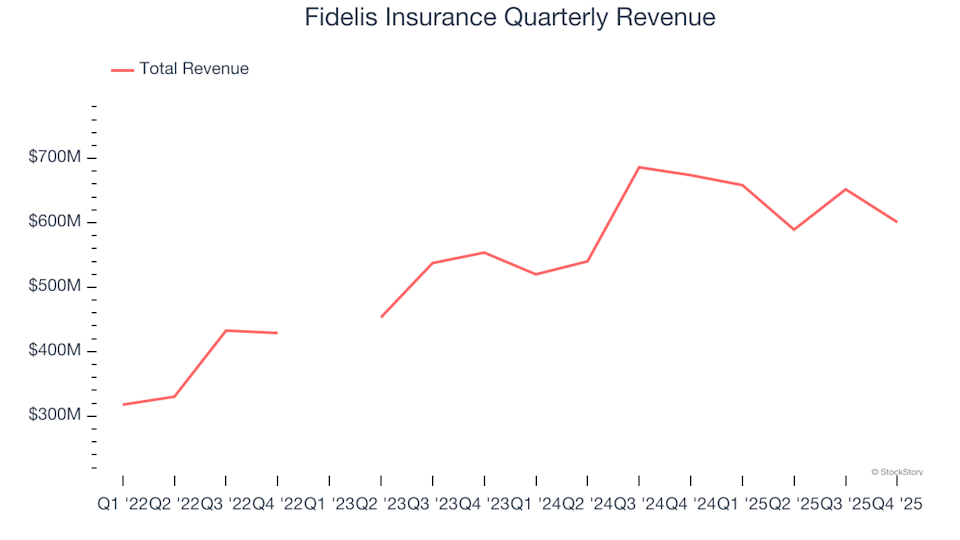
Fidelis Insurance (NYSE:FIHL) Announces Q4 CY2025 Revenue Falling Short of Analyst Projections
Trending news
MoreCrypto prices
More





