
Inchcape's 2025 Performance: Solid Delivery Amid APAC Challenges and a Reserved Forecast

Inchcape’s 2025 Results: Strong Headline Numbers, Underlying Regional Divide
Inchcape’s latest annual results met its medium-term objectives, but a closer look reveals significant differences across regions. The company posted a 13% increase in adjusted basic earnings per share and maintained a solid 6.2% operating margin. While organic revenue edged up 1% to £9.1 billion, this growth was largely offset by a 2% decline in reported revenue, mainly due to adverse currency movements. Despite these headwinds, Inchcape delivered robust adjusted pre-tax profits of £443 million and generated £315 million in free cash flow.
Volume growth reached 3%, in line with management’s targets, supported by new contract wins and strategic initiatives. The company’s capital allocation remained disciplined, highlighted by the completion of a £250 million share buyback and the launch of a further £175 million repurchase program. Financial health was underscored by a low net debt to EBITDA ratio of 0.4x and a free cash flow conversion rate of 104% relative to adjusted post-tax profit.
However, the overall positive performance masks a sharp contrast between regions. The Americas and Europe & Africa delivered encouraging results and outperformed expectations, but the Asia-Pacific (APAC) segment lagged. In APAC, organic revenue dropped by approximately 12% and margins shrank by about 60 basis points. This divergence is crucial: while Inchcape is executing well in some markets, it is contending with significant challenges in others. Investor sentiment has focused on APAC’s weakness, with the market already factoring in a more cautious outlook.
The Expectations Gap: APAC Weakness Dampens Market Optimism
Despite Inchcape’s strong global performance, the market’s response was negative, with shares falling 8.4% on Tuesday. Investors were unsettled by the uneven regional results and the company’s guarded forward guidance, particularly regarding APAC. This reaction underscores that the market is already pricing in the risks associated with the region’s underperformance.
Absolute Momentum Long-only Strategy: INCH.L Backtest Summary
- Entry Criteria: Buy INCH.L when the 252-day rate of change is positive and the closing price is above the 200-day simple moving average.
- Exit Criteria: Sell if the closing price falls below the 200-day SMA, after 20 days, or if an 8% gain or 4% loss is reached.
- Risk Controls: Take-profit at 8%, stop-loss at 4%, maximum holding period of 20 days.
Backtest Results
- Total Return: -16.4%
- Annualized Return: -7.29%
- Maximum Drawdown: 31.09%
- Profit-Loss Ratio: 1.47
Trade Statistics
- Total Trades: 24
- Winning Trades: 8
- Losing Trades: 16
- Win Rate: 33.33%
- Average Holding Period: 7.71 days
- Max Consecutive Losses: 5
- Average Gain: 5.88%
- Average Loss: 3.84%
- Largest Single Gain: 11.97%
- Largest Single Loss: 6.61%
APAC’s Drag on Performance and Market Sentiment
The APAC region’s results were notably weak, with management highlighting a 12% drop in organic revenue and a margin decline of around 60 basis points for 2025. This shortfall stands in stark contrast to Inchcape’s target of 3% volume growth and stable margins, and it has become the focal point for investors concerned about the company’s overall operational strength.
The 2026 outlook further reinforced these concerns. Management’s guidance for organic volume growth at the lower end of the 3% to 5% range triggered a sell-off, as the cautious tone—attributed to ongoing APAC difficulties—overshadowed otherwise solid results. The market interpreted this as an acknowledgment of persistent challenges rather than a temporary setback.
In summary, the market has already factored in these risks. The company’s strong global metrics—double-digit EPS growth, healthy cash flow, and aggressive buybacks—were already reflected in the share price. The key new information was confirmation that growth is uneven, with APAC acting as a significant drag. As a result, investor sentiment has shifted from optimism to a more measured, realistic stance, with future performance hinging on management’s ability to address the region’s issues.
Valuation and Capital Allocation: Discounted for Uncertainty
Inchcape’s current valuation reflects the market’s caution, especially regarding APAC. The stock trades at a trailing P/E of 11.28, well below its 10-year average of 17.33. This discount suggests investors are demanding a higher margin of safety due to ongoing regional headwinds. The valuation is not simply low—it directly signals skepticism about the company’s ability to deliver consistent growth.
Capital allocation remains a bright spot. Management has repurchased about 9% of outstanding shares in 2025 and initiated a new £175 million buyback. Alongside a 13% increase in the annual dividend, these moves demonstrate confidence in Inchcape’s cash generation. However, the scale of buybacks also raises the question of whether management is using repurchases to support the share price amid tougher conditions.
Looking ahead, management projects organic volume growth at the lower end of its 3% to 5% range for 2026, with ambitions for over 10% EPS growth in 2026 and a roughly 10% EPS CAGR through 2030. Achieving these targets will be challenging given the APAC headwinds.
Ultimately, the stock is priced for a more difficult environment, with a below-average P/E and ambitious profit targets. The risk/reward balance now depends on whether management can deliver on its growth promises despite regional setbacks. For a meaningful re-rating, Inchcape must show clear progress in resolving APAC’s issues and moving toward its double-digit EPS growth goal.
Key Drivers and Risks on the Road to 2026
Inchcape’s trajectory in 2026 will be shaped by two main factors: signs of recovery in APAC and the successful rollout of its new growth strategy, all against a backdrop of industry change. The next major milestone is the Q1 trading update on April 30, which will provide the first indication of whether management’s efforts to address APAC’s challenges are gaining traction. With guidance already pointing to growth at the lower end of the target range, this update will be crucial for validating the company’s cautious outlook and supporting its EPS growth ambitions.
There are also broader structural risks. The automotive sector is undergoing significant transformation, creating new challenges for distributors. For example, BYD’s move to internalize distribution in parts of Europe—notably in the Benelux region—signals a shift as manufacturers take greater control of their sales channels. This trend poses an ongoing threat to Inchcape’s distributor-led model, especially in its core European & Africa markets, and could further complicate the company’s recovery story.
Inchcape’s “Accelerate Plus” strategy is focused on winning new distribution contracts and pursuing targeted acquisitions. Management has already secured 10 new contracts, but the company must now execute in a more challenging environment, with APAC underperforming and key manufacturers bypassing traditional distribution channels.
Assessing the risk/reward, Inchcape’s low valuation already reflects significant caution. The company’s aggressive capital returns—repurchasing about 9% of shares in 2025—demonstrate confidence in its cash flow, but also mean less capital is available for investment in APAC. The challenge is twofold: managing a regional turnaround and adapting to industry shifts, all while aiming for double-digit EPS growth. If Inchcape can successfully navigate these hurdles, the current discounted valuation could offer upside. However, the path forward will require careful execution and adaptability.
Disclaimer: The content of this article solely reflects the author's opinion and does not represent the platform in any capacity. This article is not intended to serve as a reference for making investment decisions.
You may also like
Canton Foundation Welcomes Fireblocks as Super Validator to Drive Institutional On-chain Settlement
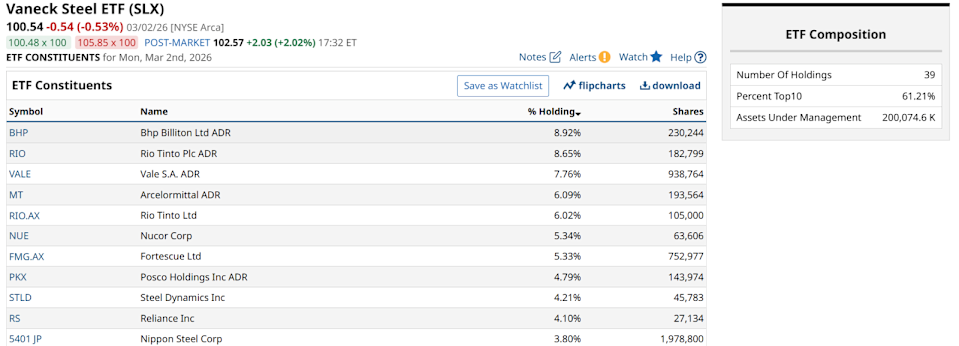
Steel stocks have been soaring lately. The chart suggests another significant surge may be on the horizon.
The Demise of Traditional Energy Security
SANAE TOKEN’s Turbulent Debut on Solana Draws Scrutiny and Official Refusal
Trending news
MoreCrypto prices
More





