
OFS Capital’s Fourth Quarter Results: Falling Short of Expectations and a Declining NAV

OFS Capital Q4: Market Expectations and Reality
OFS Capital's fourth-quarter results triggered a swift market response, as the company posted net investment income of $0.20 per share, falling short of the anticipated $0.23 by 13%. This was not a minor miss, but a significant shortfall that confirmed investor concerns about the company's performance.
This negative sentiment was already brewing from the previous quarter, when a similar earnings miss led to a 14.47% drop in the stock price the following day. That steep decline set the stage for a "sell the news" mentality, where any further disappointment would likely be met with even harsher punishment. The latest results not only failed to surpass these low expectations—they fell beneath them, reinforcing the market's worst fears.
The main culprit behind this earnings miss was a squeeze on net interest margin. Management pointed to higher rates on new unsecured notes used to refinance older, cheaper debt, combined with lower yields on the loan portfolio due to Federal Reserve rate cuts. This narrowing spread between what OFS earns and what it pays out directly impacted net investment income.
In summary, investors were hoping for a positive surprise, but instead received confirmation of the risks associated with rising refinancing costs and declining benchmark rates. The resulting drop in share price reflected the disappointment between expectations and actual results.
Net Asset Value: Underlying Portfolio Weakness
While the income miss drew immediate attention, a more serious issue emerged: a sharp decline in net asset value (NAV). As of December 31, 2025, NAV per share dropped to $9.19, down 10% from $10.17 just three months earlier—a $0.98 decrease in a single quarter. This was not a minor fluctuation, but a substantial erosion of the company's asset base.
The primary reason for this decline was a net loss on investments of $1.01 per share, driven by loan markdowns and the depreciation of CLO equity holdings. Although the portfolio's weighted-average performing income yield improved slightly to 13.5%, the fair value of these assets was marked down, highlighting a disconnect between headline yields and underlying portfolio stress.
One of the most concerning trends is the increase in non-accrual loans, which made up 4.2% of total investments with a fair value of $14.4 million at quarter-end. This deterioration contributed to unrealized losses, indicating that while reported yields remain strong, a growing portion of the portfolio is impaired and not generating expected cash flows.
Strategy Spotlight: Gap Reversion Long-Only
- Entry: Buy when the opening price gaps down more than 3% and closes below the lowest price of the past 20 days.
- Exit: Sell when the price closes above the highest price of the past 20 days, after 5 trading days, or if a 5% gain (take-profit) or 3% loss (stop-loss) is reached.
Backtest Highlights
- Total Return: -4.67%
- Annualized Return: -2.31%
- Maximum Drawdown: 4.81%
- Profit-Loss Ratio: 0.72
- Win Rate: 33.33% (1 win, 2 losses out of 3 trades)
- Average Hold: 2.67 days
- Average Win: 2.7%
- Average Loss: 3.65%
- Largest Single Gain: 2.7%
- Largest Single Loss: 4.13%
So, what has the market already factored in? The income shortfall was reflected in the share price, but the rapid NAV decline suggests that the market may not have fully priced in the deterioration in credit quality. A $0.98 per share drop in one quarter signals that the asset base is weakening faster than anticipated, even as management works to extend debt maturities. This introduces a new risk: the stock could be trading above a NAV that continues to decline.
Portfolio and Capital Structure: Shoring Up Defenses
In response to these challenges, management took decisive steps to reinforce the balance sheet and stabilize income. The most significant move was the extension of debt maturities. OFS secured an $80 million revolving credit facility with Natixis and extended its Banc of California facility to 2028, while redeeming its 2026 notes. As a result, the company now faces no debt maturities until February 2028, effectively removing near-term refinancing risk—a crucial move given the pressure on net interest margins.
This revamped capital structure is complemented by a portfolio built to withstand market swings. The loan book is predominantly floating rate—89% of loans are floating rate and all are senior secured, either first or second lien. This setup provides a natural hedge against interest rate volatility. In theory, rising rates should support the company's earning spread, helping to offset refinancing pressures. The portfolio's weighted-average performing income yield even ticked up to 13.5%, indicating that earning assets remain productive.
The board's decision to maintain the quarterly dividend at $0.17 per share underscores confidence in the sustainability of the income stream. At current prices, this equates to a 14.3% annualized yield. Importantly, net investment income of $0.20 per share last quarter easily covered the distribution, providing a solid coverage ratio for the payout.
Overall, management is taking a long-term approach—using the extended debt runway to stabilize the balance sheet, while the portfolio's defensive characteristics aim to protect earnings. The market has already priced in the near-term income miss and NAV decline. The reset in capital structure and the portfolio's yield support are steps toward closing the longer-term gap between the stock's yield and the underlying asset quality. The ultimate success of this strategy will depend on whether portfolio yields remain robust and NAV stabilizes before the next market cycle.
Looking Ahead: Key Catalysts and Risks
The market has already adjusted for a period of stress, but the next developments will determine whether this is a temporary setback or the start of a deeper correction. Three main factors will shape the path forward:
- Fansteel Equity Monetization: The most tangible catalyst is the potential sale of the Fansteel equity position, valued at $79.4 million at quarter-end. Management is actively seeking a buyer, and a successful transaction could reduce portfolio concentration, provide a significant cash boost, and potentially fund debt reduction or a special dividend—directly benefiting NAV and investor sentiment.
- Structured Finance Portfolio Risks: The main risk lies in continued unrealized losses within the CLO equity holdings. While the company recorded $3.2 million in net unrealized appreciation this quarter, the broader trend of spread tightening in underlying collateral remains a concern. Further spread compression could trigger additional markdowns, pressuring NAV and potentially threatening dividend coverage if not offset by gains elsewhere.
- Dividend Policy and NAV Trajectory: The board maintained the $0.17 per share payout, but this decision will face scrutiny if NAV continues to decline. Any reduction in the dividend would signal a reassessment of income sustainability. Persistent NAV erosion would confirm that portfolio credit quality is deteriorating faster than the market expects, widening the gap between share price and asset value.
In summary, the current environment is a classic case of expectation management. The market has reacted to the income and NAV disappointments, but the next few quarters will reveal whether management's defensive moves are enough to stabilize the company, or if deeper portfolio issues will emerge. Investors should closely monitor the Fansteel asset sale, trends in CLO spreads, and the sustainability of the dividend and NAV.
Disclaimer: The content of this article solely reflects the author's opinion and does not represent the platform in any capacity. This article is not intended to serve as a reference for making investment decisions.
You may also like
Canton Foundation Welcomes Fireblocks as Super Validator to Drive Institutional On-chain Settlement
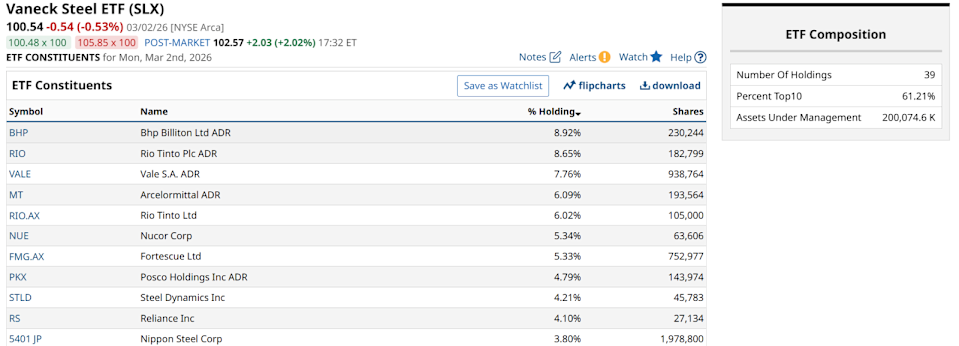
Steel stocks have been soaring lately. The chart suggests another significant surge may be on the horizon.
The Demise of Traditional Energy Security
SANAE TOKEN’s Turbulent Debut on Solana Draws Scrutiny and Official Refusal
Trending news
MoreCrypto prices
More





