
Trump’s Warsh Nomination Stalls as Market Waits for a Fed Policy Reset It May Never Get

President Trump's nomination of Kevin Warsh to succeed Jerome Powell is the central event. The formal announcement came last Friday, with Warsh slated to serve a four-year term as Chair starting February 1, 2026, and a fourteen-year term as a Board Member. The market's initial reaction was muted, but the real story is the nomination's current impasse. Senator Thom Tillis is blocking the process, refusing to advance Warsh's nomination until a criminal probe into Powell concludes. This procedural delay means the Fed's leadership vacuum persists as Powell's chair term heads toward its official end in May.
This sets up the core expectation gap. The nomination itself is a clear signal of a desire for change. Powell, a former Wall Street lawyer and Republican appointee, has presided over a Fed that expanded its toolkit far beyond interest rates, using massive bond purchases to manage the economy. Warsh is a former Fed governor known for his deep skepticism of these expanded tools. He has argued the Fed has distorted markets and taken on a role more akin to fiscal policy. In that sense, the nomination appears to be a direct shot at resetting the Fed's approach to its balance sheet and unconventional measures.
Yet, the market's priced-in expectation is one of continuity. The similarities between Powell and Warsh are striking on paper: both are lawyers, former Wall Street figures, and Republican appointees. The initial White House framing emphasized Powell's "worst decision" and the need for a "mulligan," but the nominee's background suggests a more nuanced shift. The real policy reset may hinge on Warsh's alignment with Treasury Secretary Scott Bessent, who shares his skepticism of Fed overreach.
| Total Trade | 12 |
| Winning Trades | 7 |
| Losing Trades | 5 |
| Win Rate | 58.33% |
| Average Hold Days | 16.08 |
| Max Consecutive Losses | 2 |
| Profit Loss Ratio | 1.34 |
| Avg Win Return | 2.59% |
| Avg Loss Return | 1.84% |
| Max Single Return | 3.91% |
| Max Single Loss Return | 4.46% |
The Expectation Gap: What the White House Priced In vs. What the Nomination Delivers
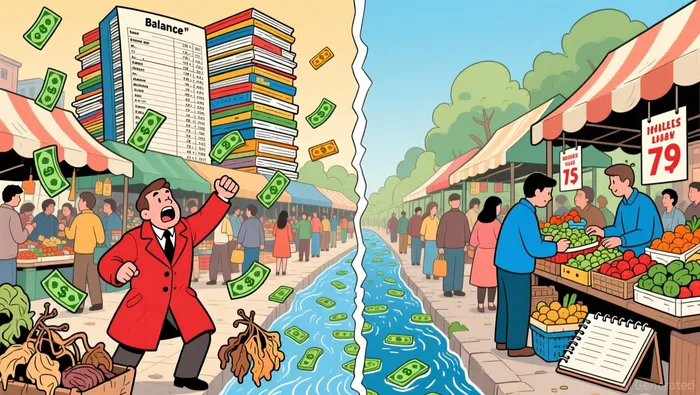
The White House's expectation was clear: a chair who would align with its policy goals, particularly the push for lower interest rates. The nomination of Kevin Warsh, however, delivers a more complex reality. The core tension is that the administration priced in a dovish pivot, but Warsh's mandate skepticism may not translate to a more restrictive stance. The market's reaction, a sell-off in risk assets, suggests it sees the same gap.
The White House's priced-in expectation was a chair who would walk the talk of lower rates. Trump's campaign rhetoric was unambiguous, and the initial framing of the Warsh pick as a "mulligan" for Powell's "worst decision" implied a fresh start. Yet, Warsh's background is a mix of hawkish past and dovish present. He was considered one of the most hawkish governors during the 2009 crisis, but his recent comments have aligned with the president's desire for lower rates. The administration likely expected this dovish rhetoric to hold once in office, turning the Fed into a tool for its economic agenda.
The nomination, however, falls short on the key metric the market watches: the Fed's balance sheet. While the White House focused on interest rates, Warsh's defining stance is on the Fed's expanded toolkit. He has been vocal about the Fed's "mission creep," arguing it has distorted the economy and taken on fiscal policy roles. This is a direct policy reset from Powell's era, where the balance sheet swelled to peaks of 30% of S&P 500 market cap. It has since declined, but remains a massive 11% of that cap. Warsh's mandate is to scale back this tool, a move that could pressure long-term rates and mortgage costs.
The market's muted reaction to the nomination itself is telling. It suggests the expectation gap was already priced in. The similarities between Powell and Warsh-both lawyers, Wall Street veterans, Republican appointees-created a perception of continuity. The real disruption came from the nomination's context: the criminal probe into Powell and the White House's desire to reset the Fed's role. This procedural drama, not the nominee's policy views, sparked recent volatility. The sell-off in tech and BitcoinBTC-1.53%, and the rally in the dollar, point to a "sell the news" dynamic. The market had likely discounted a Powell replacement, but the specifics of Warsh's skepticism on balance sheets and his potential alignment with Treasury Secretary Scott Bessent introduced new uncertainty.
The bottom line is that the Warsh nomination meets the White House's expectation for a chair who shares its skepticism of Fed overreach, but it may not deliver the dovish rate cuts it wanted. The expectation gap is now between the symbolic break from Powell's expansive toolkit and the practical reality that Warsh's own history includes supporting some of those very tools. For now, the market is pricing in a continuation of the status quo in interest rates, while watching closely for any shift in the Fed's balance sheet.
Catalysts and Risks: The Path to Confirmation and What to Watch
The path to Warsh becoming Fed Chair is now a race against a legal clock. The primary catalyst for movement is the resolution of the criminal probe into Powell, which is currently blocking Senate hearings. Senator Thom Tillis has made it clear: he will not advance Warsh's nomination until the probe ends. This procedural hold is the immediate hurdle, and its outcome will dictate the timeline for confirmation.
The major risk is that the probe's continuation prolongs uncertainty. The judge has already ruled the investigation lacks merit, calling it a pretext to pressure the Fed. Yet, the prosecutor's decision to appeal that ruling, as noted by the White House, only delays the process. This legal drama is the direct cause of the nomination's stall, and its extension creates a volatile mix of political and institutional risk. The market is watching for any sign of a resolution, as prolonged uncertainty could pressure financial markets ahead of the May 15 deadline for Powell's chair term.
The final outcome, however, depends on Senate confirmation, which faces a political battle regardless of the probe's status. Warsh's prior service as a Fed governor gives him a known profile, but his nomination is now entangled in a high-stakes clash between the White House and a Republican senator. The political calculus will be complex, with the Senate weighing the probe's legitimacy against the need for a new Fed leader. The risk is that this fight spills over into broader market commentary, amplifying volatility.
The bottom line is that the expectation gap is now a timeline problem. The White House priced in a smooth transition, but the reality is a nomination stuck in legal limbo. The key date to watch is May 15, when Powell's chair term officially ends. If Warsh is not confirmed by then, the irony would be stark: the actions of one Trump appointee could force Powell to continue leading rate-setting meetings beyond his term, undermining the president's goal. For now, the market is priced for a continuation of the status quo in leadership, but the path to confirmation is anything but clear.
Disclaimer: The content of this article solely reflects the author's opinion and does not represent the platform in any capacity. This article is not intended to serve as a reference for making investment decisions.
You may also like
SEC’s $75 Million Cryptocurrency Treasury Movement: Analyzing Its Immediate Effect on Prices

SOBR Drops 6% With No Clear Trigger, Volume Remains Weak
NVIDIA’s CUDA Advantage Under Scrutiny: Will It Maintain Its 90% AI Market Dominance by 2026?

ROMA Surges 12% on Thin Volume, Raising False Breakout Fears
Trending news
MoreCrypto prices
More





