
AtkinsRéalis Set to Lead AI-Driven Energy Advancements as Undervalued Stock Masks Nuclear Infrastructure Innovation

Nuclear Power and AI: A Transformative Intersection
AtkinsRéalis is strategically positioning itself at a pivotal moment, aiming to capitalize on the convergence of two rapidly advancing trends: the widespread adoption of nuclear energy and the explosive growth in demand for AI computing power. This collaboration is more than a simple partnership—it's an ambitious effort to redefine the foundation of AI infrastructure, where nuclear energy provides the backbone and AI technologies help shape the design and deployment of these systems.
The energy requirements for AI are soaring to unprecedented levels. Industry forecasts anticipate that artificial intelligence will drive a 165% surge in data center electricity consumption by 2026. Rather than a gradual increase, this represents a dramatic escalation, with global data center usage expected to climb from 415 terawatt-hours in 2024 to 800 TWh by 2026. Meeting such immense, continuous demand calls for a stable, low-carbon energy source—precisely the role nuclear power can fulfill. Unlike solar and wind, which are subject to fluctuations, nuclear facilities operate around the clock, making them an ideal candidate to power the next generation of AI-driven data centers.
This is where the partnership becomes truly strategic. With seven decades of expertise in nuclear technology and its proprietary CANDU reactors, AtkinsRéalis brings deep industry knowledge. Nvidia contributes advanced digital solutions, including Omniverse libraries and accelerated computing, to create digital twins and simulate entire facilities before construction begins. In this model, AI is not only a consumer of energy but also a key architect in designing its own power infrastructure, accelerating the rollout of highly efficient, nuclear-powered computing hubs.
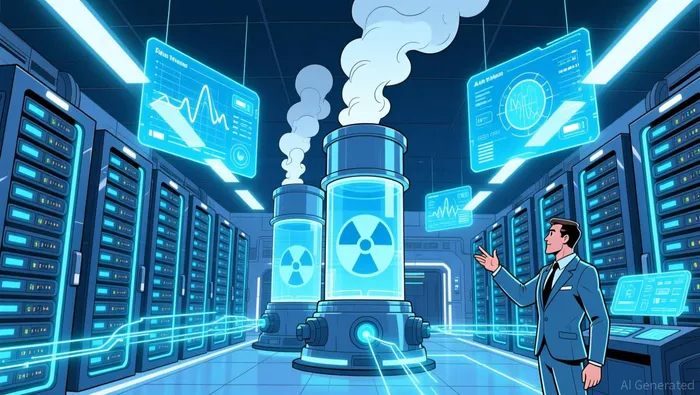
This approach exemplifies deep technology innovation: a foundational energy layer (nuclear) being optimized by the very technology (AI) it supports. The main challenge is whether this synergy can overcome the traditionally slow pace of nuclear project development. By leveraging AI to streamline design, regulatory approval, and construction, the partnership aims to dramatically shorten the timeline for deploying a new class of AI-ready facilities where energy and intelligence are developed in tandem.
Financial Strength and Market Perception
For this nuclear-AI strategy to succeed, AtkinsRéalis needs both a robust pipeline of projects and market recognition of its value. The company has secured the former, boasting a record backlog of $21.1 billion, up 22.6% from the previous year. This substantial order book ensures a steady stream of work and underpins the company’s ambitious growth plans—an essential advantage in the capital-intensive world of nuclear engineering.
However, investor sentiment has yet to catch up. Despite strong operational performance, AtkinsRéalis shares trade at a price-to-earnings ratio of just 5.73—far below what is typical for companies driving transformative change. This suggests the market remains cautious, perhaps concerned about execution risks or the slow-moving nature of nuclear projects, rather than focusing on the significant growth potential. The result is a disconnect: a company with solid fundamentals and a compelling vision is being valued like a conventional, slow-growth industrial player.
Track Record and Strategic Partnerships
AtkinsRéalis’s credibility is built on decades of nuclear engineering experience. The recent renewal of a $1 billion Master Services Agreement with Bruce Power, extending through 2035, is a testament to its reputation. This long-term contract not only secures future work but also signals confidence in the company’s stewardship of CANDU technology and its ability to deliver on complex, safety-critical projects.
Ultimately, the company has the backlog, expertise, and financial flexibility to pursue its vision. The challenge lies in shifting market perceptions—convincing investors that the nuclear-AI infrastructure revolution is both achievable and worthy of a premium valuation.
Synchronizing Nuclear and AI Growth
While the strategic direction is clear, execution hinges on aligning the lengthy timelines of nuclear development with the rapid acceleration of AI adoption. Nuclear projects typically require years for permitting, licensing, and construction, whereas AI-driven demand for data center power is rising at an exponential rate, with forecasts calling for a near doubling of consumption from 2024 to 2026. This creates a risk that the necessary infrastructure may not be ready in time to meet surging AI workloads, potentially undermining the value proposition of nuclear-powered AI facilities.
To address this, AtkinsRéalis must expand its engineering capabilities to deliver these new facilities at scale. Its longstanding reputation in the nuclear sector provides a solid foundation, but the partnership with Nvidia is specifically designed to accelerate project timelines. By utilizing AI-powered tools to create digital twins and streamline workflows, the company aims to modernize the delivery process, moving from traditional, sequential projects to a scalable model that can keep pace with AI’s rapid growth.
The most important milestone will be a successful pilot project. Demonstrating that digital twin technology can speed up the planning and construction of a nuclear-powered AI facility would provide tangible proof of concept, attracting further contracts from AI developers and validating the company’s strategic shift. Without such a demonstration, the initiative risks remaining theoretical rather than becoming a blueprint for the next generation of infrastructure.
Key Catalysts and Risks Ahead
Turning this strategic vision into financial results depends on achieving specific milestones and navigating significant execution risks. In the coming quarters, AtkinsRéalis will need to prove that its nuclear-AI strategy can move from concept to reality.
- Pilot Project Success: The most critical catalyst is a completed pilot that showcases the ability to use Nvidia’s digital twin technology to accelerate facility design and deployment. This would provide the evidence needed to secure additional business from AI developers.
- Timeline Alignment: The main risk is failing to synchronize the slow pace of nuclear construction with the fast-rising demand for AI compute. Even with a record $21.1 billion backlog, the company must convert this pipeline into contracts for AI infrastructure to validate its new direction.
- Execution Risk: If the digital twin approach does not significantly speed up project delivery, AtkinsRéalis could be left with a backlog of traditional engineering work while missing out on the high-growth AI segment. The partnership with Nvidia is therefore not just about innovation—it’s a race against time to capture a rapidly expanding market.
In summary, AtkinsRéalis stands at the forefront of a potential transformation in how AI infrastructure is powered and built. The company’s ability to deliver on this vision will depend on its capacity to execute, the success of its strategic partnerships, and the market’s willingness to recognize and reward its pioneering efforts.
Disclaimer: The content of this article solely reflects the author's opinion and does not represent the platform in any capacity. This article is not intended to serve as a reference for making investment decisions.
You may also like
2 AI Stocks Silently Surpassing Micron Technology in 2026 With Impressive Gains of 76% and 82%

Aelis Farma's CB1-SSi Platform Faces Make-or-Break Test in Down Syndrome Phase 2B Trial


China's commodity boom fueled by stimulus encounters weak consumer demand and mounting debt constraints

Trending news
MoreCrypto prices
More





