
Estée Lauder’s Recovery Accelerates, Yet Significant Execution Challenges Persist

Understanding Value Investing: Beyond Low Prices
At the heart of value investing lies a crucial lesson: a stock trading at a low price does not automatically represent a good deal if the underlying business is in decline. Investors often fall into the trap of mistaking a depressed share price for value, especially when the company’s fundamentals are weakening. A stock hitting multi-year lows might seem attractive based on valuation metrics like the price-to-earnings ratio, but if its competitive advantages are fading and its true worth is shrinking, that discount is a red flag rather than an opportunity. As highlighted in , a declining share price alone is not enough to qualify a stock as a value play. The real measure is whether the business remains fundamentally sound and resilient.
Why Estée Lauder and Helen of Troy Fall Short as Value Picks
This distinction is essential when evaluating companies such as Estée Lauder and Helen of Troy. Their significant share price drops are not just the result of market sentiment, but rather reflect deeper, structural challenges. In Helen of Troy’s case, the company has experienced a marked decline in revenue across its main divisions, even after adjusting for post-pandemic trends. This sustained revenue pressure, along with substantial goodwill impairments, has severely impacted profitability and led to a sharp fall in the stock price. Such a scenario is a textbook example of a value trap, where the price decline is driven by deteriorating business fundamentals rather than market misjudgment.
Estée Lauder faces a similar situation. Despite its strong brand portfolio, the company’s recent performance has been underwhelming, with earnings on a downward trend and analysts projecting further declines before any potential recovery. The drop to five-year lows is not just a market overreaction, but a reflection of ongoing business challenges.
Momentum Strategy Example
Absolute Momentum Long-only Strategy
This systematic approach to trading SPY involves entering positions when the 252-day rate of change is positive and the price closes above the 200-day simple moving average. Exits are triggered if the price falls below the 200-day SMA, after 20 trading days, or if a take-profit (+8%) or stop-loss (−4%) is hit.
- Entry Criteria: 252-day rate of change > 0 and close > 200-day SMA
- Exit Criteria: Close < 200-day SMA, holding period >= 20 days, take-profit at +8%, or stop-loss at −4%
- Asset: SPY
- Risk Controls: Take-profit at 8%, stop-loss at 4%, maximum holding period of 20 days
Backtest Results
- Strategy Return: 10.18%
- Annualized Return: 5.12%
- Maximum Drawdown: 5.29%
- Profit-Loss Ratio: 1.52
- Total Trades: 12 (7 winners, 5 losers)
- Win Rate: 58.33%
- Average Holding Period: 16 days
- Maximum Consecutive Losses: 2
- Average Win: 2.59%
- Average Loss: 1.6%
- Largest Gain: 3.91%
- Largest Loss: 4.46%
The lesson for value investors is clear: focus on the sustainability of the business, not just the headline valuation. True margin of safety comes from understanding the company’s ability to generate cash and maintain its competitive edge. A discounted price is only attractive if the company’s core strengths remain intact; otherwise, it’s a signal to proceed with caution.
Case Study: Helen of Troy – Facing Structural Headwinds
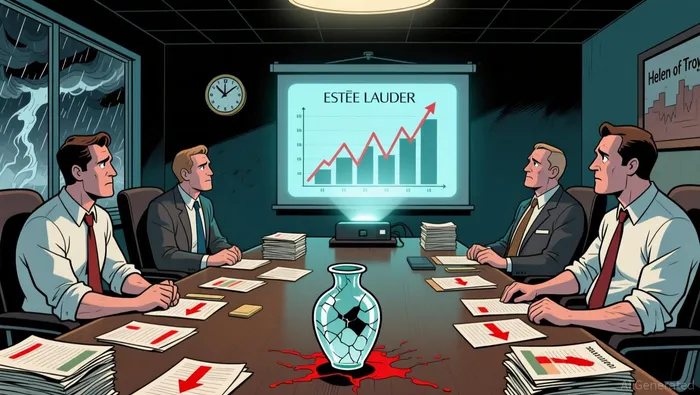
Helen of Troy’s recent performance exemplifies how a plummeting stock price can indicate lasting damage to a company’s competitive position. The stock has dropped by 60% this year, reflecting not just market volatility but deep-rooted issues. The company is grappling with a loss of pricing power and waning consumer demand across its main business lines. Even after adjusting for pandemic-related distortions, both the Home & Outdoor and Health & Beauty segments have reported revenue declines exceeding 10% in the latest quarter, putting significant pressure on profits and driving the stock lower.
Management’s response underscores the seriousness of the situation, with over $400 million in goodwill and intangible asset write-downs—a clear admission that previous acquisitions and brand value have been permanently impaired. This is a strong indicator of a business model under duress, where expected synergies and growth have failed to materialize. The company has also lowered its guidance, suggesting that these challenges are not short-term but likely to persist.
Analyst estimates further highlight the uncertainty. While some fair value assessments remain above the current share price, most price targets are clustered lower, reflecting skepticism about a turnaround. The market is waiting for evidence that the company can stabilize its operations. For value investors, the critical question is whether the current valuation offers enough protection given these structural challenges. The evidence suggests the company’s competitive moat is shrinking, and the low price is more a warning than an opportunity.
Case Study: Estée Lauder – Turnaround with Uncertain Outcomes
Estée Lauder’s situation is more complex. The company is actively pursuing a turnaround, reporting improved quarterly results and raising its full-year outlook. In the latest quarter, sales reached and net income climbed to , reversing previous losses. Management has reaffirmed its dividend and now expects 3%–5% sales growth and earnings per share between $0.98 and $1.22 for the year. These improvements, driven by stronger performance in skincare and fragrance, suggest that the company’s strategic plan is starting to yield results.
However, for value investors, the main concern is whether these positive trends are enough to offset the long-term risks that led to the stock’s decline. The turnaround is still in its early stages, and the company remains exposed to significant risks, particularly in travel retail and the Chinese market. The investment case now hinges on the belief that these challenges are manageable as the company works to rebuild margins. While the raised outlook is encouraging, it does not eliminate the underlying vulnerabilities.
This creates a classic value investing dilemma. The stock’s decline to multi-year lows may seem attractive, but unless the business’s intrinsic value is secure, the lower price alone does not guarantee a bargain. Estée Lauder’s recovery is underway, but its reliance on volatile markets means the turnaround is not yet assured. Investors must weigh the potential upside against the risk of renewed setbacks that could disrupt earnings and undermine progress.
Helen of Troy (HELE) Stock Trend Snapshot

- Ticker: HELE
- Company: Helen of Troy
- Exchange: NASDAQ
- Latest Price: $14.85
- Change: -0.13 (-0.87%)
- Status: Closed
Ultimately, the risk of execution remains high. While Estée Lauder is making progress, it has yet to prove that it can consistently grow without being overly dependent on a few key markets. For prudent investors, the margin of safety depends less on current valuation ratios and more on the sustainability of the recovery. Until the company demonstrates stable, broad-based growth, the low price signals a business in transition rather than a clear value opportunity.
Valuation and Margin of Safety: Is There Enough Protection?
For disciplined investors, a low share price is just the beginning. The real test is whether that price provides a meaningful margin of safety—a buffer against mistakes and uncertainty. As one approach suggests, a sufficient margin of safety requires buying at a significant discount to a conservative estimate of intrinsic value. For example, some investors consider a stock attractive only if its enterprise value is less than 20 times adjusted earnings (). By this measure, neither Estée Lauder nor Helen of Troy currently offers enough of a cushion to justify the risks in their business models.
True value investing is not just about finding low prices, but about identifying businesses that can grow and compound value over time. The best long-term value stocks, as highlighted by Morningstar, are those with strong competitive advantages and reliable cash flows (). Helen of Troy’s ongoing decline and Estée Lauder’s uncertain turnaround do not fit this profile. In both cases, the path to sustained value creation is unclear, making the current discounts less compelling.
Capital Allocation: Seeking Better Opportunities
Investors must carefully consider where to allocate their capital. When more attractive opportunities exist—businesses with wide moats and predictable growth—the risks of investing in companies facing structural decline or uncertain turnarounds become harder to justify. The principle of averaging down warns against buying more of a stock simply because it has fallen in price. Instead, investment decisions should be guided by the quality and durability of the business, not just the share price.
Disclaimer: The content of this article solely reflects the author's opinion and does not represent the platform in any capacity. This article is not intended to serve as a reference for making investment decisions.
You may also like
U.S. Electric Vehicle Shares Confront $65 Billion Profit Gap While International Leaders Rise

AVAX’s Struggle: A Closer Look at the Crypto’s Challenges and Opportunities

After GTC 2026, Which AI Token Stands to Win? The Case for Bittensor
Market Watch: Why More Analysts Are Mentioning Mutuum Finance This Quarter
Trending news
MoreCrypto prices
More





