
Harley-Davidson CEO's High-Value Purchase Demonstrates Confidence in Recovery Strategy as SVP Departs in Standard Transition

Overview of the Insider Transaction
On March 12, Senior Vice President Charles Do executed a sale of $4,241 shares of Harley-Davidson stock at an average price of $18.095. This transaction was carried out under a pre-established contract or plan, specifically designed to comply with Rule 10b5-1(c), which provides legal protection against insider trading accusations. As a result, this sale was scheduled in advance and was not influenced by recent developments or confidential information.
The timing of this sale is notable, as it took place while Harley-Davidson’s stock was experiencing a significant decline, hovering close to its 52-week low of $17.11—a drop of about 40% over the last half-year. For an executive, selling at such a low point is a standard move rather than a red flag. The use of a Rule 10b5-1 plan further distances the sale from any suggestion of opportunistic timing, and the proceeds, totaling around $76,740, are relatively modest.
For investors, the main question is whether this event alters the short-term risk and reward outlook. While it may seem discouraging that an insider is cashing out at a depressed price, the sale was minor and pre-planned. Meanwhile, Harley-Davidson itself is buying back shares under its own Rule 10b5-1 plan, signaling some internal confidence. This dual activity presents a more balanced picture.
In summary, this insider sale is a routine occurrence and does not fundamentally change the company’s turnaround narrative. However, it does highlight the stock’s current weakness. For those making tactical decisions, the key issue is whether the stock can maintain support above its recent lows, relegating this insider sale to a minor detail rather than a pivotal event.
Mixed Insider Activity: Diverging Strategies and Implications
Insider transactions at Harley-Davidson present a complex picture. The Senior Vice President’s sale at $18.095 per share represents a small, scheduled exit near the stock’s lowest point. In contrast, CEO Artie Starrs made a significant purchase at an average price of $19.10 per share, paying over 5% more than the SVP’s sale price. This difference is more than just numerical—it reflects a divergence in outlook. The CEO’s acquisition, totaling $286,500, suggests he sees opportunity where others see risk.
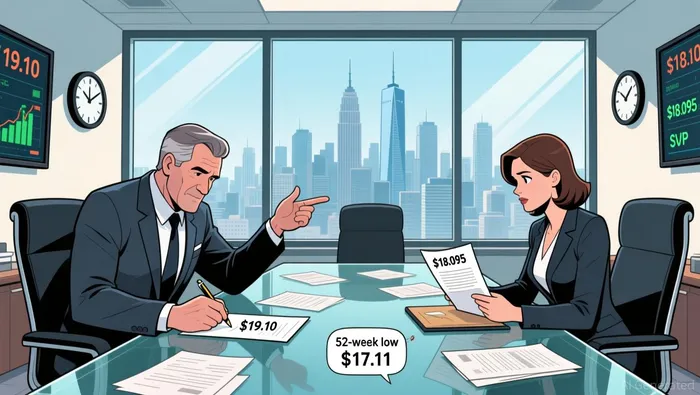
Other board members have also taken action: Director Lori Ann Flees recently bought shares, reinforcing a positive internal stance, while Director James D. Farley Jr. sold shares in February, providing a counterbalance. This mix of buying and selling creates a nuanced narrative, but the CEO’s purchase at a premium price stands out as a strong vote of confidence in the company’s recovery strategy.
For investors focused on short-term moves, the CEO’s purchase is a more meaningful indicator than the SVP’s routine sale. It signals that top leadership believes in the company’s turnaround efforts and views the current valuation as attractive. While director activity is mixed, the CEO’s actions carry the most significance, suggesting the overall insider sentiment is not entirely negative. The SVP’s sale appears to be a standard transaction, while the CEO’s buy offers a potentially bullish signal for the stock’s future stability.
Key Drivers: Business Restructuring and Financial Outlook
The real focus for investors should be on Harley-Davidson’s operational performance and financial trajectory. The company is undergoing a challenging transformation, as evidenced by its fourth-quarter results: Harley-Davidson reported an operating loss of $361 million, more than double the loss from the previous year. Revenue fell 28% year-over-year to $496 million, with the financial services division suffering a 59% revenue decline. These figures point to a significant contraction, not just a temporary setback.
Looking ahead to 2026, management expects motorcycle retail sales to range between 130,000 and 135,000 units, slightly below last year’s 132,535. This cautious guidance acknowledges ongoing demand challenges. The stock’s current valuation—a P/E ratio of 6.41 and a 4.21% dividend yield—reflects both perceived value and substantial operational risk.
The company’s future hinges on the effectiveness of its restructuring efforts. CEO Artie Starrs has taken steps to stabilize operations, including a modest share buyback program under Rule 10b5-1. However, the true test will come with the release of a new business plan in May. Until there is clear evidence that wholesale and retail trends are improving and margins are recovering, the stock is likely to remain under pressure.
Ultimately, the insider sale is a minor detail within a much larger story. The company’s ability to execute its turnaround plan and improve its financial position will determine the stock’s direction. For tactical investors, the risk/reward profile is high, and the outcome depends on operational progress rather than insider transactions.
Upcoming Catalysts and Risks to Monitor
Several near-term events will shape Harley-Davidson’s outlook. The most significant is the unveiling of the company’s new business plan in May 2026, which will be a crucial test of management’s turnaround strategy. Until then, uncertainty will persist, and the market will be watching for signs of stabilization in wholesale shipments and dealer inventories—areas that have been persistent challenges.
Investors should also pay close attention to first-quarter results, particularly motorcycle shipments and inventory levels. The company’s 2026 guidance calls for retail sales of 130,000 to 135,000 units, a slight decrease from the previous year. Any indication that shipments are stabilizing in line with this forecast would be encouraging, while further declines would signal ongoing demand weakness.
The biggest risk is the company’s inability to stabilize margins and demand, which could push the stock closer to its 52-week low of $17.11. Recent financial results underscore these risks, with a Q4 operating loss of $361 million and a 28% drop in revenue year-over-year. Without clear signs that the turnaround is taking hold, the stock remains exposed to further downside. Wells Fargo’s recent Underweight rating and $15 price target highlight the market’s skepticism until there is evidence of improvement.
In conclusion, the recent insider sale is largely irrelevant in the broader context. The real determinants for Harley-Davidson’s stock are operational milestones. For tactical investors, the situation is binary: the upcoming business plan must convincingly outline a path to recovery, and Q1 results need to show progress. Success on these fronts could help the stock find support; failure would likely lead to further declines.
Disclaimer: The content of this article solely reflects the author's opinion and does not represent the platform in any capacity. This article is not intended to serve as a reference for making investment decisions.
You may also like
Zebra’s Tariff Headwinds Overshadow Channel Award Catalyst—Is the Stock Discounted or Dislocated?

This $8.9 Million Purchase Focuses on a Stock That Has Fallen 68% and Holds $322 Million in Cash

Trending news
MoreCrypto prices
More





