
Rush Enterprises COO Exit Signals Smart Money Profit-Taking Amid 22% Rally

The official story is a clean handoff: a promoted insider stepping into a key role. But the details tell a different story. The outgoing COO, Jason Wilder, had been commuting from Atlanta to Texas headquarters for years, a strain that the company itself cited as a reason for his departure "which has been demanding on him and his family". That operational friction is a red flag in itself. A COO, responsible for the day-to-day engine of a 150-location dealership empire, shouldn't be running a cross-country commute for years. It suggests the role was already stretched thin.
The replacement, Jody Pollard, is a classic insider promotion. He's been with the company since 1999, with deep operational roots in regional management and sales. His background is exactly what the company says it needs. In theory, this is a routine, low-risk transition designed to maintain stability.
Yet the market's reaction is the real signal. The stock is up nearly 22% year-to-date, trading at $65.58. That rally happened during this leadership change. It's a classic setup where the hype around a smooth transition coincides with a stock price that has already run hard. The smart money-those watching the filings, not the press releases-might be asking if the easy part is over.
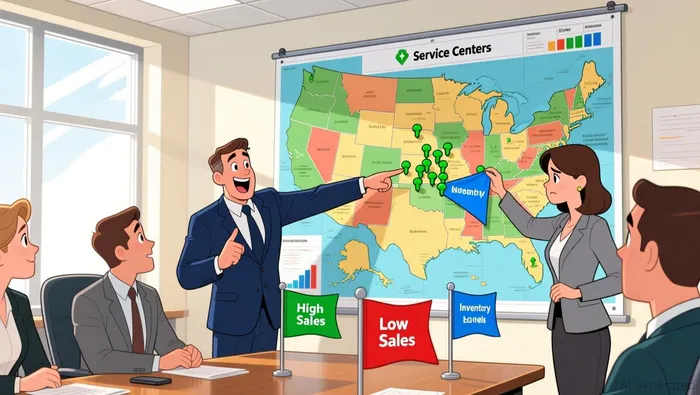
The thesis here is that the appointment appears routine, but the concurrent market performance and the operational strain behind the scenes suggest a more cautious view. When a company's top operator is commuting for years, and the stock is already up 22%, it's a prime time for profit-taking. The transition itself may be clean, but it could also be a moment when insiders with skin in the game decide to cash out before the next leg down.
Smart Money Alignment: CEO Skin in the Game vs. Insider Selling
The CEO's commitment is clear. Rusty Rush has been at the helm for over three decades, a 31-year tenure that signals deep alignment. His personal stake is substantial, with direct ownership of 1.27% of the company, worth roughly $61 million. That's skin in the game. Yet, the smart money isn't just watching the CEO; it's watching the filings for other insiders.
Recent activity tells a more nuanced story. In the past month alone, an independent director sold $651,000 worth of stock. Earlier in February, another insider exercised options and sold $640,000 worth of shares. These aren't minor transactions. They represent real capital moving out, often timed with positive earnings reports and dividend declarations. The pattern suggests a selective profit-taking, not a wholesale loss of confidence.
The company's strategic vision provides a buffer. Its emphasis on parts and service, which drives about two-thirds of gross profit, is designed to smooth out the volatility of truck sales "giving us a stable earnings base despite the cyclical nature of Class 8 truck sales". This is a solid plan, and the CEO's long-term view fits that narrative. But the insider selling shows that even with a stable model, some are taking chips off the table.
The bottom line is a split signal. The CEO's decades-long commitment and massive personal wealth create a powerful anchor of stability. Yet, the concurrent sales by other insiders-especially at a time when the stock is up sharply-raise a question about the timing of that stability. It's a classic setup where the long-term bet is strong, but the short-term playbook for some smart money is to lock in gains.
Institutional Positioning and Whale Wallets
| Total Trade | 13 |
| Winning Trades | 5 |
| Losing Trades | 4 |
| Win Rate | 38.46% |
| Average Hold Days | 5.69 |
| Max Consecutive Losses | 2 |
| Profit Loss Ratio | 1.25 |
| Avg Win Return | 7.13% |
| Avg Loss Return | 5.42% |
| Max Single Return | 9.27% |
| Max Single Loss Return | 6.07% |
Yet, the 13F filings would show the real whale wallets. While we can't see the exact holdings, the pattern of insider selling-particularly the $651,000 sale by an independent director in March-hints at a cautious playbook. It's a classic divergence: institutions may be buying the long-term story, but some insiders are taking chips off the table. This isn't a wholesale exit; it's a measured profit-taking that often coincides with positive earnings news and dividend declarations.
The company's financial execution supports the institutional thesis. Consistent earnings beats, like the Q3 2025 results that exceeded expectations, and a reliable dividend history provide the steady earnings base that institutions seek. The strategic pivot to parts and service, which drives about two-thirds of gross profit, is designed to smooth out the cyclical truck sales volatility "giving us a stable earnings base". That alignment between business model and institutional appetite is clear.
The bottom line is a split signal from the smart money. The institutional accumulation is real, driven by the company's scale and resilient model. But the concurrent insider selling shows that even with a strong setup, some are choosing to lock in gains. For a whale wallet, the move is to stay in the game, but to trim the position. The stock's run-up means the easy money is made; the next leg will depend on whether the smart money stays or starts to follow the insiders out.
Catalysts and Risks: What to Watch for Smart Money
The setup is clear. The stock has run, the COO transition is complete, and insiders have been selling. The next move hinges on a few key signals. For the smart money, the near-term catalysts are straightforward: watch the next earnings report for two things. First, listen for commentary on the operational integration following the COO change. A smooth handoff should be reflected in management's confidence. Second, scrutinize the health of the parts and service profit engine. This is the stable base that justifies the valuation premium. Any sign of margin pressure or inventory issues here would be a red flag.
Beyond the quarterly call, the real signal will be in the filings. Watch for any significant insider buying or selling in the coming quarters. The pattern of selective profit-taking-like the $651,000 sale by an independent director in March-is a cautious playbook. A reversal, with major insiders buying on weakness, would be a stronger alignment signal. But if the selling continues, it confirms the view that the easy money is made.
The key risk is a slowdown in the commercial vehicle market. While the service business provides a hedge, the truck sales component remains a major revenue driver. A cyclical downturn could pressure the top line, testing the resilience of the entire model. The smart money will be watching for any shift in the company's own guidance or comments on market conditions.
In short, the next few quarters are about validation. The institutional accumulation and CEO's skin in the game provide a floor. But the insider selling shows some are already positioning for a potential pause. The catalysts are the numbers and the filings. The risk is the cycle turning. Watch the tape, not the talk.
Disclaimer: The content of this article solely reflects the author's opinion and does not represent the platform in any capacity. This article is not intended to serve as a reference for making investment decisions.
You may also like
zSpace’s Approach to Refinancing with High Debt Raises Concerns Over Shareholder Dilution and Investor Doubts

Mastercard, Western Union tap Solana Foundation's new enterprise developer toolbox

FEED Surges 44% in Pre-Market — No News, Just Structure

Trending news
MoreCrypto prices
More





