
zSpace’s Approach to Refinancing with High Debt Raises Concerns Over Shareholder Dilution and Investor Doubts

zSpace's Financial Struggles Come Into Focus
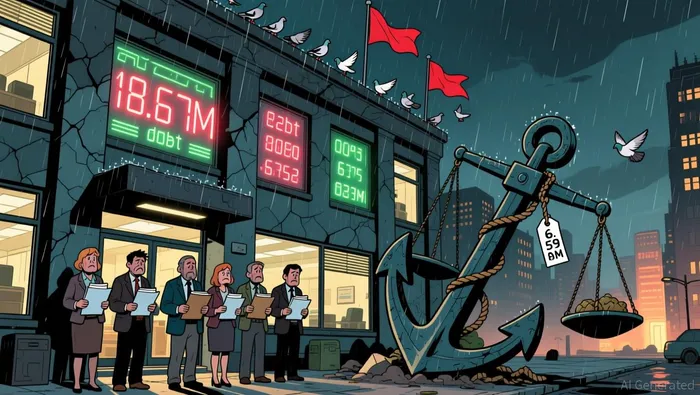
zSpace's latest fundraising round highlights a significant and ongoing financial imbalance. The company currently faces a negative equity situation, with total debt reaching $18.67 million, which dwarfs its market value of only $6.59 million. This stark contrast between liabilities and market capitalization points to serious financial distress.
On top of this, zSpace is grappling with a severe liquidity shortfall. Its current ratio is just 0.68, indicating that for every dollar owed in the short term, the company has less than 70 cents in liquid assets. This shortfall means zSpace cannot meet its immediate financial obligations without relying on outside funding, forcing it to continually seek new capital just to maintain operations.
The company's repeated capital raises reveal a pattern of expensive borrowing. The most recent $4.3 million note comes after a $13.98 million note issued in April 2025. Both are senior secured convertible notes—an expensive financing method that often carries high interest and conversion terms that can dilute existing shareholders. zSpace is using the new funds to pay down part of its debt to the same investor, effectively rolling over old debt with new, similarly costly obligations. This ongoing refinancing cycle suggests that the company's core business is not generating enough cash to cover its needs.
How the Debt Restructuring Works
The latest financing is a classic example of debt refinancing, aimed at managing cash flow rather than supporting business growth. zSpace is issuing a senior secured convertible note worth $4,301,075, set to mature in March 2028. The terms are costly: the note can be converted into shares at an initial price of $0.28, but with a minimum conversion price of $0.05 per share. This floor protects the investor if the stock price falls below $0.05, but it also means that if the share price remains low, existing shareholders face significant dilution.
The market's response was swift and negative. zSpace shares dropped 7.7% in premarket trading following the announcement, reflecting investor concerns that the new debt simply adds another layer of expensive, dilutive financing without addressing the company's underlying cash flow issues.
The structure of the deal is straightforward: zSpace will use most of the proceeds to pay down about $2 million of existing debt owed to the same investor, with the remainder going toward working capital. This is a typical refinancing move—replacing old debt with new debt at similar terms. While it temporarily relieves immediate pressure, it does nothing to improve the company's operational cash flow, perpetuating the cycle of high-cost borrowing.
Looking Ahead: What Could Change and What Risks Remain
The next major event for zSpace is its upcoming earnings report on March 30. This report will shed light on revenue trends, cash burn rate, and whether recent cost-cutting measures are making a difference. Investors will be watching closely for any indication that the company is stabilizing, as slowing the rate of cash outflow is crucial to making the new capital last.
A key question is whether the $4.3 million raised will be enough. Recent financial results show continued losses; in the third quarter of 2025, zSpace reported an EPS of -$0.26, missing analyst expectations. If losses persist at this pace, the new funds could be depleted quickly. The market will need to see a marked improvement in cash flow to believe that the company can sustain itself beyond the next quarter.
The biggest risk is further deterioration of the balance sheet. zSpace's debt ratio reached 1.03 in Q3 2025 and has been climbing steadily. If the company cannot generate positive cash flow, this ratio will rise even higher, increasing leverage and further eroding equity. In this scenario, the restructuring could actually hasten financial distress rather than provide a solution, deepening the very imbalance it was intended to fix.
Disclaimer: The content of this article solely reflects the author's opinion and does not represent the platform in any capacity. This article is not intended to serve as a reference for making investment decisions.
You may also like
Navan’s Strategic Withdrawal and Resulting Legal Issues Highlight Potential Dangers for NAJVN Shareholders



Booz Allen’s $281M CIRRUS Gamble Relies on a Weather Data S-Curve and Preparedness for AI

Trending news
MoreCrypto prices
More





