
Older Workers Forced to Tap 401(k)s as Unemployment Gaps and Weak State Safety Nets Erode Financial Security

The moment a paycheck stops is a shock. For many, it's a financial blow that quickly turns into a psychological one. The data shows this isn't a temporary setback for most. Currently, approximately one fourth of unemployed people are classified as having been jobless for 27 weeks or more-a period the U.S. Bureau of Labor Statistics defines as long-term unemployment. That's not a few months of job hunting; it's a year or more of silence, eroding confidence, and mounting bills.
This strain hits some groups far harder than others. For workers aged 55 and older, the pain has been prolonged. Unemployment rates for workers 55 and older exceeded those of mid-career workers for the length of the pandemic, a gap that persisted for over a year. They lost jobs faster and, crucially, returned to work slower, creating a dangerous headwind for their retirement security.
When the safety net frays, people reach for what's left. That's why the numbers on retirement withdrawals are so telling. In 2025, 6% of participants in 401(k) plans took hardship withdrawals, a sharp jump from the pre-pandemic average of about 2%. This isn't a minor adjustment; it's a sign of real desperation. People are tapping their nest eggs to cover basics like avoiding eviction or paying medical bills.
The bottom line is a story of compounding pressure. A layoff triggers immediate financial need. Long-term unemployment turns that need into a crisis. And when the unemployment gap for older workers persists, it leaves a vulnerable population with fewer options. The rise in hardship withdrawals is the direct, costly consequence of a system straining under the weight of these realities.
| 10.54 | 230.41% | 230.41 |
| 3.32 | 142.34% | 142.34 |
| 0.88 | 94.54% | 94.54 |
| 2.20 | 48.65% | 48.65 |
| 3.20 | 43.50% | 43.50 |
| 566.62 | 37.91% | 37.91 |
| 1.40 | 35.92% | 35.92 |
| 7.26 | 32% | 32 |
| 0.49 | 31.70% | 31.70 |
| 4.28 | 29.70% | 29.70 |
| ARTL Artelo Biosciences |
| SST System1 |
| IZM ICZOOM Group |
| NXTT Next Technology |
| ATPC Agape ATP |
| AGX Argan |
| GVH Globavend Holdings |
| EGG ENIGMATIG |
| MGRX Mangoceuticals |
| SBDS Solo Brands |
The Hardship Math: What's Left in the Wallet?
When the paycheck stops, the temptation to raid your 401(k) is real. But the numbers on the withdrawal slip tell a harsher story than the cash in hand. The first rule is simple: distributions are treated as taxable income in the year you take them. That means the IRS gets a cut before you even see the money. And if you're under 59½, there's a standard penalty on top of that. Early withdrawals are subject to a 10% penalty. This isn't a small fee; it's a direct hit to your emergency fund.
Then there's the catch that often gets overlooked. That withdrawal cash can directly reduce your other safety net. Many states require you to report 401(k) withdrawals as income when applying for unemployment benefits. Note that many states require individuals getting unemployment benefits to report 401(k) withdrawals as income. The result? Your weekly benefit check could be lowered, or you could lose eligibility altogether. It's a double-dip where you trade one form of income for another that comes with a tax bill and a penalty.
| Total Trade | 11 |
| Winning Trades | 7 |
| Losing Trades | 4 |
| Win Rate | 63.64% |
| Average Hold Days | 17.36 |
| Max Consecutive Losses | 2 |
| Profit Loss Ratio | 1.25 |
| Avg Win Return | 2.59% |
| Avg Loss Return | 1.94% |
| Max Single Return | 3.91% |
| Max Single Loss Return | 4.46% |
The bottom line is a stark math problem. You take money out, but you lose a chunk to taxes and penalties. That same money can then shrink your unemployment check. It's a costly trade that erodes your financial runway at a time when you need every dollar to last.
The Long-Term Scarring: Beyond the Immediate Cash
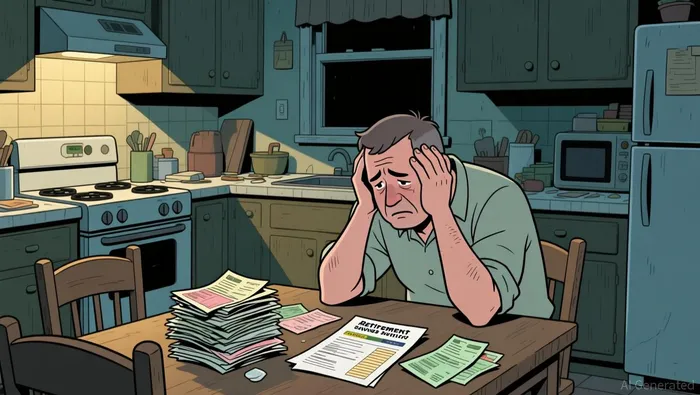
The real cost of a 401(k) withdrawal isn't just the tax bill or the penalty. It's the decades of growth you sacrifice today for a dollar tomorrow. A 401(k) is built on the power of compound interest, where your money works for you year after year, tax-deferred. When you pull cash out for a short-term need, you're not just spending that money; you're extinguishing its future potential. That's a fundamental error in long-term planning. You're trading a known, immediate need for an unknown, future security.
This gamble hits hardest when there's little to begin with. The data shows a stark vulnerability. More than 20% of adults ages 50 and older have no retirement savings. For this group, a 401(k) might be their only nest egg. Tapping it for an emergency isn't a choice; it's a necessity. But it leaves them with nothing to fall back on when the next crisis comes, creating a dangerous cycle of depletion.
This reliance on retirement funds as a safety net is a symptom of a broader system failure. When unemployment benefits are weak or hard to access, people have no other option. The evidence points to a regional divide. Southern states tend to provide among the lowest benefits, shortest potential benefit durations, and most exclusionary eligibility criteria. Workers there are more likely to face delays, underpayments, and outright denial. This isn't just bad luck; it's a policy choice that funnels more people toward their retirement accounts as a last resort.
The bottom line is a story of long-term scarring. You fix a short-term leak with a bucket of your future savings. That bucket gets smaller every time you dip in. For millions, especially older workers in underfunded states, this is the only safety net they have. But using it for a crisis today guarantees a deeper hole tomorrow.
What to Watch: The Safety Net and the Recovery
The bottom line for any jobless worker is this: your ability to survive without touching retirement savings depends on a patchwork of state benefits and personal financial reserves. There's no national guarantee. The real story is played out in the details of local policy and personal planning.
First, you must monitor the state you live in. The system is wildly uneven, with Southern states offering particularly weak support. Workers in the South were 28 percent more likely to report any type of difficulty applying for UI benefits than those elsewhere. They face longer delays, more underpayments, and even reported discrimination in the process. This isn't just bureaucracy; it's a direct barrier to getting help. If your state is one of the weaker ones, your safety net is already frayed before you even apply. Watch for any local reforms aimed at simplifying applications or expanding eligibility. A stronger state system means less pressure to raid your 401(k).
Second, keep an eye on the rules for accessing your own retirement funds. The process has become easier in recent years. Congress reformed the process for taking 401(k) hardship withdrawals in 2018, making it easier to do so by eliminating a requirement that a plan participant take a loan out first. This change, coupled with a broader trend of easier access, likely explains the record number of hardship withdrawals in 2025. While this may help some, it also lowers the barrier to a costly decision. The key is to know the rules of your specific plan and understand the full cost-taxes, penalties, and the potential loss of unemployment benefits-before you act.
The core conclusion is a practical one. Avoiding a 401(k) withdrawal starts with a strong unemployment claim and a solid personal cushion. If your state's system is broken, you're more likely to need that cushion. If your cushion is thin, you're more likely to need that 401(k). The data shows more than 20% of adults ages 50 and older have no retirement savings at all. For them, the choice isn't about minimizing damage; it's about survival. The path forward requires both personal preparation and political will to fix the broken regional safety net.
Disclaimer: The content of this article solely reflects the author's opinion and does not represent the platform in any capacity. This article is not intended to serve as a reference for making investment decisions.
You may also like
Global Partners’ nine-decade advantage could reflect market skepticism rather than strength

Primoris' 2026 Revenue Dip Hides a Buy-the-Dip Setup as $11.9B Backlog Looms

Goldman Sachs Small Cap Value Fund Adapts to Volatility Following Market Rotation as Major Drivers Change
Trending news
MoreCrypto prices
More





